
What Drives the Cost of Tunneling Equipment Innovations in Large Projects?
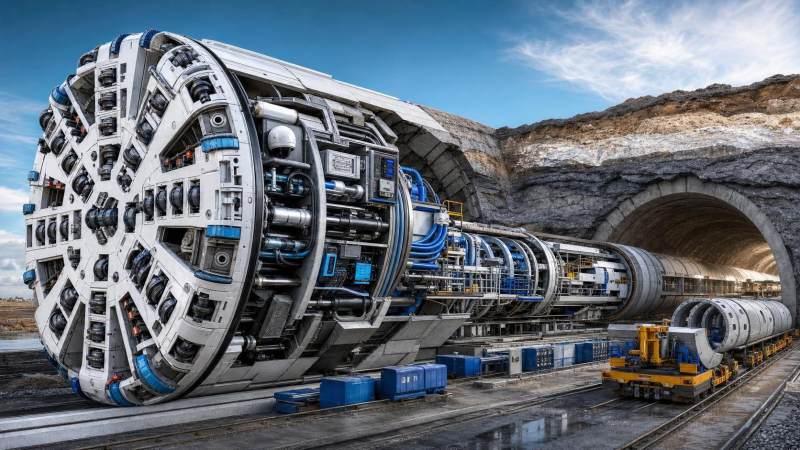
Why tunneling equipment innovations cost is rising in a more complex project cycle
Large tunneling projects are no longer priced around steel, thrust, and diameter alone.
The real shift is that tunneling equipment innovations cost now reflects a broader engineering intelligence burden.
Machines must cut harder geology, meet stricter urban limits, share data with digital project systems, and stay productive under tighter delivery windows.
That combination changes how innovation is funded, specified, and judged in major infrastructure programs.
From recent project signals, cost growth is less about experimental technology for its own sake.
It is more often tied to risk reduction, adaptability, and lifecycle control.
This is why the same TBM class can show very different innovation budgets across metro, water conveyance, and mountain tunnel applications.
For platforms such as TF-Strategy, which track heavy equipment through geology, materials, construction methods, and infrastructure demand, the pattern is consistent.
Innovation spending follows project uncertainty more closely than headline machine size.
The cost signal is moving from machine purchase to system performance
One of the clearest market changes is that buyers are valuing integrated performance, not isolated equipment features.
That makes tunneling equipment innovations cost harder to benchmark with a simple capex comparison.
A new cutterhead design may raise upfront cost, yet lower intervention frequency and reduce schedule exposure.
An advanced guidance package may seem expensive, but it can protect alignment tolerance in dense urban corridors.
Remote diagnostics, sensor arrays, and automation modules also add cost in procurement documents.
Still, their value often appears later through fewer stoppages, lower crew exposure, and better intervention planning.
This is especially visible where tunneling is connected to larger logistics chains involving cranes, road equipment, spoil handling, or mine-like haulage environments.
In those settings, equipment innovation behaves like a network cost, not a single machine premium.
Where the biggest cost pressure usually comes from
The table matters because tunneling equipment innovations cost is now distributed across subsystems that used to be treated as optional.
Geology is still the anchor, but material science is changing the equation
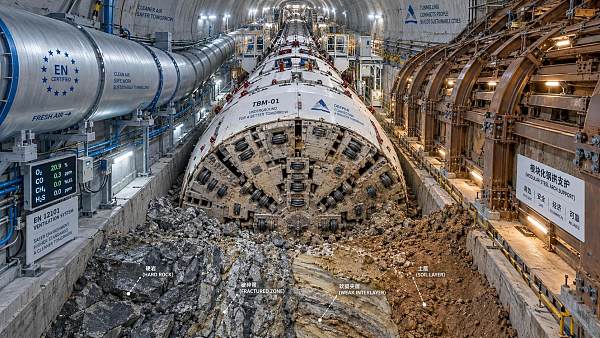
Geology remains the most stubborn cost variable in tunnel engineering.
Yet the response to geology has evolved.
Instead of relying only on brute-force machine scaling, many projects are investing in material upgrades and adaptable tooling strategies.
This includes cutterhead alloys, disc cutter enhancements, wear-resistant coatings, and more specialized mixing or pressure control elements.
These changes increase tunneling equipment innovations cost early, sometimes significantly.
But they can also reshape the cost curve over the full drive length.
In mixed-face conditions, the value of innovation often comes from avoiding unstable performance rather than maximizing peak output.
That distinction matters in financial evaluation.
A stable but more expensive configuration can be superior to a cheaper setup that triggers repeated interventions, segment damage, or settlement concerns.
TF-Strategy’s attention to TBM cutterhead material iteration reflects this broader industrial reality.
Advanced materials are no longer niche upgrades.
They increasingly function as financial risk instruments inside equipment design.
Automation adds cost, but the real question is where it removes uncertainty
Digital control, remote monitoring, and semi-autonomous operating logic are raising equipment complexity across heavy industry.
Tunneling is following the same path, though with stricter reliability demands.
As a result, tunneling equipment innovations cost increasingly includes software integration, control architecture, data transmission, and interface compatibility.
The common mistake is to evaluate these additions as if they only improve convenience.
In large projects, they often improve decision speed during abnormal conditions.
That means quicker response to wear patterns, pressure instability, slurry variation, or cutter performance drift.
More importantly, data-rich machines fit the wider transformation of infrastructure delivery.
Owners want traceability, contractors want schedule control, and insurers increasingly care about operational visibility.
When those expectations enter contract structures, innovation cost becomes easier to justify.
What looked like a premium feature a few years ago can become a baseline compliance expectation today.
Signals worth watching in digital cost inflation
- More tenders require real-time equipment data interfaces, not only post-shift reporting.
- Control systems are being judged on cybersecurity and interoperability, not only performance.
- Remote support capability is gaining value where labor access is constrained.
- Predictive maintenance tools are moving from pilot use into formal lifecycle assumptions.
The influence reaches beyond tunneling itself
The market tends to discuss tunneling equipment innovations cost as a TBM issue alone.
That is too narrow for current megaproject conditions.
Innovation in tunneling now interacts with lifting plans, segment logistics, spoil transport, power supply, and site digitalization.
This is where a broader heavy-equipment intelligence view becomes useful.
A more advanced TBM may require different crane coordination during assembly.
A higher-output drive may force changes in haulage capacity or muck treatment rhythm.
A low-emission site strategy may shift auxiliary fleet choices around the tunnel system.
So the impact of tunneling equipment innovations cost often appears in adjacent work packages.
This is one reason simple equipment comparisons keep failing in large cross-disciplinary projects.
The better comparison asks whether innovation creates friction elsewhere, or reduces it.
What deserves closer attention before cost assumptions are locked in
In practical evaluation, the most useful question is not whether innovation costs more.
It usually does.
The more valuable question is which innovations move cost from unpredictable field events into controllable engineering decisions.
Several checkpoints help sharpen that judgment.
- Match innovation claims to the actual geology profile, not generic machine brochures.
- Separate headline capex from lifecycle effects such as cutter consumption, downtime, and intervention frequency.
- Check whether digital features are operationally usable or only nominally installed.
- Review compliance costs early, especially ventilation, emissions, safety control, and settlement monitoring links.
- Examine supply-chain exposure for specialty metals, electronics, seals, and high-wear consumables.
These checkpoints bring tunneling equipment innovations cost back into a decision framework grounded in risk and delivery performance.
The next phase will reward better cost intelligence, not cheaper specifications
The direction of travel is fairly clear.
Large projects will keep demanding more adaptive, data-capable, and regulation-ready tunneling systems.
That means tunneling equipment innovations cost is unlikely to normalize around older procurement logic.
The winning approach is not aggressive cost trimming at specification stage.
It is better cost intelligence across the full project chain.
A useful next step is to map innovations into three buckets: mandatory compliance, geology-driven resilience, and productivity enhancement.
That structure makes trade-offs easier to test against schedule sensitivity and operational exposure.
It also creates a clearer basis for comparing suppliers, service models, and lifecycle support commitments.
For organizations following global heavy-equipment signals through sources such as TF-Strategy, the priority is straightforward.
Track how geology, materials, automation, and adjacent equipment systems are converging.
That is where the next real movements in tunneling equipment innovations cost will emerge, and where better returns will be decided.
Related News
 Oct 03, 2026How to Assess TBM Manufacturers for Hard-Rock Tunneling Projects?Choose the right tunnel boring machine manufacturer for hard-rock projects. Explore key criteria for design, lifecycle cost, factory quality, and service support.
 Oct 02, 2026How to Evaluate Heavy Equipment Technology Suppliers for Fleet Uptime and SupportHeavy equipment technology suppliers can make or break fleet uptime. Learn how to assess diagnostics, data access, parts, service coverage, and support terms before you buy.
 Oct 01, 2026How to Use Technical References to Benchmark Industrial Equipment PricesIndustrial equipment technical reference pricing: learn how to normalize specifications, scope, service life, and operating costs to benchmark quotes accurately and choose the best-value equipment.
 Sep 30, 2026What Does an Ultra-Large Excavator Really Cost Over Its Service Life?Ultra-large excavators cost far more than purchase price. Explore lifecycle expenses, uptime risks, energy use, maintenance, and cost-per-tonne insights.
Prof. Marcus Chen
Weekly Insights
Stay ahead with our curated technology reports delivered every Monday.