
Crawler Crane Specifications Explained: Capacity, Boom Length, and Ground Pressure
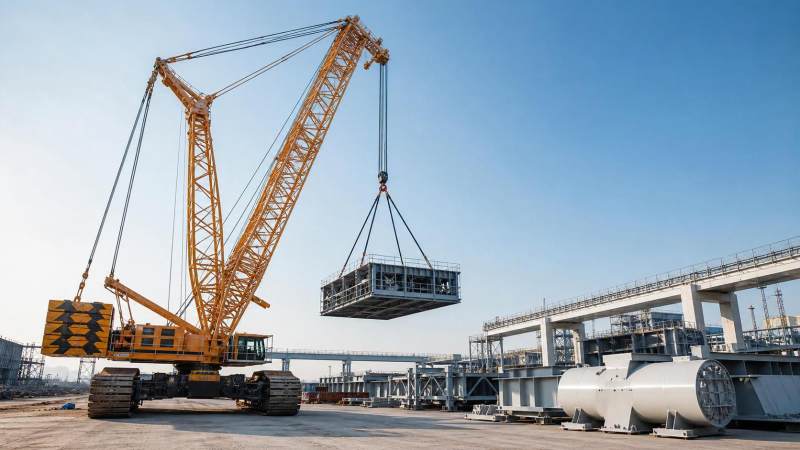
Reading crawler cranes specifications correctly is not a paperwork exercise. It shapes lift safety, transport planning, assembly time, and the margin between a smooth operation and an unstable one.
In heavy infrastructure, those figures matter even more. Wind projects, petrochemical modules, bridge segments, and energy construction all depend on precise lifting decisions made before the crane starts moving.
That is why crawler cranes specifications deserve close attention from field teams. Capacity, boom length, and ground pressure are linked, and none of them should be judged in isolation.
At TF-Strategy, crawler cranes sit alongside TBM systems, mining fleets, and large road machinery as part of the wider mechanics of global earth engineering. Physical parameters are only useful when they are tied to site conditions and construction method.
Why Specifications Matter More in Today’s Projects
Lifts are getting heavier, sites are tighter, and schedules leave less room for rework. A crawler crane may still look forgiving on paper, yet the real decision window is narrower than many assume.
Large nacelles, reactor sections, precast elements, and port equipment often push cranes toward long radii or difficult ground conditions. In that setting, crawler cranes specifications become operational intelligence, not just catalog data.
The industry is also watching total cost of ownership more closely. A crane that appears oversized may create unnecessary mobilization cost, while an undersized one can trigger delays, re-lifts, or support crane requirements.
Start With Rated Capacity, but Read the Fine Print
Rated capacity is usually the first figure people look for. It tells you the maximum lifting ability under defined conditions, but it is never a universal number.
A 300-ton crawler crane does not lift 300 tons at every radius, with every boom, or on every configuration. The load chart is the real authority, not the model label.
Manufacturers define capacity through a combination of boom arrangement, working radius, counterweight, track position, and sometimes the duty rating allowed by structural limits or tipping limits.
What changes the real lifting number
- Working radius increases and available capacity drops quickly.
- Longer boom or luffing jib configurations reduce usable capacity.
- Counterweight packages can change the load chart substantially.
- Hook block, slings, spreader bars, and rigging count as lifted load.
- Wind limits can reduce what is practical even before chart limits are reached.
In practice, the safe question is not “What is the crane rated for?” It is “What can this crane lift, at this radius, with this boom, on this ground, using this rigging package?”
Boom Length Affects More Than Reach
Boom length is often treated as a simple reach figure. That is too narrow. It changes lifting geometry, transport planning, assembly complexity, and sometimes the entire site layout.
A longer boom can help clear structures, work over process equipment, or place components farther from the crane centerline. At the same time, it usually cuts capacity at comparable radii.
This is where crawler cranes specifications become especially useful. They show how boom inserts, main boom combinations, fixed jibs, and luffing attachments reshape the crane’s working envelope.
Questions to ask before choosing boom length
- Is vertical clearance more critical than raw lift capacity?
- Will the crane need to work around live structures or pipe racks?
- Can the site support the assembly area required for a longer boom?
- Does transport routing allow the extra boom sections and attachments?
For wind and industrial work, a small change in boom setup can decide whether the crane can stay in one location or must be repositioned. That has direct impact on time, ground preparation, and risk.
Ground Pressure Is Often the Hidden Constraint
Many lift plans focus on capacity first and discover ground issues later. That sequence creates avoidable trouble, especially on reclaimed land, soft soils, trench zones, or partially improved project pads.
Ground pressure describes how the crane load transfers into the surface through the crawler tracks. It is not only a geotechnical detail. It governs whether the crane can operate where it is needed.
Crawler cranes are valued because tracks spread weight better than outriggers. Even so, large machines can still exceed site bearing limits during assembly, travel, or heavy picks.
When reading crawler cranes specifications, check whether ground pressure values refer to transport condition, basic assembly, or full counterweight lifting condition. Those numbers can differ in meaningful ways.
How the Main Parameters Work Together
The most common mistake is treating each specification line separately. In reality, crane behavior is a tradeoff system. More boom can mean less capacity. More counterweight can mean higher transport complexity and ground demand.
Radius is often the pivot point. A lift that looks acceptable at 10 meters may become unworkable at 14 meters, even with the same load and same crane model.
That is why experienced planners compare load chart margin, setup area, and soil condition together. Crawler cranes specifications only become useful after they are mapped against the real lift path.
A practical reading sequence
- Confirm load weight, rigging weight, and center of gravity.
- Define the actual pick radius and placement radius.
- Match boom and attachment configuration to clearance needs.
- Check rated capacity from the exact chart condition.
- Review ground pressure and assembly footprint.
- Verify transport, site access, and erection sequence.
Typical Use Cases Across Heavy Industry
Crawler cranes are central to several project types, but the specification priorities shift by sector. The same nominal crane can be a good fit in one environment and a poor fit in another.
Wind power installation
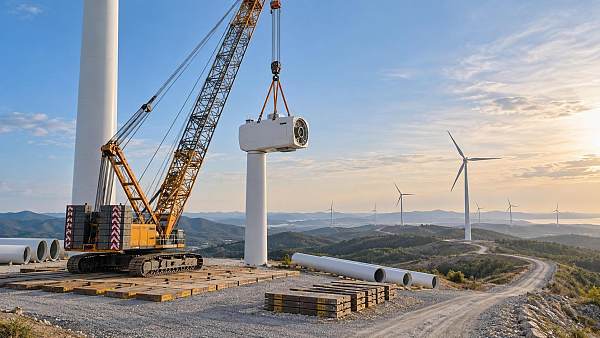
Long boom systems and high hook heights dominate the decision. Ground preparation is also critical because turbine pads and access roads can become the real bottleneck.
Petrochemical and refinery work
Tight footprints, overhead obstructions, and high-value modules shift attention toward radius control, tail swing, and staged assembly.
Bridge and civil infrastructure
Travel with load, temporary platforms, and repetitive picks make ground pressure and track behavior especially important.
Mining and plant construction
Remote logistics, uneven terrain, and demanding duty cycles push teams to compare crawler cranes specifications against mobilization constraints, not just lift charts.
This wider view reflects how TF-Strategy approaches heavy equipment intelligence. A machine parameter only gains decision value when it is tied to terrain, logistics, and mission profile.
Where Misreading Specifications Creates Risk
Specification errors are rarely dramatic at the start. They usually appear as small assumptions that stack together until the planned lift has no real margin.
- Using headline capacity instead of the exact load chart.
- Ignoring rigging and hook block weight.
- Choosing boom length before checking assembly space.
- Treating average ground pressure as the only soil indicator.
- Overlooking wind limits during long boom operations.
- Assuming travel routes can support the assembled crane.
Better decisions usually come from slower reading, not faster selection. A few extra checks on crawler cranes specifications can prevent expensive changes once the crane arrives on site.
A Better Way to Compare Crane Options
When several models appear suitable, compare them on operating fit rather than brochure scale. The largest crane is not automatically the strongest project choice.
Look at net lifting margin at the real radius. Then review boom flexibility, assembly time, transport loads, counterweight handling, and site bearing requirements.
That approach usually produces a clearer answer than focusing on maximum tonnage alone. It also aligns with current infrastructure trends, where schedule reliability matters as much as raw lifting power.
For the next evaluation step, gather the exact lift path, load details, boom requirement, and ground data before comparing machines. With those inputs in place, crawler cranes specifications become a decision tool instead of a rough reference.
That is the point where better field judgment starts: not from memorizing numbers, but from understanding how each number changes the lift in front of you.
Related News
 Oct 04, 2026Nuclear Lifting Equipment Cost: Budgeting for Compliance, Testing, and Lifecycle RiskNuclear lifting equipment cost explained: budget for compliance, proof-load testing, installation, documentation, and lifecycle risk to make confident procurement decisions.
 Oct 03, 2026How to Assess TBM Manufacturers for Hard-Rock Tunneling Projects?Choose the right tunnel boring machine manufacturer for hard-rock projects. Explore key criteria for design, lifecycle cost, factory quality, and service support.
 Oct 02, 2026How to Evaluate Heavy Equipment Technology Suppliers for Fleet Uptime and SupportHeavy equipment technology suppliers can make or break fleet uptime. Learn how to assess diagnostics, data access, parts, service coverage, and support terms before you buy.
 Oct 01, 2026How to Use Technical References to Benchmark Industrial Equipment PricesIndustrial equipment technical reference pricing: learn how to normalize specifications, scope, service life, and operating costs to benchmark quotes accurately and choose the best-value equipment.

Structural Load Expert
Weekly Insights
Stay ahead with our curated technology reports delivered every Monday.