
Heavy Equipment Replacement Demand: How to Judge Repair vs Replace by Lifecycle Cost
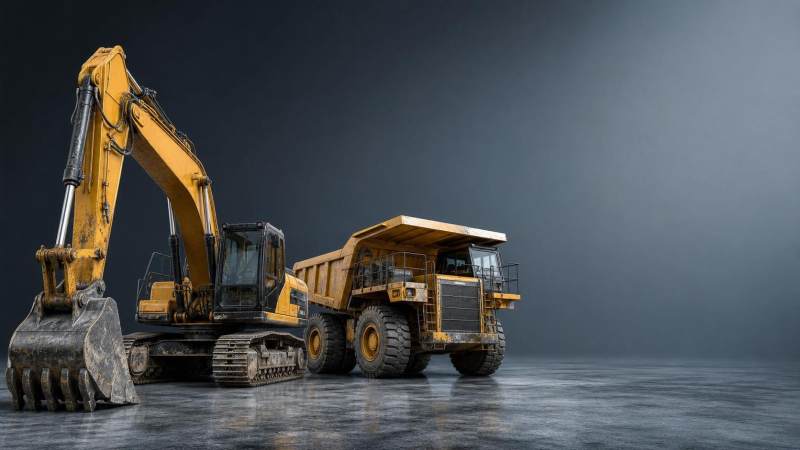
Heavy equipment replacement demand: is age really the main trigger?
Heavy equipment replacement demand often looks simple on paper.
A machine gets older, repairs rise, and a replacement request appears.
In practice, that shortcut causes expensive mistakes.
A ten-year-old crawler crane may still earn strong returns.
A newer mining dump truck may already be destroying value through downtime, fuel burn, or weak parts support.
That is why heavy equipment replacement demand should be tested through lifecycle cost, not calendar age alone.
For global infrastructure fleets, this matters even more.
TBMs, ultra-large excavators, road machinery, and heavy haulage assets operate under punishing duty cycles.
A wrong repair versus replace decision can distort project margins for years.
TF-Strategy often frames this through “Power and Precision.”
Physical performance, project method, and capital logic must be judged together.
What does heavy equipment replacement demand actually mean in cost terms?
It does not simply mean a machine is worn out.
It means the current asset no longer delivers acceptable lifecycle economics against its operating role.
That role matters.
A backup road paver faces a different threshold than a primary excavator in an open-pit mine.
The stronger test is whether future ownership cost is still lower than the cost of replacement plus transition.
This usually includes five variables:
- expected repair spending over the next 12 to 36 months
- planned and unplanned downtime losses
- fuel or energy efficiency gaps versus newer models
- residual value erosion if replacement is delayed
- productivity impact on the wider project chain
In actual projects, hidden costs are usually underestimated.
A TBM cutterhead delay, crane outage, or haul truck stoppage can affect multiple crews and contract milestones.
So heavy equipment replacement demand is not just an asset issue.
It is a project cashflow issue.
When does repair still make sense, and when is replacement the stronger choice?
A useful question is not “Can this be repaired?”
Most heavy machines can be repaired.
The real question is “Will this repair preserve competitive operating cost?”
Repair is often justified when the fault is concentrated.
Examples include a hydraulic rebuild, undercarriage replacement, or drivetrain overhaul with predictable service life afterward.
Replacement becomes stronger when failures are systemic.
That includes repeated electrical issues, chronic overheating, structural fatigue, obsolete control systems, or weak component availability.
The decision becomes clearer in a side-by-side view:
If three or more replace-bias signals are present, heavy equipment replacement demand is usually economically real.
Which lifecycle cost items are most often missed?
The common error is focusing only on workshop invoices.
That captures visible repair cost but ignores the wider loss structure.
In heavy industry, the missed items are usually larger than the repair bill itself.
Downtime has to be priced like a production event
A failed excavator does not only consume spare parts.
It may idle trucks, crews, blasting schedules, and loading windows.
A stalled crane can delay turbine erection, vessel placement, or refinery turnaround milestones.
Those losses belong in the replacement model.
Efficiency losses accumulate quietly
Older machines often survive, but at weaker output per hour.
Fuel burn, idle time, slower cycle speeds, and lower payload consistency all reduce return on asset time.
This is one reason heavy equipment replacement demand rises during periods of tight project margins.
Technology gaps now carry cost
TF-Strategy tracks shifts such as remote control, digital diagnostics, and electric haulage logic.
These are not image upgrades.
They affect safety, staffing, maintenance planning, and energy use.
When older assets cannot integrate with the operating model, replacement demand gains strategic weight.
How should you compare repair versus replace across different machine types?
Not every category should be judged with one formula.
The cost logic is shared, but the trigger points differ by asset role.
- TBMs: reliability, cutterhead support, geology fit, and schedule exposure dominate the decision.
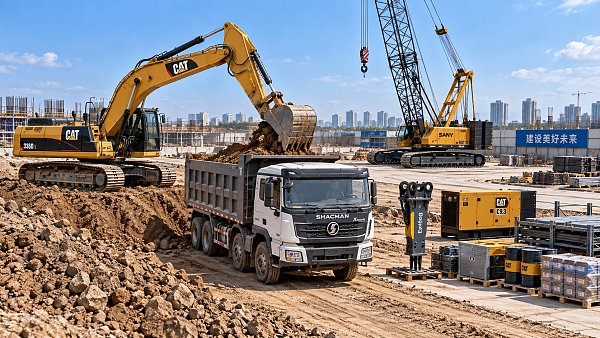
- Ultra-large excavators: availability, bucket productivity, and component rebuild cycles matter most.
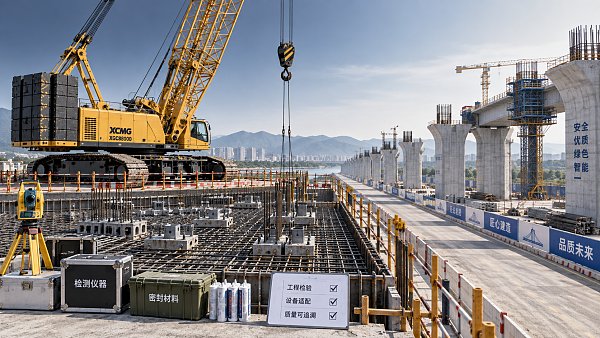
- Crawler cranes: certification, structural integrity, and project-critical lifting windows shape the decision.
- Road machinery: paving precision, compaction consistency, and emissions compliance carry more weight.
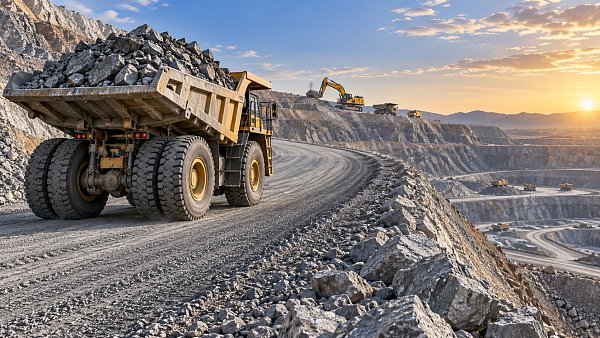
- Mining dump trucks: fuel use, tire economics, haul cycle speed, and altitude performance become decisive.
A machine with acceptable workshop cost may still deserve replacement if its role is highly time-sensitive.
That is especially true in megaproject environments, where one failed unit can block an entire sequence.
More common than many expect, heavy equipment replacement demand is driven by system dependency, not by mechanical collapse.
What mistakes distort the replacement decision?
One mistake is using last year’s repair cost as the only benchmark.
That looks backward, while the decision must look forward.
Another mistake is treating residual value as fixed.
In volatile equipment markets, resale timing can materially change replacement economics.
A third mistake is ignoring support risk.
When OEM parts, dealer coverage, or skilled technicians become scarce, repair plans become less reliable.
The last major error is approving replacement without a transition cost model.
Delivery lead time, operator training, tooling changes, commissioning, and early-life utilization all matter.
The better judgment method is to compare two future cash paths over the same period.
One path assumes repair and continued use.
The other assumes replacement and ramp-up.
Whichever path protects output and lowers total ownership burden is the stronger answer.
What is a practical approval framework for heavy equipment replacement demand?
A disciplined review does not need to be complicated.
It needs to be complete.
A practical framework usually includes the following checks:
This is where market intelligence helps.
A platform such as TF-Strategy is useful when replacement demand cannot be judged from maintenance records alone.
Tender activity, material trends, technology shifts, and regional fleet patterns provide context for timing and asset selection.
That context often separates a cautious approval from a well-timed one.
So what should happen next when the numbers are still unclear?
If the case feels borderline, widen the lens before approving either path.
Rebuild the comparison around lifecycle cost, not repair history.
Stress-test downtime assumptions.
Check whether residual value is slipping faster than expected.
Confirm whether newer equipment changes fuel, safety, or digital operating performance enough to matter.
Heavy equipment replacement demand becomes credible when future operating risk is priced honestly.
The strongest decisions usually come from a simple sequence:
- define the asset’s real project role
- model repair and replacement over the same horizon
- include downtime, efficiency, and disposal timing
- test the decision against market and technology signals
When those four steps are done properly, repair-versus-replace decisions become less subjective.
They also become easier to defend across long-cycle infrastructure programs.
Related News
 Sep 29, 2026Infrastructure Construction Standards: A Project Manager’s Guide to ComplianceInfrastructure construction standards guide for project managers: turn requirements into field controls, hold points, traceability, and compliant delivery.
 Sep 28, 2026How to Specify Custom Mining Equipment for Abrasive Ground and High-Load HaulageCustom mining equipment for abrasive ground and high-load haulage: learn how to optimize payload, wear protection, powertrains, uptime, and lifecycle cost for safer, reliable production.
 Sep 29, 2026What belongs in a construction equipment package sourcing plan?Construction equipment package planning sourcing guide: learn how to match machines, attachments, site conditions, supplier support, costs, and acceptance gates for reliable project delivery.
 Sep 29, 2026How to verify equipment durability before approving suppliers at scaleHow can heavy equipment manufacturers verify durability and manage supplier risk at scale? Explore practical testing, traceability, audits, and control strategies.
Ms. Elena Rodriguez
Weekly Insights
Stay ahead with our curated technology reports delivered every Monday.