
How to Read Earth Engineering Equipment Specifications for Site Planning and Bidding
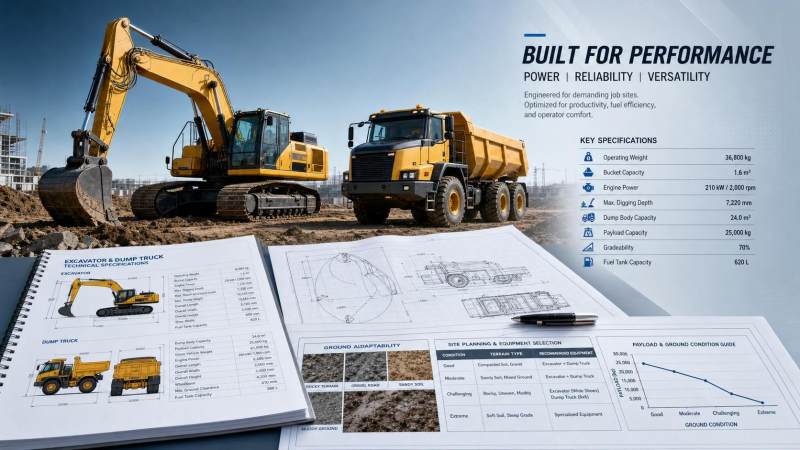
How to Read Earth Engineering Equipment Specifications for Site Planning and Bidding
For project managers and engineering decision-makers, understanding earth engineering equipment specifications is critical to accurate site planning, risk control, and competitive bidding.
From machine dimensions and power output to ground adaptability and hauling efficiency, the right data can shape project feasibility and cost performance.
This guide explains how to read specifications with a strategic lens, helping you align equipment selection with construction goals, budget discipline, and delivery confidence.
Why earth engineering equipment specifications matter early
Many teams review earth engineering equipment specifications too late.
They focus first on unit price, then discover transport, setup, or productivity limits during bid clarification or mobilization.
That creates avoidable cost exposure.
A specification sheet is not just technical paperwork.
It is a condensed risk map.
It tells you whether a machine can enter the site, survive local ground conditions, meet production targets, and support a realistic bid margin.
In practice, earth engineering equipment specifications affect four decisions at once.
- Site layout and access planning
- Method statement and construction sequencing
- Fuel, labor, maintenance, and transport cost forecasting
- Bid compliance against client technical requirements
Once you treat specifications as decision inputs, not brochure data, the review process becomes sharper and faster.
Start with the operating context, not the machine
Before reading earth engineering equipment specifications, define the operating envelope.
This step is often skipped, but it changes how every number should be interpreted.
Ask a few direct questions.
- What material will the machine handle: rock, clay, overburden, mixed soil, or blasted ore?
- What is the required output per hour, shift, and month?
- What are the slope, altitude, temperature, and moisture conditions?
- How tight are access roads, turning zones, and assembly areas?
- Is the project schedule production-driven or logistics-driven?
These answers create the filter for reading specifications correctly.
A crawler crane for wind components, a dump truck in high altitude mines, and a TBM in fractured geology require very different specification priorities.
TF-Strategy often frames this as matching physical parameters with method and mission.
That is the useful mindset for bid-stage review.
How to read the core sections of a specification sheet
1. Dimensions and transport envelope
Start with transport dimensions, operating dimensions, and assembly requirements.
This part of earth engineering equipment specifications directly affects route clearance, escort permits, and on-site cranage.
Check overall length, width, height, and shipping weight.
Then compare them with bridge ratings, road width, temporary ramps, and laydown space.
A machine can be technically suitable and still be a poor choice if mobilization becomes a separate project.
2. Operating weight and ground pressure
This section is often misunderstood.
Higher operating weight may improve stability and breakout force, but it can also damage temporary roads and working platforms.
Ground pressure matters more than total weight in soft or wet conditions.
When reading earth engineering equipment specifications, compare ground pressure against geotechnical recommendations for access areas and working pads.
3. Powertrain and hydraulic performance
Engine power alone does not tell the full story.
Look at rated power, usable torque range, hydraulic flow, hydraulic pressure, and duty cycle assumptions.
For excavators and road machinery, hydraulic efficiency drives real output.
For hauling equipment, gradeability and sustained power under load are more revealing than peak figures.
4. Capacity, cycle time, and productivity assumptions
Production claims need context.
Bucket capacity, payload, cutting rate, or lifting charts only become meaningful when linked to actual material density and site cycle distance.
Always test specification values against your own cycle model.
That is where many bidding errors begin.
5. Environmental and altitude limits
Earth engineering equipment specifications should state temperature range, emissions tier, dust protection, and altitude derating.
This is especially relevant in mining, remote mountain projects, and desert infrastructure corridors.
A strong machine on paper may lose performance sharply at elevation or in extreme heat.
Translate specifications into bidding decisions
The next step is commercial translation.
Reading earth engineering equipment specifications well means turning technical values into cost, duration, and risk assumptions.
This conversion step is where strong bids separate from optimistic bids.
More importantly, it supports defensible pricing during client review.
Common mistakes when reading earth engineering equipment specifications
Several mistakes appear repeatedly across tenders and early planning packages.
- Using nominal capacity instead of effective site productivity
- Ignoring attachment weight and its effect on performance
- Missing altitude derating or ambient temperature limits
- Assuming dealer support is equal across regions
- Comparing two models with different test conditions
- Overlooking assembly, dismantling, and relocation time
These errors look small in a specification review.
On site, they turn into idle crews, lower availability, and claims pressure.
That is why earth engineering equipment specifications should always be reviewed with operations, procurement, and planning in the same discussion.
A practical review framework for faster decisions
A useful review framework keeps the process disciplined.
You do not need a long checklist.
You need the right questions in the right order.
- Confirm site constraints before comparing brands or models.
- Read earth engineering equipment specifications against actual ground, haul, and weather conditions.
- Adjust supplier output figures using your project cycle assumptions.
- Test whether transport and setup requirements fit the schedule window.
- Check maintenance access, spare parts coverage, and technician response time.
- Convert all major specification items into cost and risk lines in the bid model.
This review structure works well across excavators, dump trucks, crawler cranes, road machinery, and even specialized systems like TBM support equipment.
It also fits the current market, where delivery certainty often matters as much as nameplate performance.
Final takeaway
Earth engineering equipment specifications are far more than technical reference sheets.
They are the bridge between engineering feasibility and commercial confidence.
When you read them through the lens of site conditions, production logic, and bid exposure, better decisions follow quickly.
That matters even more in heavy industry sectors shaped by complex geology, long logistics chains, and strict delivery windows.
For teams tracking global equipment intelligence, TF-Strategy’s perspective is straightforward: align machine parameters with construction method, then align both with project strategy.
Use that approach on every tender review, and earth engineering equipment specifications become a competitive tool, not just a compliance document.
Related News
 Sep 29, 2026Infrastructure Construction Standards: A Project Manager’s Guide to ComplianceInfrastructure construction standards guide for project managers: turn requirements into field controls, hold points, traceability, and compliant delivery.
 Sep 28, 2026How to Specify Custom Mining Equipment for Abrasive Ground and High-Load HaulageCustom mining equipment for abrasive ground and high-load haulage: learn how to optimize payload, wear protection, powertrains, uptime, and lifecycle cost for safer, reliable production.
 Sep 29, 2026What belongs in a construction equipment package sourcing plan?Construction equipment package planning sourcing guide: learn how to match machines, attachments, site conditions, supplier support, costs, and acceptance gates for reliable project delivery.
 Sep 29, 2026How to verify equipment durability before approving suppliers at scaleHow can heavy equipment manufacturers verify durability and manage supplier risk at scale? Explore practical testing, traceability, audits, and control strategies.
Ms. Elena Rodriguez
Weekly Insights
Stay ahead with our curated technology reports delivered every Monday.