
How to Plan Construction Equipment for Middle East Projects: Climate, Compliance, and Cost
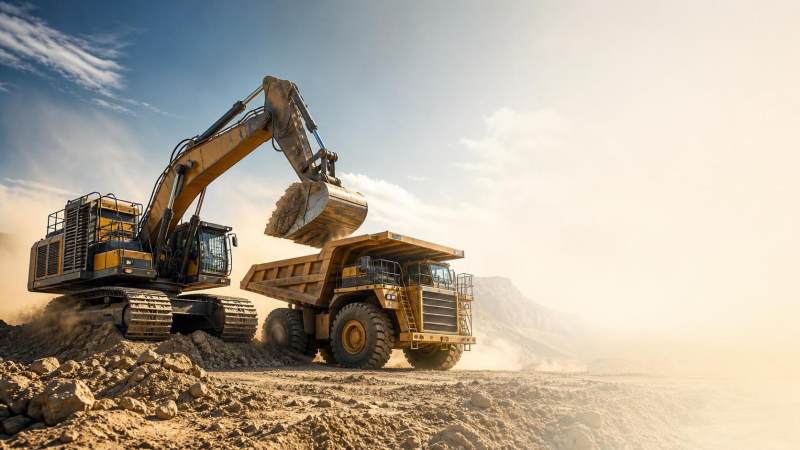
For construction equipment planning Middle East projects, the real question is not “what machines do we need?” It is “what will still run reliably in heat, dust, and heavy-duty cycles without blowing up the budget?” That is the decision most project managers eventually face. In the Middle East, equipment selection is shaped as much by climate, compliance, logistics, and service access as by scope. If you ignore those factors, you usually pay for it later in downtime, premature wear, rushed replacements, or contract delays.
The practical answer is simple: plan equipment around the site conditions first, then the regulatory path, then the cost model. If you reverse that order, the cheapest machine on paper can become the most expensive one on site.
Start with the project, not the catalog
Good equipment planning begins with a clear view of the job mix. A road program, a port expansion, a metro tunnel, and an open-pit support fleet do not fail for the same reasons, so they should not be planned with the same logic. For Middle East projects, I would separate the work into four questions before looking at any quotation: what has to run continuously, what will face extreme heat, what has to move across borders or jurisdictions, and what cannot fail because of schedule pressure.
That is where the main keyword, construction equipment planning Middle East, becomes more than a search phrase. It is really a planning discipline. You are choosing between owned equipment, rented equipment, or a mixed fleet; between standard machines and heat-rated configurations; between equipment that is locally supported and equipment that looks attractive only because the initial quote is lower.
If the project has tight milestone penalties, availability matters more than theoretical fuel savings. If the work is remote, service coverage and spare parts matter more than brand preference. If the project crosses a national boundary or sits in a special economic zone, compliance documentation can be the item that delays mobilization, not the machine itself.
Climate changes the machine spec faster than many teams expect
The Middle East puts a different load on equipment than temperate markets do. High ambient temperatures reduce cooling margin, accelerate hydraulic stress, and expose weak points in filtration, seals, batteries, and electronics. Sand is not just a housekeeping problem; it changes maintenance intervals and can shorten component life if filtration is undersized or ignored.
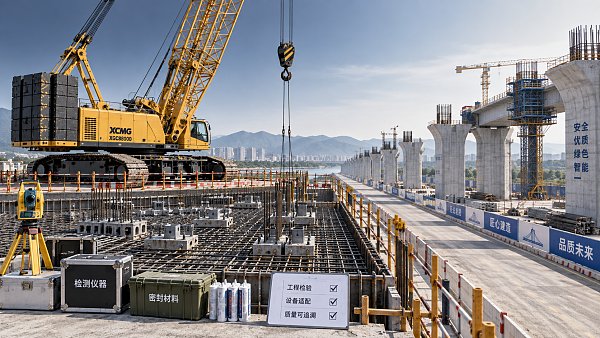
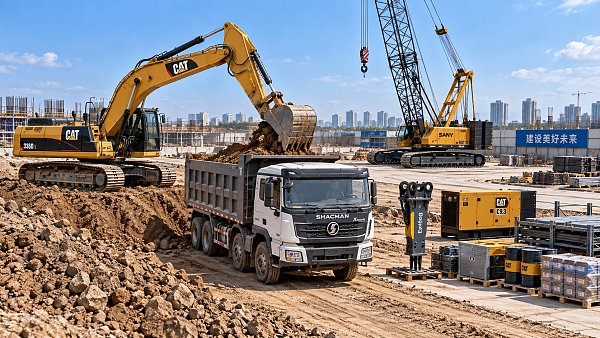
That is why crawler cranes, road machinery, dump trucks, and excavators all need a climate check before procurement. Look beyond tonnage and horsepower. Check cooling package capacity, dust protection, air intake design, cab HVAC performance, tire and undercarriage wear rates, and whether the machine has a track record in hot, abrasive conditions. For TBM support systems, the same logic applies to auxiliary equipment, ventilation, power supply stability, and consumables. Even if the cutting machine itself is not the focus of the procurement, the support fleet can make or break tunnel progress.
One common mistake is buying for peak output on a cool-day data sheet and assuming the numbers will hold in summer. They usually do not. A machine that performs well in mild conditions can lose usable efficiency once ambient temperatures stay high for long shifts. If your schedule depends on summer production, plan for de-rating, backup capacity, and stronger preventive maintenance intervals from day one.
Compliance is not a paperwork detail
In regional heavy equipment procurement, compliance tends to be treated as a late-stage checklist. That is risky. Import rules, emissions standards, operator certification, lifting regulations, site access controls, and local registration requirements vary by country and sometimes by project owner. For cross-border work, the compliance path should be mapped before purchase orders are issued.
This matters most when you are moving higher-value assets such as ultra-large excavators, crawler cranes, or specialized road machinery. If documents are incomplete, the cost is not only delay. You may also face storage charges, resubmission costs, temporary substitution of a less suitable unit, or a compressed commissioning window that pushes the team into avoidable mistakes.
For project leaders, the practical question is simple: can this equipment enter the country, be registered, be insured, be operated by available labor, and be maintained under local rules without improvisation? If the answer is uncertain, the item is not ready for procurement.
Cost should be measured as total cost of ownership
In this market, purchase price is often the least useful number in the decision. Total cost of ownership tells the real story: acquisition, shipping, duties, assembly, fuel, consumables, scheduled maintenance, unscheduled downtime, operator training, and resale value. A lower upfront price can easily hide higher downtime and weaker support.
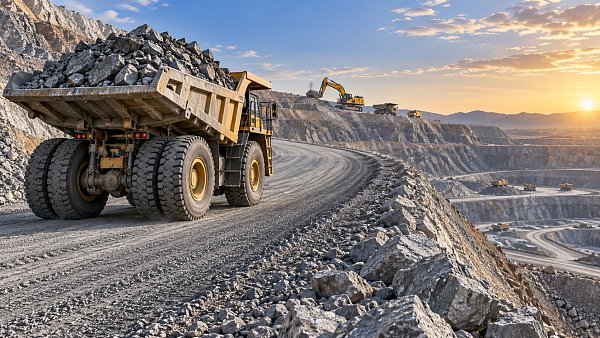
That is especially true for mining dump trucks and large road machinery, where utilization determines whether the investment makes sense. A truck with lower fuel burn on paper may be a poor choice if parts supply is slow or payload performance falls short under site conditions. A paving train that is cheaper to buy can become expensive if local technicians are not familiar with the control system.
My advice is to build a cost model that includes three scenarios: planned utilization, conservative utilization, and stressed utilization. The stressed case is the one teams usually ignore, yet it is the one that exposes whether the project can absorb heat-related downtime, customs delays, or a change in workfront sequence. If the equipment still makes sense under that scenario, you probably have a defensible buying decision.
Where TF-Strategy fits into the picture
TF-Strategy is useful when the equipment decision is not just about a single machine but about how heavy equipment, project methodology, and commercial risk fit together. Its focus on TBM, ultra-large excavators, crawler cranes, large road machinery, and mining dump trucks aligns well with the kind of planning Middle East projects require: practical visibility into machine parameters, delivery conditions, and the commercial logic behind fleet choices.
For example, if a project team is comparing a TBM support package with a road-building fleet or evaluating whether a crawler crane should be owned or rented, intelligence on serviceability, project timing, and total cost of ownership is often more valuable than a brochure-level spec sheet. That kind of information helps contractors avoid overbuying, under-specifying, or committing to machines that look efficient only before the site realities are priced in.
A usable planning sequence
Here is the sequence I would use on a real project.
First, define the operating environment in plain terms: maximum heat, dust exposure, shift length, mobility needs, and the distance to service support. Then translate those conditions into equipment requirements: cooling, filtration, payload, lifting radius, road quality, and spare parts access. After that, check compliance constraints country by country. Only then should you compare vendors and pricing.
Next, pressure-test the fleet mix. Ask whether the job depends on one critical machine or whether there is backup capacity. Ask whether rental fills a short-term gap more cheaply than purchase. Ask whether local maintenance capability exists, or whether the project is creating a hidden dependency on outside technicians. These questions sound basic, but they are where cost overruns often start.
Finally, treat commissioning as part of planning, not a separate phase. In hot regions, the first month of operation is where weak decisions show up fastest. If you have not planned for operator training, lubrication schedules, filter changes, and spare inventory, the equipment may be technically delivered but operationally unready.
What experienced teams watch for
Experienced project teams rarely get trapped by the big issues. They get trapped by small omissions that compound. A machine is accepted without enough coolant margin. A crane is mobilized before local lifting approval is settled. A road machine fleet arrives, but wear parts are not stocked nearby. A dump truck class is selected for payload, yet the haul profile makes the unit inefficient in practice.
Those mistakes are avoidable if procurement and operations are sitting in the same conversation. The equipment buyer should not work from price alone, and the site team should not assume the vendor has already accounted for local conditions. Someone has to own the full picture.
That is the real lesson of construction equipment planning Middle East projects: climate, compliance, and cost are not separate boxes. They interact. A slightly more expensive machine can be the cheaper one if it survives the heat, clears compliance smoothly, and stays productive through the critical months. A cheaper unit can become costly very quickly if it needs special handling, delayed parts, or repeated workarounds.
For project managers and engineering leads, the goal is not to buy the most advanced fleet. It is to buy the fleet that will still perform after the first hard summer, the first customs delay, and the first schedule slip. That is the difference between a procurement decision and an operational one.
Related News
 Sep 29, 2026Infrastructure Construction Standards: A Project Manager’s Guide to ComplianceInfrastructure construction standards guide for project managers: turn requirements into field controls, hold points, traceability, and compliant delivery.
 Sep 28, 2026How to Specify Custom Mining Equipment for Abrasive Ground and High-Load HaulageCustom mining equipment for abrasive ground and high-load haulage: learn how to optimize payload, wear protection, powertrains, uptime, and lifecycle cost for safer, reliable production.
 Sep 29, 2026What belongs in a construction equipment package sourcing plan?Construction equipment package planning sourcing guide: learn how to match machines, attachments, site conditions, supplier support, costs, and acceptance gates for reliable project delivery.
 Sep 29, 2026How to verify equipment durability before approving suppliers at scaleHow can heavy equipment manufacturers verify durability and manage supplier risk at scale? Explore practical testing, traceability, audits, and control strategies.
Ms. Elena Rodriguez
Weekly Insights
Stay ahead with our curated technology reports delivered every Monday.