
Heavy Haulage Trucks vs Modular Transporters: Which Fits Oversized Project Cargo Better?
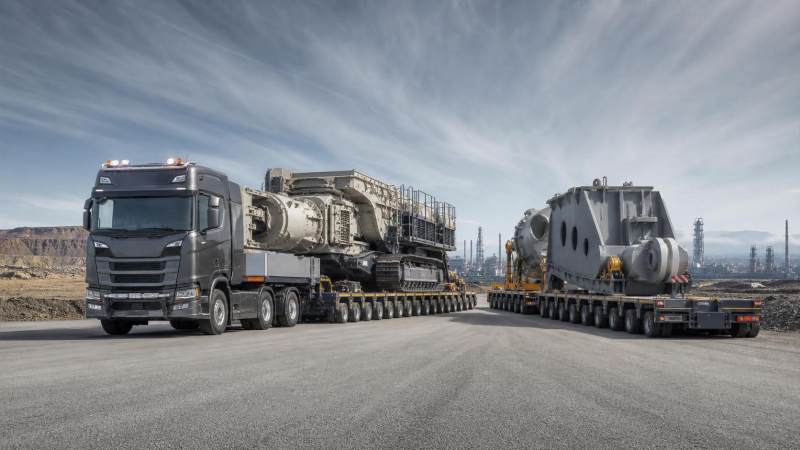
Oversized project cargo rarely fails because of lifting capacity alone. More often, problems appear in transport planning, route limits, permit timing, and site access. That is why the choice between heavy haulage trucks and modular transporters deserves close attention. In tunnel works, mining expansions, wind projects, and petrochemical construction, the transport method can reshape cost, schedule reliability, and risk exposure long before equipment reaches the jobsite.
For organizations tracking global heavy industry, this comparison is not theoretical. It sits at the intersection of machine dimensions, road conditions, construction sequencing, and regional regulation. That is also why platforms such as TF-Strategy focus on linking equipment parameters with real project execution, especially where TBM components, crawler crane parts, mining systems, and other ultra-heavy assets move across difficult corridors.
What separates the two transport solutions
Heavy haulage trucks usually refer to tractor-trailer combinations designed for moving large and heavy cargo on roads with relatively conventional logistics support. They are widely used for long overland transfers where the load remains challenging but still manageable within a trailer-based transport setup.
Modular transporters, often including hydraulic platform trailers and self-propelled modular transporters, are built for cargo that pushes beyond normal road transport assumptions. They spread axle loads, adapt to unusual dimensions, and allow more controlled movement of extremely heavy or irregular components.
In simple terms, heavy haulage trucks are usually faster to mobilize and easier to integrate into standard logistics chains. Modular transporters become more valuable when weight, geometry, steering requirements, or route fragility make conventional heavy haulage impractical.
Why the choice matters more today
Project cargo is getting larger, but transport corridors are not getting simpler. Wind turbines are scaling up. TBM shields and backup systems remain massive. Mining equipment is moving into remote areas. Refinery and power modules increasingly arrive as preassembled units to save field labor.
At the same time, infrastructure constraints are tighter. Bridges have aging load limits. Urban access windows are narrower. Environmental compliance is stricter. Escort, permitting, and road closure requirements can change quickly between jurisdictions.
That makes the decision less about headline tonnage and more about system fit. A transport option that looks cheaper on paper may trigger hidden costs through detours, civil reinforcement, staging delays, or split deliveries.
Where heavy haulage trucks usually perform well
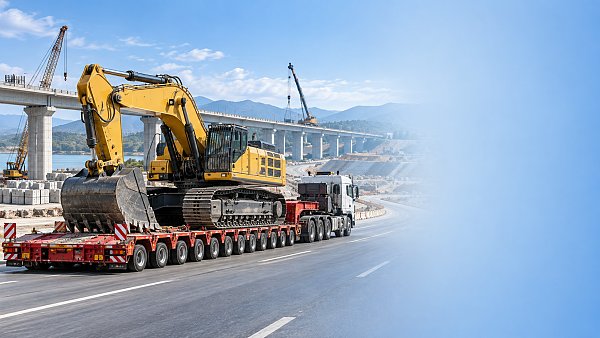
Heavy haulage trucks are often the better choice when cargo dimensions remain within a workable envelope for multi-axle trailers and standard prime movers. They suit routes with decent pavement quality, known bridge capacities, and predictable turning radii.
They are especially effective in these situations:
- Long regional transport where road permits are available without major route engineering.
- Projects requiring faster dispatch and tighter commercial transport scheduling.
- Cargo that can be broken into transportable units without harming installation efficiency.
- Corridors with service support for tractors, maintenance, escort teams, and fuel access.
For many infrastructure packages, heavy haulage trucks offer the best balance between transport capability and operating cost. They can also reduce coordination complexity when multiple loads must move in sequence over long distances.
This matters in road machinery deployment, mine support equipment, and certain crane components where oversized cargo is serious, but not structurally extreme.
When modular transporters become the stronger answer
Modular transporters stand out when weight concentration, cargo footprint, or site maneuvering makes trailer-based transport too restrictive. Their key advantage is not just capacity. It is controlled load distribution and movement flexibility under demanding conditions.
That difference becomes decisive in several cases:
- TBM main bearing sections, cutterheads, and backup modules with difficult center-of-gravity behavior.
- Large mining components crossing weak roads, temporary works, or uneven ground.
- Petrochemical and power modules that are too large to dismantle economically.
- Site entries demanding crab steering, lateral adjustment, or very low-speed precision positioning.
In these situations, modular transporters can prevent cargo splitting, reduce lifting interfaces, and lower the chance of route failure. They may cost more to mobilize, but they often protect the broader project economics.
The decision is really about route engineering
A common mistake is choosing equipment before understanding the route. The route should shape the transport solution, not the other way around. Heavy haulage trucks may look sufficient until bridge load spread, slope transitions, or turning geometry are modeled properly.
Modular transporters are often selected after route analysis reveals one of three constraints: concentrated axle loading, insufficient maneuvering space, or unstable ground conditions. In practice, route engineering often determines whether a transport plan is viable at all.
This is where intelligence-led planning becomes valuable. The strongest transport decision comes from combining cargo physics, route surveys, permit strategy, and installation sequencing into one model.
Cost should be measured beyond freight rates
Comparing price tags alone often leads to the wrong conclusion. Heavy haulage trucks may have a lower direct transport rate, but route modifications, partial disassembly, and extra lifting events can erase the savings.
Modular transporters may look more expensive at the transport stage, yet reduce total project cost by preserving assembly integrity and avoiding expensive field rework. In oversized cargo, the cheapest move is not always the least costly decision.
A better cost view includes:
- Permit and escort complexity across every jurisdiction.
- Road reinforcement, bridge checks, and temporary civil works.
- Disassembly and reassembly labor at both ends.
- Installation delay risk caused by late or damaged cargo.
- Insurance exposure linked to route uncertainty and cargo handling frequency.
Typical project environments
TBM and underground works
TBM logistics often involve ports, urban roads, and constrained shaft access. Heavy haulage trucks work well for support systems and segmented loads. Modular transporters become more suitable for oversized shield sections, cutterheads, or awkward modules with narrow route tolerances.
Open-pit mining projects
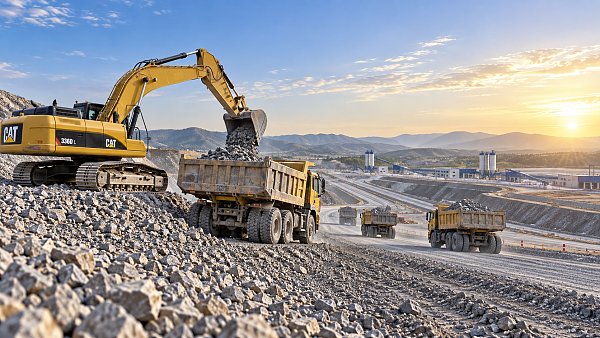
Mining corridors can include altitude, dust, poor pavement, and temporary haul access. Heavy haulage trucks remain useful for many machine components. Yet modular transporters offer clear advantages where ground bearing pressure and off-road transitions threaten transport stability.
Wind, nuclear, and petrochemical construction
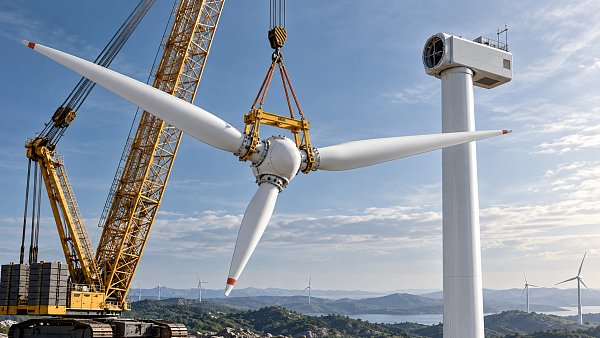
These sectors increasingly depend on larger prefabricated units. The more value embedded in one transported module, the more important controlled movement becomes. That often shifts the balance toward modular transporters, especially near final positioning areas.
A practical way to decide
The most reliable decision process starts with facts that can be measured early. That means transport weight, axle reactions, center of gravity, cargo envelope, road class, bridge data, and site turning limits.
From there, several questions help clarify whether heavy haulage trucks are enough or whether modular transporters are justified:
- Can the cargo move as one piece without creating route failure risk?
- Will axle load distribution exceed bridge or pavement thresholds?
- Does site entry require precision steering beyond standard trailer geometry?
- Is faster mobilization worth possible extra handling later?
- Would a higher transport cost reduce overall schedule and installation risk?
That approach is increasingly relevant as projects become larger and less tolerant of logistics errors. In many cases, the right answer is not one platform for the entire journey. Heavy haulage trucks may cover long-distance transfer, while modular transporters handle the final constrained segment.
What to review next
Choosing between heavy haulage trucks and modular transporters should begin with route truth, not transport habit. The better fit depends on cargo geometry, load spread, surface conditions, permit pathways, and the cost of being wrong.
A useful next step is to build a side-by-side transport matrix for the project package. Compare load cases, route constraints, handling stages, and schedule sensitivity. That makes it easier to identify where heavy haulage trucks remain efficient and where modular transporters protect execution quality.
For complex infrastructure and heavy equipment programs, the decision improves further when transport analysis is linked with broader project intelligence. That includes equipment evolution, corridor conditions, and construction sequencing, which is exactly where deeper industry observation creates practical value.
Related News
 Sep 27, 2026Heavy Equipment Selection Factors for Matching Machine Capacity to Jobsite ConditionsHeavy equipment selection factors for matching capacity to jobsite conditions, improving productivity, safety, fleet efficiency, and total project cost control.
 Sep 26, 2026How to Select Wind Rotor Lifting Equipment for Safe Blade and Hub InstallationWind rotor lifting equipment selection guide: ensure safe blade and hub installation with the right lift method, load control, crane compatibility, wind limits, and compliance.
 Sep 25, 2026What Drives Heavy Haulage Cost on Oversized Construction Equipment Moves?Heavy haulage cost explained: discover how load dimensions, route surveys, permits, escorts, lifting plans, and scheduling shape reliable oversized equipment transport budgets.
 Sep 24, 2026Supplier Management Frameworks That Reduce Delays on Large Construction ProjectsLarge-scale construction projects supplier management frameworks help prevent costly delays with risk-based controls, milestone tracking, quality oversight, and escalation plans for critical packages.
Ms. Elena Rodriguez
Weekly Insights
Stay ahead with our curated technology reports delivered every Monday.