
Why open-pit mining costs can rise before output does
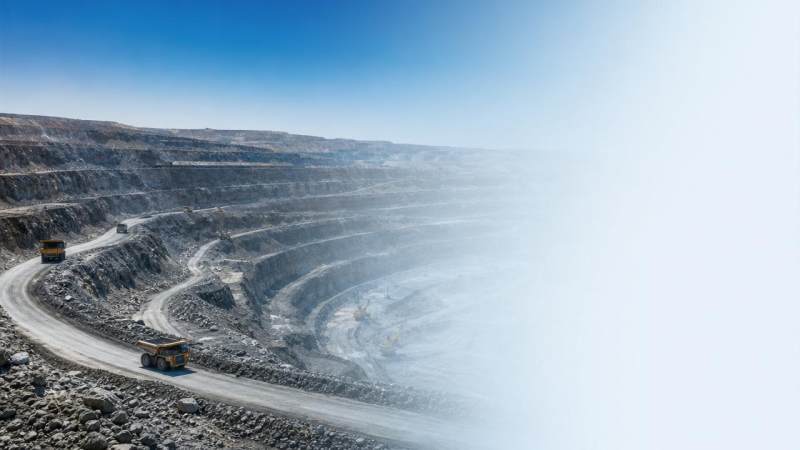
In open-pit mining, costs often rise before tonnage responds. That pattern is not always a sign of weak execution. It usually reflects mine sequencing, waste movement, longer hauls, and lower short-term equipment productivity. Understanding this timing gap helps explain why spending can accelerate while output remains flat, and why early cost pressure can still support stronger long-term economics.
Why a checklist matters before judging rising open-pit mining costs
Cost review in open-pit mining often becomes distorted when budgets are compared against near-term production only. A pit is a geometric system, not a straight-line factory. Material has to be uncovered, access maintained, benches developed, and haul profiles adjusted before ore flow improves.
A checklist prevents shallow conclusions. It separates structural cost escalation from controllable loss. It also supports better capital discipline, because many early cost increases are linked to future access, safety, and reserve conversion rather than immediate metal output.
This matters across the broader heavy-equipment ecosystem tracked by TF-Strategy, where machine physics, haulage strategy, and ground conditions often explain financial variance more accurately than headline production numbers alone.
Core checklist: what to test when open-pit mining costs rise first
Use the following checklist before labeling higher costs as underperformance in open-pit mining.
- Check stripping ratio movement. Rising waste-to-ore volumes often push drilling, blasting, loading, and haulage costs higher months before saleable output improves.
- Measure haul distance changes. As the pit deepens, cycle times lengthen, truck queues grow, and fuel burn per tonne increases even with stable fleet availability.
- Review vertical lift and ramp geometry. More elevation gain and tighter traffic design reduce payload efficiency and increase tire, brake, and engine stress.
- Track ore release timing. Bench preparation, dewatering, and wall support can delay ore access while pre-stripping costs continue to accumulate.
- Compare equipment utilization with effective productivity. High operating hours do not guarantee low unit cost if trucks wait on shovels or shovel passes increase.
- Audit blast outcomes. Poor fragmentation raises dig time, secondary breakage, crusher loading variability, and fuel use across the downstream chain.
- Test fuel intensity by route and material type. Wet ground, uphill segments, and rolling resistance can sharply increase litres per tonne moved.
- Assess maintenance timing. Component replacement often rises during pit transition phases when utilization stays high under harder operating conditions.
- Verify contractor scope creep. Temporary road works, pumping, slope remediation, and rehandling can inflate costs without immediate production gains.
- Separate sustaining work from growth work. Some spending protects future mine access and should not be evaluated against current-month tonnes only.
Why open-pit mining costs front-load before output expands
1. Waste must move before ore can move
In open-pit mining, revenue depends on ore, but ore is rarely exposed at the moment it is needed. Pre-stripping creates future access. That means current cost can reflect tomorrow’s production, not today’s shipment.
This is especially visible during pushbacks, cutbacks, and new phase development. Waste volumes surge first. Ore release follows later, after slopes, roads, and working widths are established.
2. Pit depth changes the cost physics
As pits deepen, every tonne tends to travel farther and climb more. That changes cycle time, queue exposure, fuel intensity, and maintenance demand. The fleet may look fully deployed while unit cost quietly worsens.
The result is a common mismatch: more machine hours, more diesel, and more tire wear, but little near-term output growth. In deep open-pit mining, geometry often drives this outcome more than operator effort.
3. Mine transitions disturb utilization
Transitions between benches, phases, and haul routes reduce system smoothness. Shovels reposition. Trucks re-route. Drill plans shift. Short interruptions multiply across the mining chain and push cost upward before tonnage stabilizes.
In some cases, temporary technical support information may sit inside broader intelligence workflows, such as 无, where project and equipment context are stitched into decision reviews. Even then, the operational test remains the same: determine whether cost is transitional or structural.
Scenario notes: how the pattern changes by mine condition
Early-stage pit development
In early development, open-pit mining costs often look inflated because roads, drainage, starter ramps, and initial waste campaigns dominate activity. Production indicators can stay modest until stable ore faces are opened.
This phase should be judged against schedule logic, strip plan integrity, and access readiness, not output alone.
Mature pit with deepening haul profiles
In a mature open-pit mining operation, cost pressure often comes from longer hauls, lower travel speed, congestion, and maintenance fatigue. Ore tonnes may remain steady, but cost per tonne rises because the route has become heavier and slower.
This is where dispatch design, trolley assist potential, road quality, and truck-shovel matching become more decisive than raw fleet size.
High-rainfall or unstable ground conditions
Wet weather changes everything in open-pit mining. Haul resistance rises, berm repair becomes frequent, dewatering costs increase, and blast performance can deteriorate. Output may lag simply because the system is spending more effort preserving safe access.
Under these conditions, spending can be defensive rather than inefficient. The key question is whether the extra cost protects continuity and wall stability.
Commonly missed risks behind early cost escalation
One common mistake is treating all cost increases in open-pit mining as operating failure. Some increases are planned consequences of mine sequence. If they are not separated from avoidable losses, corrective action can become misdirected.
Another missed risk is relying on average utilization. A truck fleet can show strong calendar hours while suffering poor effective throughput because of queuing, underloading, or bad fragmentation. Cost rises first because hidden friction rises first.
A third risk is ignoring deferred maintenance. During aggressive stripping campaigns, mines may hold production equipment in service longer. That can protect short-term movement but create later spikes in downtime and repair cost.
A fourth risk is failing to classify spending correctly. Road relocation, wall buttressing, pumping, and phase opening may support reserve access over several quarters. Judging them only against one month of output gives a false signal.
Practical execution steps for better cost control in open-pit mining
- Build a bridge metric between cost and future ore access, such as waste moved per planned ore bench released.
- Report haul distance, vertical lift, and fuel per tonne beside production, not after production.
- Segment unit costs into structural mine-sequence drivers and controllable operational losses.
- Review fragmentation quality, queue time, and loading accuracy weekly during pushbacks and route changes.
- Tie maintenance planning to pit transition stages so component wear does not surprise later quarters.
- Use external intelligence carefully when evaluating fleet strategy or mine-phase timing, including references such as 无 where relevant context supports internal review.
Conclusion: read the sequence, not just the spending line
When open-pit mining costs rise before output does, the explanation is often embedded in the mine plan. Stripping ratios, haul geometry, access preparation, and utilization quality usually move ahead of production response.
The smartest next step is simple: review cost through a sequence-based checklist. Separate future-enabling work from avoidable inefficiency. Once that distinction is clear, decisions on budget, timing, and risk become far more accurate.
Related News
 Sep 29, 2026Infrastructure Construction Standards: A Project Manager’s Guide to ComplianceInfrastructure construction standards guide for project managers: turn requirements into field controls, hold points, traceability, and compliant delivery.
 Sep 28, 2026How to Specify Custom Mining Equipment for Abrasive Ground and High-Load HaulageCustom mining equipment for abrasive ground and high-load haulage: learn how to optimize payload, wear protection, powertrains, uptime, and lifecycle cost for safer, reliable production.
 Sep 29, 2026What belongs in a construction equipment package sourcing plan?Construction equipment package planning sourcing guide: learn how to match machines, attachments, site conditions, supplier support, costs, and acceptance gates for reliable project delivery.
 Sep 29, 2026How to verify equipment durability before approving suppliers at scaleHow can heavy equipment manufacturers verify durability and manage supplier risk at scale? Explore practical testing, traceability, audits, and control strategies.
Ms. Elena Rodriguez
Weekly Insights
Stay ahead with our curated technology reports delivered every Monday.