
How to Evaluate a High-Altitude Mining Solutions Manufacturer for Remote Projects

At a remote mine above typical operating elevations, a machine that performs acceptably at a dealer yard can become a costly source of delays. Engines lose available power, cooling margins narrow, hydraulic response can change, and a simple replacement part may take far longer to reach site than the repair itself. For a procurement team, the immediate purchase price is therefore a weak indicator of value.
The right way to evaluate a high-altitude mining solutions manufacturer is to test whether its equipment, engineering process, parts model, and field-support plan are designed around the mine’s actual duty cycle. Do not accept a generic claim that a truck, excavator, drill, or support machine is “suitable for altitude.” Ask for operating limits, derating logic, site-specific configuration details, and a practical recovery plan for failures that can stop production.
Start with the operating envelope, not the equipment brochure
Before comparing suppliers, translate the project conditions into an operating envelope. Elevation alone is not enough. A site at high altitude with mild temperatures and short hauls creates a different demand from a high-altitude operation with steep ramps, abrasive material, freezing nights, and long distances to maintenance infrastructure.
The procurement specification should state conditions that can be verified during supplier evaluation:
- Normal and maximum operating elevation, including travel routes between pit, dump point, workshop, and fuel area.
- Expected ambient temperature range, daily temperature swings, solar exposure, wind, dust, rain, snow, and humidity.
- Material density, fragmentation, abrasiveness, moisture variation, and expected payload profile.
- Haul-road grades, rolling resistance, turning radius, road surface condition, and downhill braking demand.
- Shift pattern, planned utilization, idling periods, refuelling arrangements, and maintenance windows.
- Available fuel quality, electrical supply, workshop tooling, communications coverage, and local technician capability.
This information prevents a common procurement mistake: requesting a nominal equipment model and then asking suppliers to “confirm suitability.” A serious manufacturer should use the operating envelope to establish configuration requirements and performance boundaries. If the response remains limited to catalogue dimensions, rated power, and a broad altitude statement, the evaluation has not reached the real operating risk.
Examine altitude derating as a system issue
Lower air density reduces the oxygen available for combustion and affects heat rejection. On diesel-powered equipment, this can reduce usable engine output unless the engine, turbocharging system, fuel control, and cooling package are properly matched to altitude. Buyers should not treat rated engine power as haul performance. The relevant question is how much power remains available at the intended elevation, temperature, and load condition.
Ask the manufacturer to provide a documented derating curve or equivalent engineering statement showing the relationship between elevation, ambient temperature, and available power. The document should identify the engine rating standard, any assumed fuel characteristics, and whether the proposed configuration includes changes to air intake, turbocharging, cooling, calibration, or transmission ratios.
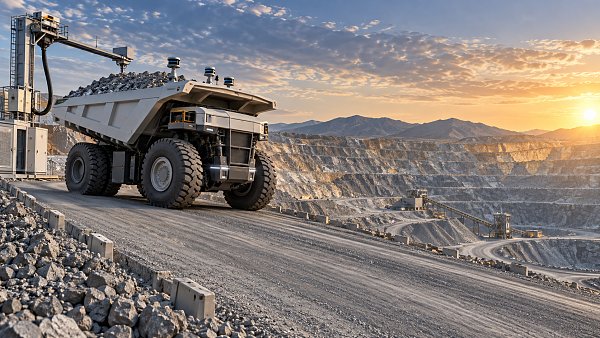
For haulage equipment, request a gradeability and retarding assessment based on loaded and empty travel. A truck may climb an acceptable grade at a reduced speed, yet still create a production bottleneck if its cycle time rises beyond the fleet plan. On long descents, inadequate retarding capacity can accelerate brake wear and impose operating restrictions. For excavators and loaders, examine whether hydraulic performance is maintained under continuous high-load work rather than only during short, unloaded movements.
Look beyond engine power to thermal management
At remote elevation, overheating is rarely just an engine problem. Cooling systems must manage the engine, transmission, hydraulic oil, charge air, batteries, and sometimes electric drive components. Dust accumulation, limited cleaning water, blocked radiator cores, and repeated low-speed operation can reduce heat-transfer performance further.
Evaluate the proposed cooling system in practical terms. Can operators and maintenance staff inspect and clean heat exchangers safely? Are radiator cores accessible without extensive disassembly? Does the machine use reversible fans, variable-speed fans, screens, or other dust-management features where appropriate? A feature list is less useful than a clear explanation of how the design will be serviced under the site’s expected contamination level.
Ask how temperature monitoring is arranged. Useful monitoring includes distinct alerts for coolant, hydraulic oil, transmission or drive temperature, intake restriction, and fan-system faults. The supplier should explain alarm thresholds, derate behavior, shutdown logic, and whether fault history can be retrieved remotely or locally. A warning system that only tells an operator the machine is already hot does little to prevent a repeated production interruption.
Cold conditions deserve equal attention. Low overnight temperatures can affect battery availability, fuel flow, lubricant viscosity, seals, and hydraulic warm-up time. Confirm the grade of lubricants, fuel-heating or filtration arrangements, battery specification, preheating options, cab heating, and cold-start procedures. The most appropriate setup depends on the actual temperature range and shift schedule; additional equipment is not automatically better if it adds components that the site cannot maintain.
Assess the machine around its whole work cycle
Procurement decisions often focus on the primary machine while overlooking interfaces that determine availability. A high-altitude mining solution should be evaluated as a working system: loading, hauling, dumping, refuelling, inspection, communications, and recovery all affect the cost per productive hour.
For a truck fleet, examine the matching of loader bucket capacity, truck body volume, payload measurement method, tyre selection, and road profile. Poor matching can lead to persistent underloading, overload events, excessive passes, or tyre heat problems. Tyres require particular scrutiny because heat generation, cut resistance, air pressure management, and supply lead times may all be critical in isolated operations.
For excavators, drills, and auxiliary machinery, review attachment compatibility, hydraulic flow requirements, ground bearing pressure, access for daily checks, and recovery points. A machine may be technically capable of working at altitude but still be unsuitable if a routine hose replacement requires special tools unavailable on site or if recovery after a failure requires lifting equipment the mine does not have.
Separate genuine engineering support from a standard quotation
The quality of pre-sale technical work is often a strong indicator of what support will look like after delivery. A capable manufacturer should ask detailed questions about elevation, temperature, material, road conditions, fuel, maintenance facilities, and planned production. It should also identify assumptions that remain unverified rather than presenting every estimate as certain.
During technical clarification, ask for a configuration register that identifies each site-specific selection and its purpose. This may cover engine settings, cooling equipment, filtration, tyres or tracks, brake and retarding arrangement, lubrication choices, cold-weather equipment, fire-suppression interface requirements, telematics hardware, and spare-parts recommendations. The document should distinguish standard equipment, optional equipment, exclusions, and buyer-provided infrastructure.
Also test the manufacturer’s willingness to discuss limitations. Clear limits are valuable. A supplier that can state where performance may be restricted, what operating practices are required, and what conditions invalidate a stated duty assumption is usually more useful than one offering unconditional assurances. Procurement teams need a defensible basis for comparison, not a promise that avoids technical detail.
Make service logistics part of the commercial evaluation
Remote projects turn ordinary service delays into extended downtime. The key question is not simply whether the manufacturer has service capability somewhere in the region. It is whether the proposed support model can function during the first operating months, when commissioning issues, operator familiarization, and early component failures are most likely to occur.
Request a written support plan covering commissioning, operator and technician training, scheduled inspections, escalation contacts, remote diagnostic access, field-service mobilization, and parts delivery routes. Clarify who is responsible for travel permissions, transport to site, accommodation, lifting support, and access to the machine. These details are frequently left vague until a failure occurs.
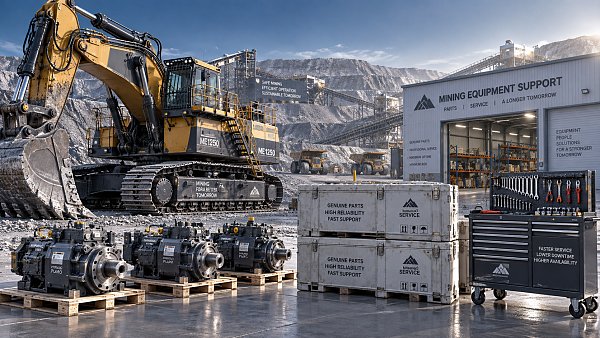
Spare-parts planning should be tied to equipment criticality and lead time. Ask the supplier to classify recommended inventory into consumables, planned-maintenance parts, high-wear components, and production-critical failure items. A site stock proposal should explain why each part is included, not merely provide a long catalogue list. Focus especially on filters, hoses, sensors, belts, seals, electrical components, cooling-system parts, brake or retarding components, and items that require matching software or calibration after replacement.
For electronically controlled machinery, establish ownership and access rights for diagnostics. Determine whether site personnel can read fault codes, perform approved parameter checks, and obtain service documentation without waiting for a travelling technician. Secure remote connectivity is useful, but it should not become a single point of failure where communications are intermittent.
Compare lifecycle cost using visible assumptions
A lower acquisition price can be offset by fuel consumption, tyre wear, service travel, parts holding, reduced payload, slower cycle times, or more frequent downtime. Conversely, a higher-priced configuration may not be justified if its claimed performance benefit is based on operating conditions that do not resemble the mine plan.
Build a comparison model with the same assumptions for every bidder. Include purchase and delivery scope, commissioning, fuel or energy consumption basis, consumables, scheduled maintenance labor, recommended site inventory, expected replacement intervals, service response arrangements, and any necessary workshop equipment. Where suppliers use different assumptions, record the difference rather than averaging it away.
Do not treat predicted availability as a standalone number. Ask what it includes and excludes: planned maintenance, weather delays, operator errors, waiting time for parts, communications failures, and road-related damage may be treated differently by each supplier. More revealing questions are which components are expected to drive maintenance activity, what inspection intervals apply at the proposed duty level, and what onsite actions can prevent a minor warning from becoming a major stoppage.
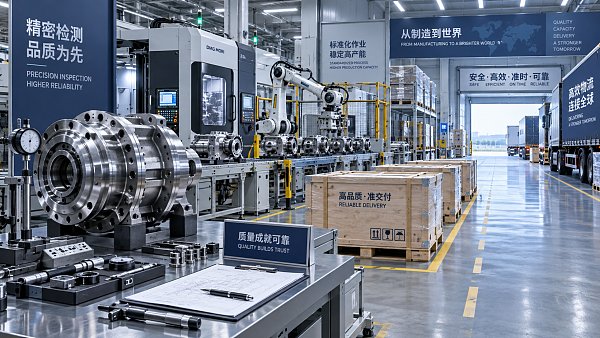
Use the factory or technical review to test decision readiness
A visit, virtual review, or formal technical meeting should be used to validate processes, not simply inspect finished machines. Ask to see how configuration changes are controlled, how component serial numbers are tracked, how service bulletins are communicated, and how engineering questions from field teams are handled. For a remote project, disciplined documentation can be as important as physical build quality because site technicians will depend on accurate parts identification and service instructions.
Prior to contract award, resolve acceptance criteria. These may include configuration verification, documentation delivery, operator and maintenance training content, commissioning responsibilities, performance verification conditions, and the process for handling defects identified after delivery. Avoid acceptance language based only on broad phrases such as “fit for purpose” unless the required operating conditions and measurement method are defined elsewhere in the contract.
A manufacturer is a stronger candidate when it can connect every major recommendation to a site condition: the cooling package to ambient temperature and dust, drivetrain selection to grade and payload, filtration to contamination risk, spare holding to transit time, and training scope to maintenance capability. That connection is what turns equipment supply into a workable high-altitude mining solution rather than a collection of specifications.
Related News
 Sep 22, 2026How to Evaluate a High-Altitude Mining Solutions Manufacturer for Remote ProjectsEvaluate a high-altitude mining solutions manufacturer with proven derating, cooling, service logistics, and lifecycle-cost support for remote projects.
 Sep 21, 2026Industrial Supplier Evaluation: A Risk-Based Scorecard for Quality, Capacity, and DeliveryIndustrial supplier evaluation made practical: use a risk-based scorecard to assess quality, capacity, and delivery reliability, reduce project risk, and select suppliers with confidence.
 Sep 20, 2026Comparing Heavy Equipment Warranty Suppliers: Coverage, Claims, and Downtime RiskSupplier comparison for heavy equipment warranty: evaluate coverage, claims speed, service networks, and downtime risk to protect uptime and project costs.
 Sep 19, 2026Mining Truck Technology Trends: What Fleet Managers Should Prioritize for 2026Mining truck technology trends for 2026: prioritize electrification, autonomy, predictive maintenance, and road intelligence to improve fleet uptime, safety, and cost control.

Ms. Elena Rodriguez
Weekly Insights
Stay ahead with our curated technology reports delivered every Monday.