
How to Evaluate Open-Pit Mining Solutions for Haul Road Layout, Drilling, and Loading
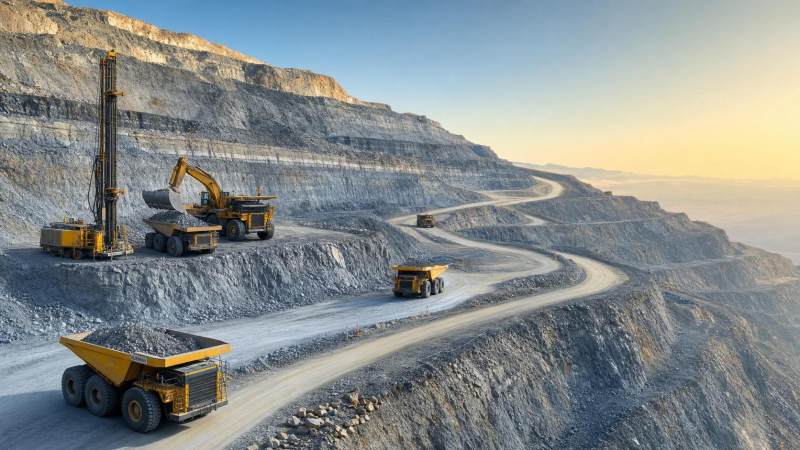
Why open-pit mining solutions must be judged in operating context
Choosing open-pit mining solutions is rarely a simple equipment exercise. A layout that looks efficient on paper can fail once gradient, fragmentation, and traffic rhythm begin to interact.
In practical mine development, haul road layout, drilling discipline, and loading balance shape the real economics of movement. They influence fuel burn, tire life, dilution, rework, and shift stability.
That is why strong open-pit mining solutions are evaluated as connected systems. Road geometry affects truck cycle times. Drilling quality affects blast outcomes. Blast outcomes then reshape loading speed and road maintenance pressure.
Within heavy industry intelligence, this systems view matters because physical machine parameters only create value when matched to site conditions and construction logic. That perspective sits close to TF-Strategy’s broader focus on power, precision, and operational fit.
Actual mine conditions change what good open-pit mining solutions look like
Two pits can target similar annual output yet require very different open-pit mining solutions. The difference usually starts with geology, haul profile, bench design, and weather exposure.
A deepening pit with long vertical development often prioritizes ramp efficiency and truck endurance. A wider, shallow pit may focus more on loading congestion, face availability, and drainage resilience.
Ore variability also matters. Hard, abrasive rock raises drilling wear and changes fragmentation expectations. Softer formations may reduce penetration difficulty but increase wall control concerns and wet-condition instability.
More importantly, timing changes the answer. Early-stage stripping, peak production, and pushback transitions do not demand identical open-pit mining solutions, even inside the same operation.
A quick comparison of demand differences
Before comparing vendors, it helps to map where the operating pressure actually sits. The table below shows why similar pits can reach different decisions.
When haul road layout drives the whole decision
In many operations, haul road performance decides whether open-pit mining solutions deliver planned output. Road layout is not only about access. It shapes speed consistency, tire stress, and queuing behavior.
Steep grades and tight curves may still be workable in low-volume phases. Under sustained production, the same geometry can create bottlenecks, overheating, brake wear, and reduced payload confidence.
A more reliable evaluation looks beyond maximum gradient figures. It checks cumulative elevation change, passing opportunities, drainage after rainfall, berm condition, and the effect of mixed truck classes on traffic flow.
This is also where large road machinery and mining dump truck data become strategically useful. Surface quality, rolling resistance, and road recovery speed can materially change total cost of transport.
- Review loaded and empty travel separately, because the constraint is often different in each direction.
- Test road layout against wet-season performance, not only dry benchmark conditions.
- Measure intersection delay and spotting time, since congestion can erase theoretical speed gains.
Drilling quality matters most where geology punishes inconsistency
Some open-pit mining solutions appear competitive until drilling variance begins to spread through the operation. Hole deviation, burden inconsistency, and uneven depth control usually surface later as fragmentation problems.
In competent rock, small drilling errors can create oversized material, toe problems, and slower excavation. In more variable formations, the same errors may increase dilution or weaken wall control.
That is why drilling should be judged by repeatability, not only penetration rate. Fast drilling means little if the blast pattern cannot produce a predictable dig face for the loading fleet.
A useful check is to compare drill accuracy with downstream consequences. If secondary breakage rises, bucket fill factor falls, or crusher surges become frequent, the drilling package may be underperforming even when meterage looks acceptable.
Where evaluation should go deeper
- Hole navigation reliability under dust, vibration, and poor visibility.
- Bit and consumable life under the site’s actual abrasiveness profile.
- Ease of integrating blast data with planning and dispatch systems.
- Ability to maintain pattern discipline during shift changes and face moves.
Loading zones reveal whether the solution is truly balanced
Loading efficiency is often treated as a machine selection issue. In reality, open-pit mining solutions perform well only when the dig face, fragmentation, truck positioning, and support access work together.
A narrow loading area may suit short campaigns or selective extraction. During high-volume phases, it can reduce maneuvering space, delay spotting, and create unsafe overlap between trucks, excavators, and dozers.
Face condition also changes the answer. Well-fragmented, dry material supports smoother bucket fill and cleaner truck loading. Sticky or blocky material slows cycle time and raises variance between operators and shifts.
For that reason, loading should be evaluated as the operational proof of upstream decisions. If drilling and road design are right, loading zones usually become more predictable without forcing excessive machine oversizing.
Common misreads when comparing open-pit mining solutions
One common mistake is to compare open-pit mining solutions using headline equipment capacity alone. Rated payload, drill meterage, or excavator bucket size do not describe how the site will actually behave.
Another misread is assuming similar pits have similar requirements. Two sites may share strip ratio and annual tonnage while differing sharply in road maintenance demand, wall sensitivity, and blast control needs.
Short-term economics can also distort selection. Lower purchase cost may be attractive, yet tire consumption, rehandle, consumables, and road rehabilitation can make the cheaper option structurally expensive.
Digital features deserve the same caution. Remote monitoring, autonomous haul support, and integrated planning tools matter only when the site has the communication discipline and maintenance structure to use them well.
A practical way to match solutions to real operating pressure
A grounded evaluation process starts by ranking the mine’s dominant constraints. Some operations are road-limited. Others are drill-limited, crusher-limited, or face-access limited. The right open-pit mining solutions respond to that ranking.
It helps to build comparison criteria around operating consequences rather than generic features. Instead of asking which package is most advanced, ask which package stabilizes cycle time under your hardest routine conditions.
This method creates a more durable comparison. It also aligns better with strategic intelligence work, where equipment decisions are linked to long-term infrastructure delivery, not isolated machine preferences.
What to confirm before moving to final selection
Before finalizing open-pit mining solutions, confirm the site assumptions behind each proposal. Check road design criteria, expected blast fragmentation, loading zone dimensions, maintenance support, and seasonal operating constraints.
Then compare total operating exposure, not just capital figures. Review how each option affects cycle stability, consumable life, operator consistency, and schedule recovery after disruption.
The most dependable open-pit mining solutions are usually the ones that stay coherent across road layout, drilling execution, and loading behavior. When those three elements reinforce each other, cost control becomes more realistic.
A sensible next step is to map the mine by operating scenario, compare constraints under dry and wet conditions, and set site-specific acceptance criteria before any final commitment.
Related News
 Sep 30, 2026What Does an Ultra-Large Excavator Really Cost Over Its Service Life?Ultra-large excavators cost far more than purchase price. Explore lifecycle expenses, uptime risks, energy use, maintenance, and cost-per-tonne insights.
 Sep 29, 2026Infrastructure Construction Standards: A Project Manager’s Guide to ComplianceInfrastructure construction standards guide for project managers: turn requirements into field controls, hold points, traceability, and compliant delivery.
 Sep 28, 2026How to Specify Custom Mining Equipment for Abrasive Ground and High-Load HaulageCustom mining equipment for abrasive ground and high-load haulage: learn how to optimize payload, wear protection, powertrains, uptime, and lifecycle cost for safer, reliable production.
 Sep 30, 2026When does a lower construction machinery price raise lifecycle costs?Construction machinery pricing can hide costly risks. Discover how downtime, fuel use, maintenance, productivity, and resale value shape total lifecycle costs.
Ms. Elena Rodriguez
Weekly Insights
Stay ahead with our curated technology reports delivered every Monday.