
How to Evaluate a Heavy Machinery Information Platform for Project Equipment Sourcing
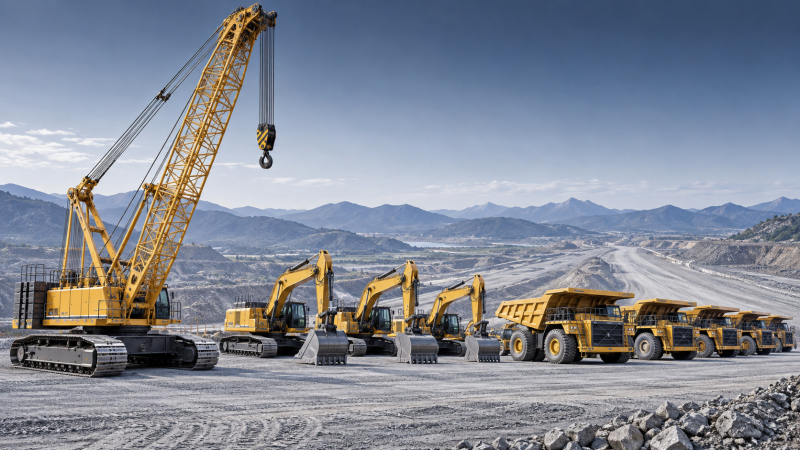
A heavy machinery information platform should be judged by whether it reduces uncertainty before a high-value equipment commitment—not by the volume of news, machine listings, or specification tables it publishes. For TBMs, crawler cranes, mining dump trucks, large excavators, and road machinery, the decisive question is rarely “Which machine has the highest rated capacity?” It is whether the available information can connect equipment capability to ground conditions, lift plans, haul profiles, regulations, logistics constraints, service access, and the commercial consequences of downtime.
A platform that only aggregates manufacturer brochures can help create an initial shortlist. It cannot, on its own, support a defensible sourcing decision. The more specialized the machine and the more severe the operating environment, the more important it becomes to test the quality, traceability, and decision relevance of the information behind the platform.
Start with the decision the platform must support
“Heavy machinery” is too broad to be a useful sourcing category. A platform may be strong for comparing standard excavators yet provide little value for a hard-rock TBM, a 1,000-tonne crawler crane, or a battery-electric mining truck fleet. Evaluation should begin with the decision at hand and the cost of getting it wrong.
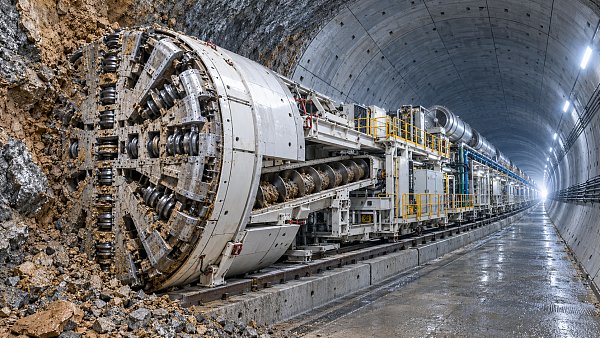
For a tunnel project, useful intelligence may include geology, groundwater conditions, tunnel diameter, segment configuration, cutterhead design, cutter consumption assumptions, backup train arrangement, power demand, slurry or earth-pressure balance suitability, and the availability of refurbishment capability. A published thrust force or installed power figure is not enough to establish project fit.
For a crawler crane, rated load charts matter, but they must be read with boom and jib configuration, working radius, ground bearing pressure, transport envelope, assembly time, wind restrictions, local lifting rules, and accessory availability. For open-pit equipment, payload and engine output need to be considered alongside haul-road gradient, altitude, ambient temperature, tyre availability, fuel or charging infrastructure, dispatch-system compatibility, and maintenance planning.
The platform should therefore make it possible to move from a generic machine category to a project-specific comparison. If its content cannot be filtered, interpreted, or cross-referenced against the conditions that govern production and risk, it is primarily a discovery tool rather than a sourcing intelligence resource.
Specification depth matters more than specification length
Long specification lists can create an impression of precision while leaving the critical comparison unresolved. The better test is whether the platform distinguishes between nominal ratings and operating capability under defined conditions.
For example, a mining dump truck’s nominal payload does not explain productive payload under site-specific density, body configuration, road condition, rolling resistance, and altitude. A crane’s maximum moment does not replace a configuration-specific lift study. A road paver’s maximum paving width does not establish the quality achievable at a given layer thickness, mix temperature, grade-control arrangement, and compaction sequence.
Useful equipment records normally clarify:
- the measurement basis for performance figures;
- machine configuration, attachments, and optional systems included in the rating;
- operating limits, not only maximum values;
- interfaces with transport, power supply, consumables, digital systems, and site infrastructure;
- conditions that materially affect output, availability, or safety; and
- differences between a current production model, an upgraded variant, and a discontinued or refurbished unit.
Configuration control is particularly important in international sourcing. A machine described by a familiar model family may vary by engine emissions package, electrical standard, cabin arrangement, safety system, regional attachment interface, or software version. A platform should not treat model names as if they were complete technical identities.
It is also worth checking whether the site separates manufacturer-stated data from editorial interpretation. These are not equivalent. Original manufacturer data may be authoritative for stated dimensions and ratings, while independent analysis can add value by explaining limitations, trade-offs, or relevant application conditions. Reliable presentation makes that distinction visible.
Assess source traceability before trusting comparison tools
Comparison functions are only as reliable as their inputs. When evaluating a heavy machinery information platform, look for evidence that information can be traced to a primary or clearly identified source. This does not require every item to be a formal engineering document, but it does require a credible chain from claim to source.
Strong indicators include publication dates, model-year references, document links or citations, identification of whether a statement comes from the manufacturer, a project owner, a regulatory filing, a tender notice, or an editorial analysis. Platforms dealing with equipment technology should also make clear when a feature is commercially available, optional, under development, or demonstrated only in a limited application.
This distinction is essential for remote operation, automation, electrification, and condition-monitoring systems. A machine may support remote-control hardware without being ready for unattended operation. An electric haulage offering may be technically available while requiring charging, trolley-assist, battery exchange, or power-distribution arrangements that are absent from the proposed site. Treating these as simple product features can distort both capital cost and schedule risk.
Weak platforms often show similar signs: undated technical entries, copied descriptions across multiple models, no explanation of regional variation, and headlines that present an announced project or prototype as an operational deployment. Such material may still be useful as a signal to investigate, but it should not become a source for tender requirements, commercial assumptions, or technical compliance claims.
Project intelligence should be connected to equipment intelligence
Equipment selection is shaped by the project pipeline, but project news alone is not sufficient. The useful connection is between a project’s technical and contractual characteristics and the machinery likely to be required.
For tunnelling, relevant project intelligence includes alignment, geology, drive length, access conditions, spoil-handling method, segment supply arrangement, planned advance rate, and the division of risk in the contract. In lifting work, valuable signals include component weights, hub heights, installation sequence, port and laydown constraints, and whether the work requires a main crane, tailing crane, or specialized transport arrangement. In mining, the critical questions may concern stripping ratio, mine depth, haul distances, fleet replacement timing, and power availability.
A platform adds real value when it helps distinguish a confirmed requirement from a broad market signal. A new wind project does not automatically create a crawler crane purchase opportunity; the lifting scope may be performed by specialist contractors, rented equipment, or an existing fleet. A mine expansion does not necessarily mean a new truck order; the operator may extend existing equipment life, reassign units, or change the production sequence.
Project intelligence is most useful when it supports timing and fit rather than optimistic demand assumptions. Tender stage, funding status, contract award, delivery milestone, local-content obligations, and transport feasibility can all matter more than a project announcement.
Use total cost logic, not acquisition-price logic
Large equipment is frequently compared through purchase price because it is visible and easy to request. That approach can be misleading where utilization, downtime exposure, mobilization, consumables, and end-of-project disposal dominate the economics.
A credible platform need not calculate a universal total cost of ownership figure. Such a figure would be unreliable without site-specific assumptions. It should, however, identify the cost drivers that need to enter the commercial model and show why two apparently similar machines may create different cost profiles.
The most valuable content exposes assumptions. If a platform presents energy savings, productivity gains, or lower maintenance claims, it should indicate the operating context on which the claim depends. An efficiency statement based on a stable haul route, moderate climate, trained operators, and a fully supported service network cannot be transferred automatically to a remote high-altitude site.
For equipment purchased for a finite project, residual-value assumptions deserve the same discipline. Resale potential depends on configuration, remaining life, regulatory status, transportability, local demand, maintenance records, and whether the machine is specialized for one application. A platform that treats resale as a generic percentage of original price is not providing decision-grade commercial intelligence.
Supplier signals need to go beyond brand visibility
Brand recognition is not a substitute for deliverability. The relevant supplier question is whether the required machine, parts, technical support, documentation, and warranty commitments can be provided in the required location and time window.
Platform content should help verify practical supply capability: production status, regional distribution arrangements, dealer or service coverage, lead-time signals, parts warehousing, technician availability, overhaul capacity, and experience with the required emissions, electrical, or safety configuration. It should also help identify whether an offer is from an original manufacturer, an authorized distributor, an independent trader, a rental provider, or a refurbishment specialist. These channels carry different responsibilities and risks.
For used and refurbished machinery, equipment condition cannot be inferred from age, hours, or repainting. Useful intelligence should direct attention to maintenance history, major component rebuild records, structural inspection, software and control-system support, attachment completeness, and the availability of a verifiable serial-number trail. For cranes and other safety-critical lifting assets, inspection and certification requirements must be checked against the jurisdiction and planned use rather than assumed from a general statement of compliance.
Check how the platform handles standards and compliance
Compliance information requires particular caution because requirements vary by market, machine type, and operating use. A platform should explain the scope of a standard or certification rather than displaying logos or broad claims without context.
CE marking, for example, relates to applicable European Union product requirements and does not automatically establish suitability for every jobsite or country. Emissions rules depend on the engine category and destination market. Lifting equipment may be subject to additional inspection, operator, registration, and local authority requirements beyond the machine’s original conformity documentation. Electrical equipment may need voltage, frequency, connector, insulation, and hazardous-area compatibility checks.
Good platform content identifies what must be confirmed in original documentation: declaration of conformity where applicable, serial-number-specific records, load charts, inspection certificates, operator manuals, maintenance instructions, and country-specific import or operating requirements. It should not imply that a downloadable brochure settles a compliance question.
Evaluate usability as a control against decision error
The platform’s design affects sourcing quality when it determines whether important differences can be found quickly. Search tools should allow filtering by configuration, operating class, region, application, condition, and technology—not merely by brand and category. Technical terminology should be consistent, units should be clearly labeled, and conversion between metric and imperial values should not obscure the original source value.
Version history is especially useful. Updated content should show whether a change reflects a new model, a corrected specification, a regulatory revision, or a new project development. Without this, old and current information can become mixed in a sourcing file, creating avoidable errors in requests for quotation and technical evaluations.
The best platforms also preserve uncertainty instead of concealing it. Where information is incomplete, unconfirmed, configuration-dependent, or subject to site validation, that limitation should be stated plainly. In high-value equipment decisions, a visible information gap is manageable; a hidden assumption is far more dangerous.
A reliable platform does not replace engineering review, supplier due diligence, contract negotiation, or site-specific planning. Its value lies in improving the quality of those activities: narrowing the shortlist on sound grounds, identifying questions before they become commercial surprises, and separating credible equipment options from attractive but poorly supported claims. That is the standard against which any heavy machinery information platform should be measured.
Related News
 Oct 08, 2026How to Evaluate a Heavy Machinery Information Platform for Project Equipment SourcingHeavy machinery information platform guide: compare equipment fit, source reliability, lifecycle costs, supplier capability, and compliance to make smarter sourcing decisions.
 Oct 07, 2026How to Evaluate a Hydraulic System Component Supplier for Heavy Equipment UptimeChoose a hydraulic system component supplier with proven quality, technical fit, and reliable delivery to reduce heavy equipment downtime and lifecycle costs.
 Oct 06, 2026Selecting Petrochemical Overhead Cranes for Hazardous Areas and Heavy Process LoadsPetrochemical overhead cranes for hazardous areas: learn how to match capacity, duty, controls, corrosion protection, and maintenance access for safer, reliable lifts.
 Oct 05, 2026Tunneling Equipment Specification Planning: Key Criteria for Ground and Project RisksEquipment specification planning tunneling: learn how to match TBM systems to ground risks, geometry, safety, logistics, and lifecycle cost for more reliable project delivery.
Ms. Elena Rodriguez
Weekly Insights
Stay ahead with our curated technology reports delivered every Monday.