
Construction safety gaps that appear during fast-track projects
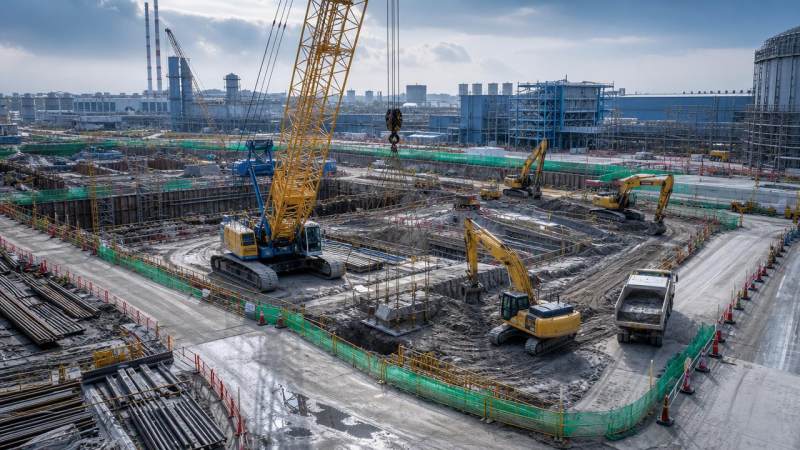
In fast-track projects, compressed timelines often expose hidden construction safety gaps long before quality issues become visible. For safety managers and quality control teams, the real challenge is balancing speed, coordination, and risk control without compromising site discipline. This article explores where construction safety breaks down under schedule pressure and how heavy-industry projects can respond with stronger oversight, planning, and operational precision.
Why construction safety is becoming harder to protect in accelerated delivery models
Across infrastructure, mining support works, tunneling access preparation, energy facilities, and heavy lifting programs, fast-track delivery is no longer an exception. Owners are pushing earlier commissioning, EPC teams are overlapping design and execution, and contractors are mobilizing major equipment before all interfaces are fully stabilized. This shift changes the risk profile of construction safety in a very practical way: hazards emerge not only from dangerous tasks, but from unstable sequencing, partial information, and rapid workforce turnover.
For safety managers, the main signal is clear. In traditional schedules, safety planning could follow a relatively linear path from design review to work package control. In fast-track projects, the site often moves faster than the decision chain. Temporary works evolve repeatedly, logistics routes are revised under pressure, and subcontractor boundaries blur. As a result, construction safety is increasingly shaped by coordination quality, data visibility, and equipment interface control rather than by rulebooks alone.
This matters especially in heavy-industry environments observed by TF-Strategy, where crawler cranes, TBM support systems, large excavators, road machinery, and mining haulage assets interact with dense site operations. When schedule compression meets high-energy equipment, the cost of small planning failures rises sharply. A delayed handover area, an unverified lifting path, or an unfinished geotechnical update can quickly become a major construction safety event.
The strongest trend signal: safety gaps now appear earlier than quality failures
One of the most important changes in the market is that construction safety gaps often surface before measurable quality defects do. Quality problems usually need time to become visible through testing, inspection, or performance failure. Safety weaknesses, by contrast, show up as workflow disorder almost immediately: rushed toolbox talks, permit overlap, congestion around lifting zones, inconsistent lockout practice, or workers entering incomplete workfaces.
This early-warning characteristic makes construction safety a strategic indicator for project health. If a fast-track site begins to rely on verbal approvals, late method statements, or daily rework of access arrangements, quality and productivity issues are likely to follow. For QC personnel, that means safety observations should not be treated as a parallel compliance stream. They should be read as leading signals of broader execution instability.
For decision-makers, the lesson is that construction safety in fast-track projects should be monitored as a dynamic control system, not a static checklist.
Where the most serious construction safety gaps usually emerge
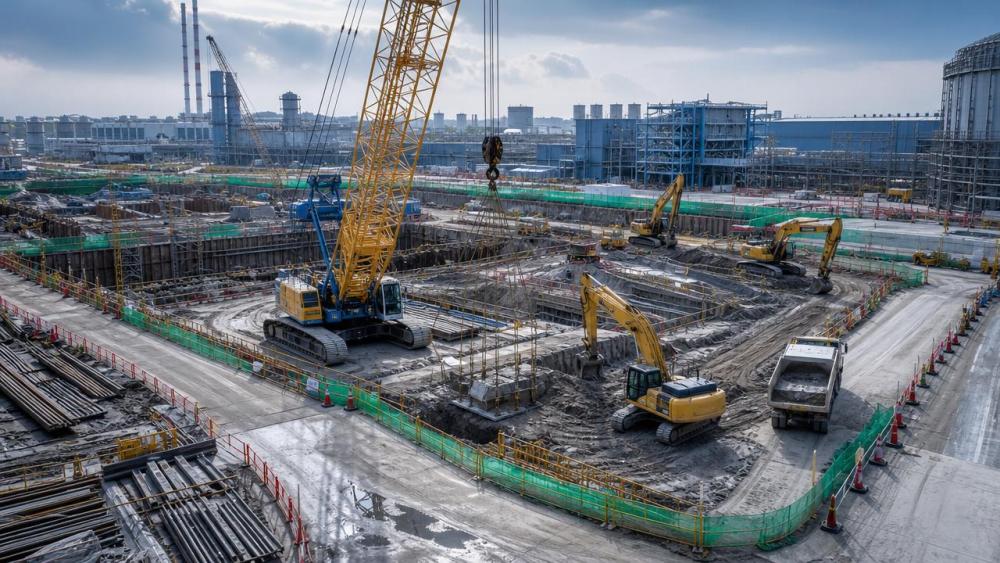
The most common gaps are no longer limited to obvious high-risk tasks. They are increasingly found at transition points where planning, equipment, and human behavior meet. These are the areas safety managers should watch most closely.
1. Incomplete interface control between work packages
Fast-track projects often split responsibilities among civil, mechanical, electrical, lifting, and logistics teams working in parallel. When boundaries are unclear, no single party fully owns temporary access, housekeeping, isolation, or handover status. Construction safety failures then appear as “small” assumptions: one team thinks an area is released; another believes it is still under permit control.
2. Temporary works that evolve faster than review cycles
Platforms, crane mats, haul roads, ventilation setups, power routing, and excavation support are often modified repeatedly under schedule pressure. In tunneling or mining-adjacent works, ground response, drainage, and equipment loading can shift quickly. If review and reapproval lag behind field changes, construction safety becomes dependent on informal judgement rather than engineered assurance.
3. Overcrowding around high-energy equipment
Crawler cranes, heavy excavators, TBM support systems, and dump trucks all create moving exclusion zones. In accelerated programs, the pressure to keep every machine utilized often leads to congested workfaces. The danger is not only machine failure but overlapping activity: lifting over access routes, maintenance beside live operations, or pedestrian movement through reversing corridors. This is one of the fastest ways construction safety margins disappear.
4. Weak permit discipline during shift changes and night work
Fast-track schedules rely heavily on extended shifts and 24-hour sequencing. However, permit-to-work quality frequently drops when supervision thins out after normal daytime management windows. Night shifts may inherit outdated assumptions, partial isolations, or unresolved punch items. For construction safety teams, shift transition quality is now a major risk predictor.
5. Training that does not keep pace with mobilization speed
High workforce turnover is common in compressed projects. New operators, riggers, banksmen, and subcontractor crews may receive orientation, but not enough task-specific reinforcement. Construction safety then weakens through inconsistent signaling, poor hazard recognition, and incomplete understanding of local emergency rules.
What is driving this shift in construction safety risk
Several forces are pushing the industry toward faster execution while making construction safety governance more complex. First, global infrastructure competition rewards earlier revenue generation and shorter delivery cycles. Second, heavy equipment fleets are becoming more productive, which encourages tighter schedules but also compresses recovery time when coordination fails. Third, digital workflows have improved visibility, yet many sites still struggle to convert information into disciplined field execution. Finally, supply chain volatility often forces resequencing, substitute materials, or revised mobilization plans, each adding new safety decision points.
In sectors linked to tunneling, open-pit mining, large lifting, and road development, this pressure is intensified by equipment scale. A schedule change affecting a small building project may alter manpower distribution. The same change on a heavy-industrial site can alter lifting studies, transport routes, foundation loading, and isolation logic at the same time. That is why construction safety management must now be more integrated with engineering intelligence and equipment strategy.
How the impact differs for safety managers, QC teams, and operations leaders
The effect of these changes is not uniform. Different roles experience the pressure in different ways, and understanding that difference helps improve response.
The next direction: construction safety will depend more on live coordination than on static documentation
A key industry direction is the shift from document-centered compliance to live control assurance. Method statements, JSAs, lift plans, and permit systems remain essential, but they are no longer enough when site conditions change by the hour. The stronger model is continuous verification: daily interface reviews, visual planning boards, digital permit tracking, geofenced equipment movement, and quick escalation when assumptions no longer match field reality.
For heavy-equipment projects, this trend is especially relevant. A crane plan is only safe if the actual lift path, ground bearing condition, weather window, nearby operations, and exclusion enforcement are still valid when the activity begins. A haul route is only safe if drainage, visibility, speed discipline, and crossing control remain intact under changing production pressure. In other words, construction safety performance increasingly depends on the quality of real-time operational intelligence.
What safety-focused organizations should monitor now
For organizations trying to judge whether fast-track execution is weakening construction safety, several signals deserve close attention:
- Increase in last-minute work package changes without updated controls
- Frequent overlap of lifting, access, and maintenance activities in the same zone
- Rising number of temporary works modifications not reflected in field briefings
- More night-shift or handover-related deviations than daytime incidents
- Repeated housekeeping, barricading, or permit discipline failures in critical areas
These indicators are valuable because they help teams intervene before a serious event occurs. They also support stronger alignment between quality control and construction safety, which is increasingly necessary in compressed delivery environments.
Practical response: how to close construction safety gaps without slowing the project blindly
The answer is not simply to demand “more caution” or add generic paperwork. Effective response should target decision speed, field clarity, and control ownership.
First, define non-negotiable control gates for critical tasks such as heavy lifting, excavation support changes, confined access, energization, and simultaneous operations around large equipment. Second, make interface mapping a routine discipline rather than a one-time coordination exercise. Third, require shift-to-shift control confirmation, not just production handover. Fourth, integrate QC and construction safety walks in areas where sequence instability is highest. Fifth, use short-cycle review meetings to confirm whether method statements still match actual site conditions.
For companies operating in TBM logistics, mining infrastructure, or large crane programs, additional attention should be given to transport corridors, matting and ground capacity, spotter competence, and exclusion zone enforcement. These are practical pressure points where speed often defeats discipline if leadership attention fades.
Questions leaders should ask before risk turns into incident
If your organization wants a sharper view of construction safety exposure in fast-track work, focus on a few direct questions. Are field conditions changing faster than control documents? Are crews working from the same version of the plan? Which interfaces lack a single accountable owner? Where are heavy machines operating close to pedestrian or maintenance traffic? Which night or weekend activities continue with weaker supervision? These questions help reveal whether pace is still controlled or merely being tolerated.
For safety managers and quality teams, the broader judgment is this: fast-track projects do not automatically create poor construction safety, but they punish weak coordination much faster. The organizations that perform best are those that treat safety as an early indicator of delivery resilience. If enterprises want to judge how this trend affects their own business, they should start by confirming where schedule compression is reshaping interfaces, temporary works, equipment density, and shift governance—because that is where the next construction safety gap is most likely to appear.
Related News
 Sep 22, 2026How to Evaluate a High-Altitude Mining Solutions Manufacturer for Remote ProjectsEvaluate a high-altitude mining solutions manufacturer with proven derating, cooling, service logistics, and lifecycle-cost support for remote projects.
 Sep 21, 2026Industrial Supplier Evaluation: A Risk-Based Scorecard for Quality, Capacity, and DeliveryIndustrial supplier evaluation made practical: use a risk-based scorecard to assess quality, capacity, and delivery reliability, reduce project risk, and select suppliers with confidence.
 Sep 20, 2026Comparing Heavy Equipment Warranty Suppliers: Coverage, Claims, and Downtime RiskSupplier comparison for heavy equipment warranty: evaluate coverage, claims speed, service networks, and downtime risk to protect uptime and project costs.
 Sep 19, 2026Mining Truck Technology Trends: What Fleet Managers Should Prioritize for 2026Mining truck technology trends for 2026: prioritize electrification, autonomy, predictive maintenance, and road intelligence to improve fleet uptime, safety, and cost control.

Ms. Elena Rodriguez
Weekly Insights
Stay ahead with our curated technology reports delivered every Monday.