
Middle East Heavy Haulage Equipment Market: Energy and Infrastructure Demand

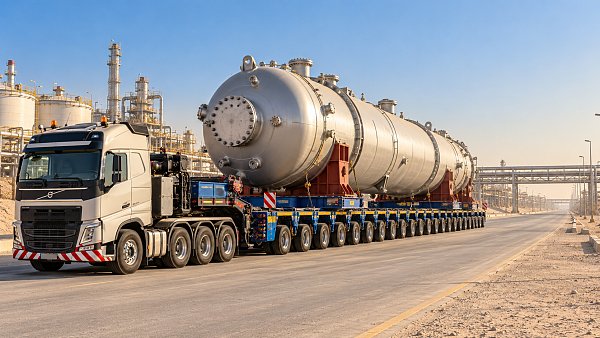
Energy expansion and infrastructure construction create substantial heavy-haulage requirements across the Middle East, but a large project pipeline does not automatically justify a larger equipment fleet. The strongest investment case is where contracted cargo movements, feasible transport routes, and repeat deployment opportunities overlap. A high-capacity transporter purchased for one exceptional load can be less commercially attractive than a smaller, compatible fleet serving several projects.
The central distinction is between demand for heavy transport services and demand for newly purchased equipment. LNG plants, gas-processing facilities, power developments, and industrial infrastructure require specialized movements, yet contractors can meet those requirements through existing fleets, rental arrangements, cross-border mobilization, or subcontracting. Assessing the heavy haulage equipment Middle East market therefore requires attention to cargo characteristics and fleet availability—not simply announced capital expenditure.
Energy projects provide an identifiable demand base
Major energy developments offer identifiable sources of heavy and oversized cargo. QatarEnergy’s North Field expansion, Saudi Aramco’s Jafurah gas development, and ADNOC’s Ruwais LNG project illustrate the scale and variety of facilities involved. Their relevance to transport equipment lies in the movement of process modules, pressure vessels, compressors, transformers, and associated plant components.
These cargoes do not create interchangeable requirements. A long process vessel places different demands on steering geometry and support spacing than a compact transformer with concentrated weight. A large prefabricated module can require a wide transport configuration, synchronized hydraulic suspension, and carefully engineered load distribution. The commercial opportunity depends on the actual cargo list, not the broad classification of a project as “oil and gas.”
Project execution strategy also changes where demand appears. Greater off-site fabrication transfers more transport work to fabrication yards, load-out areas, ports, and the route to the installation site. Smaller assemblies can reduce individual transport complexity while increasing the number of journeys. Neither approach necessarily produces greater equipment sales: existing fleet configurations and the scheduling of deliveries determine the capacity shortfall.
New-build construction and operational maintenance should also be assessed separately. Construction can generate concentrated campaigns of module deliveries, followed by a sharp reduction in equipment requirements. Maintenance, replacement, and plant modification work can provide repeat assignments, but cargo dimensions and timing are less uniform. A commercial forecast should not treat commissioning a facility as evidence that its original transport demand will continue.
Infrastructure and renewables broaden demand—but not uniformly
Infrastructure programs add opportunities through substations, power stations, desalination facilities, rail systems, bridges, and industrial zones. However, total construction expenditure is a weak proxy for specialized haulage demand. Civil works dominated by excavation, concrete, and conventional building materials can be substantial without requiring many hydraulic modular trailers or self-propelled modular transporters.
The more relevant indicator is the number of indivisible loads that exceed conventional road-transport capabilities. Large transformers, generator components, bridge sections, and selected tunnel-boring-machine assemblies can require engineered transport solutions. Their delivery schedules matter as much as their weight: several sequential movements may be served by one fleet, while simultaneous deliveries can create a temporary capacity constraint.
Renewable energy creates another important distinction. Wind projects require transport solutions for long blades, tower sections, and heavy nacelles, but not every component requires the same equipment. Blade length and swept-path clearance can be more restrictive than gross mass. Tower diameter can determine route feasibility, while nacelle transport places greater emphasis on payload distribution and axle loading.
Utility-scale solar construction has a different transport profile. Much of its cargo can move on conventional commercial vehicles; specialized demand is more directly associated with transformers and other heavy electrical equipment. Combining wind and solar investment into one forecast for heavy-haulage equipment would therefore obscure the equipment mix and overstate the relevance of some project announcements.
The regional market is a network of transport corridors
Country-level opportunity is useful, but individual port-to-site corridors are more decisive. A project near a capable port with a suitable industrial access road presents a different transport problem from an inland development requiring bridge assessments, temporary roadworks, utility interventions, and multiple authority approvals.
Saudi Arabia’s geographic scale makes inland mobilization, service coverage, and distances between assignments important commercial variables. Energy and infrastructure opportunities may be separated by long repositioning journeys. Equipment availability at national level does not necessarily mean that an appropriate configuration can reach a particular site economically and on schedule.
Qatar’s LNG-related work makes delivery sequencing and access coordination especially relevant. In the UAE, the relationship between ports, fabrication facilities, and industrial sites supports both road-haulage requirements and short-distance modular transport applications. Oman’s ports and industrial developments provide further points of demand, although route geometry and terrain must be assessed for each destination.
These differences argue against treating the Gulf as one freely interchangeable fleet pool. Temporary import arrangements, registration, operator eligibility, insurance, border procedures, and abnormal-load permissions can affect deployment. Equipment stationed nearby is not equivalent to equipment that is legally and operationally available for a contracted movement.
Equipment demand is shifting with the transport task
The commercially relevant question is not which machine has the largest nominal capacity, but which configuration can perform the expected work with acceptable deployment costs. Conventional heavy-duty trailers, hydraulic modular trailers, and self-propelled modular transporters serve overlapping but distinct applications.
Self-propelled modular transporters should not be treated as universal substitutes for road-haulage combinations. Their maneuverability is valuable within industrial sites and on engineered routes, but long-distance public-road transport introduces different operating and approval requirements. Buying them against a general infrastructure spending forecast risks confusing lifting-and-positioning logistics with intercity transport demand.
Modularity can improve fleet flexibility, provided compatibility is established. Axle lines, power packs, controls, coupling systems, and steering arrangements must support the intended combinations. Equipment described as modular is not automatically interchangeable across manufacturers or product generations. Expansion purchases should be assessed against the existing fleet’s practical configuration options.
Route feasibility can outweigh nominal payload
A transporter’s rated capacity is only one boundary on a movement. Permitted axle loads, bridge capacity, culvert condition, pavement performance, overhead clearance, gradients, turning space, and ground-bearing strength can determine the usable configuration. Adding axle lines may improve load distribution, but it also increases combination length and can make junctions or site access more difficult.
This creates a direct link between transport engineering and market demand. If a route requires extensive temporary works, the customer may alter the delivery port, change fabrication splits, or revise the installation method. The original equipment requirement can disappear or change materially before transport procurement begins.
High ambient temperatures and dust also affect equipment suitability. Cooling performance, hydraulic-system operating limits, tires, filtration, seals, and electronic controls require assessment against the planned duty cycle. Manufacturer ratings and operating instructions should underpin that assessment rather than a general claim that equipment is suitable for desert conditions.
Abnormal-load procedures must be checked with the relevant authorities for each jurisdiction and route. Permission to operate in one location does not establish permission elsewhere, and technical capacity does not guarantee approval. Where delivery windows are narrow, uncertainty over permits and enabling works can be more financially significant than a difference in purchase price.
Utilization determines whether demand becomes investment
Heavy-haulage fleets can remain committed to a project while performing relatively few actual movements. Waiting for cargo readiness, installation access, marine delivery, or route approval ties up equipment without necessarily generating equivalent revenue. Commercial evaluation must distinguish operating days, paid standby, unpaid standby, and repositioning time.
A useful starting point is contribution per paid deployment day:
Break-even paid days = annual fixed ownership costs ÷ contribution per paid deployment day.
The contribution figure should deduct deployment-related costs, including crews, fuel, mobilization, escorts, permits, and subcontracted services where applicable. Fixed ownership costs should reflect the financing structure, depreciation assumptions, insurance, storage, and baseline maintenance. Paid standby deserves separate treatment because its revenue and cost profile differs from active transport.
Peak fleet requirements also need to be separated from annual workload. Two major projects can create an equipment shortage if their delivery windows overlap, even when average yearly utilization is modest. Conversely, a large announced pipeline may be serviceable by existing assets if delivery campaigns occur sequentially. Shipment schedules reveal more than aggregate project values.
Rental and specialist subcontracting are credible responses to short peaks or unusual loads. Ownership becomes more defensible when committed work covers a meaningful share of fixed costs, configurations are reusable, and local maintenance support protects availability. Residual value should be assessed conservatively where equipment is highly specialized or expensive to relocate.
Project execution signals matter more than announcements
The most useful indicators sit between project approval and physical delivery. EPC awards establish more substance than preliminary announcements; confirmed fabrication packages provide greater cargo visibility; transport tenders and route-engineering appointments bring the opportunity closer to executable demand. Port bookings, approved delivery schedules, and site-readiness milestones further reduce uncertainty.
Even an awarded transport contract requires scrutiny. Minimum-volume commitments, standby compensation, cancellation provisions, payment timing, and responsibility for route works determine whether scheduled demand supports reliable earnings. A contract that reserves substantial equipment without protecting it against client-driven delays can leave the fleet owner carrying much of the project’s timing risk.
Demand for heavy transport in the Middle East is best understood as a series of equipment-specific opportunities linked by ports, industrial sites, and delivery corridors. Energy developments provide identifiable heavy-cargo requirements, while infrastructure and renewable projects diversify the workload unevenly. The strongest investment case rests on approved routes, committed movements, compatible equipment, and credible redeployment—not on the size of the regional project pipeline alone.
Have questions about this sector analysis, or seeking best practices specific to your niche? Drop us a line below and let the senior consultants at TF-Strategy assist you.
Related News
 Oct 29, 2026Middle East Heavy Haulage Equipment Market: Energy and Infrastructure DemandExplore the heavy haulage equipment Middle East market for energy and infrastructure demand, route challenges, and fleet investment insights to make smarter buying decisions.
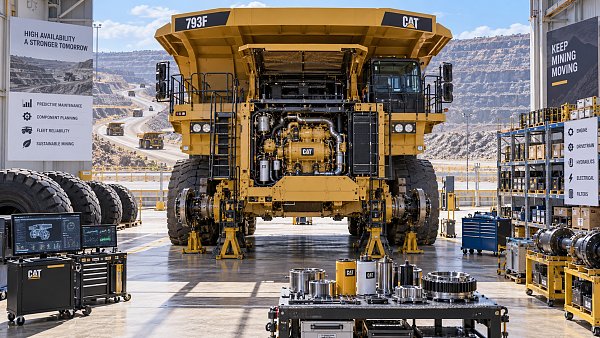
 Oct 15, 2026Mining Truck Maintenance Markets: Service Models Reshaping Fleet AvailabilityMining truck fleet maintenance and repair services market: discover service models, predictive insights, and strategies to maximize fleet availability.
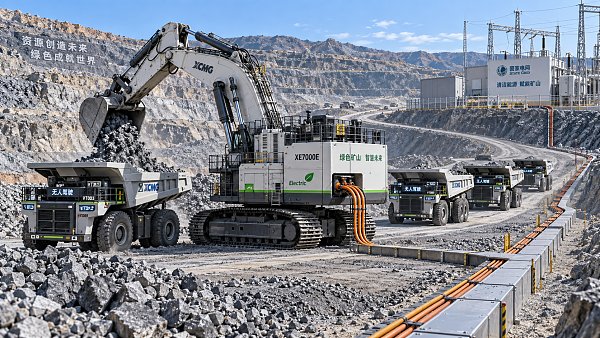
 Oct 08, 2026Are Electric Mining Excavators Ready for Continuous-Duty Operation?Are electric mining excavators ready for continuous operation? Explore power options, charging strategies, uptime factors, and practical deployment insights.
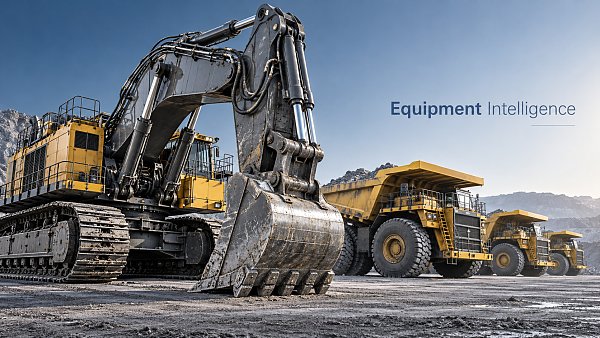
 Sep 19, 2026Mining Truck Technology Trends: What Fleet Managers Should Prioritize for 2026Mining truck technology trends for 2026: prioritize electrification, autonomy, predictive maintenance, and road intelligence to improve fleet uptime, safety, and cost control.

Prof. Marcus Chen
Weekly Insights
Stay ahead with our curated technology reports delivered every Monday.