
How to Source Construction Machinery Components in Europe: Supplier Types, Lead Times, and Compliance Checks
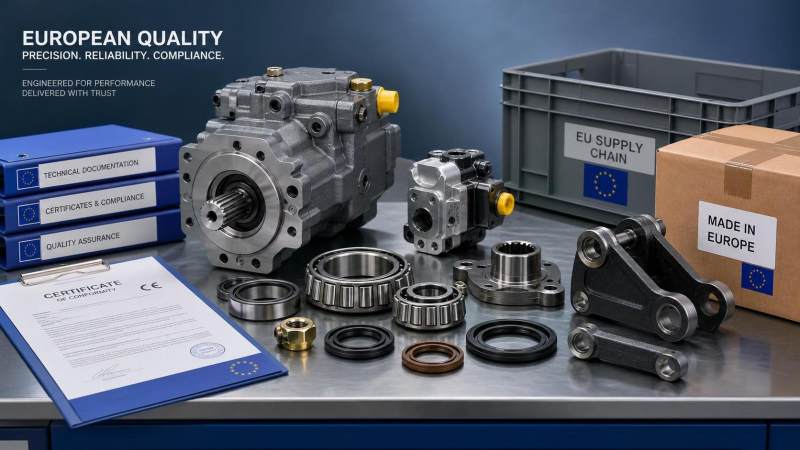
How to Source Construction Machinery Components in Europe: Supplier Types, Lead Times, and Compliance Checks
Sourcing construction machinery components Europe-wide is no longer just a price comparison exercise. It now depends on supplier fit, lead-time control, and solid compliance screening.
For teams balancing uptime, cost, and delivery risk, the European market offers strong options. It also brings fragmentation, documentation pressure, and uneven inventory visibility.
That is why construction machinery components Europe sourcing needs a structured approach. The best outcomes usually come from matching part criticality with the right supplier channel.
In practice, buyers who understand supplier types, lead-time patterns, and compliance checks can reduce downtime, improve forecasting, and avoid expensive last-minute substitutions.
Why Europe Matters for Component Sourcing
Europe remains a key region for construction machinery components because it combines manufacturing depth with mature engineering standards. That matters for both premium equipment fleets and mixed-brand operations.
You can source hydraulic systems, undercarriage parts, wear components, drivetrain assemblies, electrical modules, and structural fabrications from specialized suppliers across Germany, Italy, Poland, Spain, and the Nordics.
More importantly, Europe often offers better traceability than lower-cost regions. For critical machines, that traceability can be worth more than a small unit-price reduction.
This is especially relevant when sourcing TBM support components, crawler crane parts, mining truck systems, and heavy road machinery spares tied to strict performance tolerances.
The Main Supplier Types in Construction Machinery Components Europe
Not every supplier serves the same need. In construction machinery components Europe sourcing, choosing the wrong channel creates delays, weak warranty support, or hidden quality risk.
1. OEM and Authorized Distributors
These suppliers are usually the safest choice for high-value or safety-critical parts. Think control units, hydraulic pumps, sensors, slewing rings, or machine-specific structural parts.
Advantages include technical documentation, warranty clarity, and better fit assurance. The tradeoff is obvious: higher prices and sometimes longer lead times for non-stock items.
2. Independent European Manufacturers
Many independent manufacturers produce aftermarket or cross-compatible components. They are common in filtration, wear parts, hoses, bearings, rubber-metal parts, and fabricated assemblies.
This channel can be cost-effective, especially for fleets with multiple brands. Still, buyers should confirm dimensional compatibility, metallurgy, and tested operating conditions.
3. Stocking Traders and Multi-Brand Wholesalers
These companies are useful when speed matters more than factory-direct pricing. They often hold inventory from several brands and can consolidate urgent orders.
Their value is strongest for maintenance cycles and emergency replacements. The key check is whether they can provide reliable origin and batch traceability.
4. Niche Engineering Workshops
For older machinery or modified fleets, niche workshops can reverse-engineer shafts, brackets, housings, and special wear elements. This is common in mining and tunneling support equipment.
The upside is flexibility. The downside is that engineering approval, testing records, and repeatability must be checked far more carefully than with standard catalog parts.
How to Match Supplier Type to Part Criticality
A practical sourcing model starts by classifying components into critical, operational, and consumable categories. This keeps construction machinery components Europe purchasing aligned with actual risk.
- Critical parts: braking systems, structural joints, control electronics, high-pressure hydraulics, lifting components.
- Operational parts: pumps, motors, bearings, undercarriage elements, radiators, seals.
- Consumables: filters, cutting edges, wear plates, hoses, belts, common fasteners.
Critical parts usually justify OEM or tightly audited suppliers. Operational parts can support a mixed strategy. Consumables often allow more aggressive cost competition without major fleet risk.
This segmentation also helps during tendering. Suppliers receive clearer RFQs, and your internal team avoids comparing low-risk parts with high-consequence components on the same logic.
Typical Lead Times Across Europe
Lead times in construction machinery components Europe vary widely by product complexity, stock profile, and documentation burden. Recent market shifts have made realistic planning more important than optimistic quotes.
For stocked maintenance items, delivery can range from two to ten working days inside the EU. Multi-country consolidation may stretch that timeline slightly.
For engineered or low-volume parts, four to twelve weeks is common. Machined or fabricated assemblies can take longer when material certifications or special coatings are required.
Imported subcomponents also affect European lead times. A supplier may assemble locally but still depend on castings, electronics, or seals from outside Europe.
In actual buying cycles, quoted lead time is only the headline. Confirm production slot, material reservation, inspection stage, and export paperwork before treating any date as firm.
The Compliance Checks You Cannot Skip
Compliance is where many construction machinery components Europe deals look acceptable on paper but fail under audit. A low quote has little value if the component cannot be installed or insured.
Verify Legal Entity and Manufacturing Scope
Check whether the supplier is a manufacturer, distributor, or broker. That sounds basic, but it directly affects liability, quality control, and after-sales response.
Review Technical Documentation
Request drawings, data sheets, material certificates, pressure ratings, and test reports where relevant. For load-bearing or hydraulic parts, document depth should match the risk profile.
Confirm CE and Related Requirements Carefully
Not every component needs CE marking in the same way, but many assemblies interact with regulated machinery systems. Ask how the part fits within the final machine compliance framework.
Check REACH, RoHS, and Material Restrictions
For electrical and material-sensitive parts, substance declarations matter. This is becoming more visible in public tenders and large contractor qualification systems.
Audit Traceability and Batch Control
If a supplier cannot link a part to a batch, inspection record, or production lot, risk increases fast. That is especially true for safety parts and failure-sensitive wear components.
Cost Control Without Creating Hidden Risk
Procurement savings in construction machinery components Europe should be measured beyond unit price. Downtime exposure, installation failure, warranty disputes, and repeat ordering all change true cost.
A practical model is to use dual sourcing where possible. Keep OEM coverage for critical systems, and build qualified aftermarket options for predictable replacement categories.
It also helps to negotiate on packaging, Incoterms, inspection points, and blanket order volumes. Many savings sit there rather than in the visible line-item price.
More noticeably, suppliers with strong forecasting visibility often protect capacity better. Sharing demand windows can secure better terms than pushing for a one-off discount.
A Simple Sourcing Checklist for Better Decisions
- Define part criticality before sending RFQs.
- Shortlist supplier types that match the risk level.
- Request lead-time breakdown, not just a final date.
- Verify entity status, plant location, and production capability.
- Check certificates, drawings, test records, and traceability.
- Compare total landed cost and downtime impact.
- Approve one backup source for vulnerable categories.
This kind of discipline makes construction machinery components Europe sourcing more predictable. It also strengthens internal alignment between procurement, maintenance, and engineering.
The European market can support reliable heavy equipment operations, but only when sourcing decisions reflect part criticality, realistic lead times, and documented compliance. In the end, better sourcing is less about buying cheaper parts and more about buying fewer surprises.
Related News
 Oct 07, 2026How to Evaluate a Hydraulic System Component Supplier for Heavy Equipment UptimeChoose a hydraulic system component supplier with proven quality, technical fit, and reliable delivery to reduce heavy equipment downtime and lifecycle costs.
 Oct 06, 2026Selecting Petrochemical Overhead Cranes for Hazardous Areas and Heavy Process LoadsPetrochemical overhead cranes for hazardous areas: learn how to match capacity, duty, controls, corrosion protection, and maintenance access for safer, reliable lifts.
 Oct 05, 2026Tunneling Equipment Specification Planning: Key Criteria for Ground and Project RisksEquipment specification planning tunneling: learn how to match TBM systems to ground risks, geometry, safety, logistics, and lifecycle cost for more reliable project delivery.
 Oct 04, 2026Nuclear Lifting Equipment Cost: Budgeting for Compliance, Testing, and Lifecycle RiskNuclear lifting equipment cost explained: budget for compliance, proof-load testing, installation, documentation, and lifecycle risk to make confident procurement decisions.
Ms. Elena Rodriguez
Weekly Insights
Stay ahead with our curated technology reports delivered every Monday.