
TBM Technology for Highway Tunnels Explained: Geology, Alignment, and Project Fit
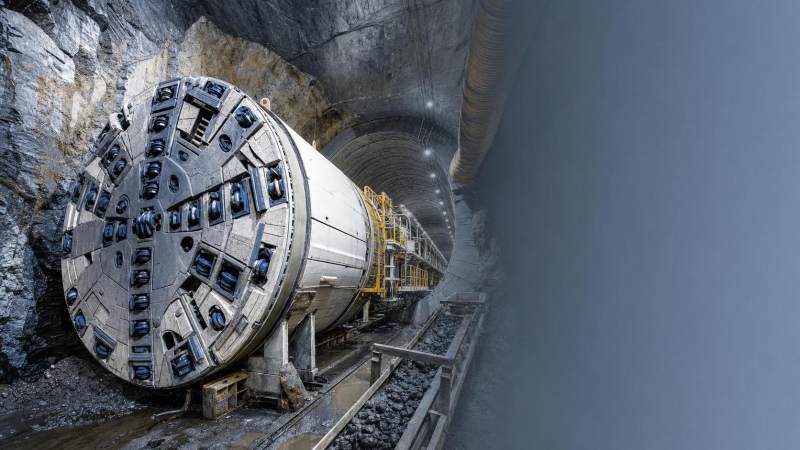
TBM Technology for Highway Tunnels Explained: Geology, Alignment, and Project Fit
TBM technology for highway tunnels is not a default answer for every mountain crossing or bypass scheme.
It performs best when ground behavior, tunnel geometry, logistics, and schedule targets support continuous mechanized excavation.
For highway projects, that fit can be strong, but only under the right technical and commercial conditions.
In practice, decision quality improves when teams evaluate TBM technology for highway tunnels as a system, not just a machine purchase.
That means linking geology, alignment, support design, muck handling, ventilation, safety, and lifecycle cost.
Why TBM Technology for Highway Tunnels Matters
Highway tunnels demand predictable progress, stable profiles, and reliable safety margins over long excavation distances.
That is where TBM technology for highway tunnels often shows clear value.
Compared with drill and blast, a well-matched TBM can reduce overbreak, smooth cycle variation, and improve lining interface quality.
It can also support better environmental control near sensitive slopes, villages, utilities, or protected corridors.
Still, mechanized tunneling creates its own constraints.
A TBM needs room for launch, backup systems, segment or support logistics, power supply, dewatering, and emergency access planning.
So the real question is not whether TBMs are advanced.
The question is whether TBM technology for highway tunnels fits the actual project envelope better than alternatives.
Geology Is the First Decision Filter
Geology decides more than production rate.
It influences cutter wear, face stability, groundwater response, maintenance frequency, and intervention risk.
For TBM technology for highway tunnels, the best candidates usually show long reaches of reasonably consistent ground.
Homogeneous hard rock often supports stable TBM performance, especially where tunnel length justifies the setup investment.
Mixed-face zones are more demanding.
When the cutterhead crosses from hard rock into fractured ground, clay seams, or water-bearing faults, performance can drop sharply.
This is where early site investigation matters most.
Boreholes, geophysics, probe drilling plans, and hydrogeological models should be built around excavation decisions, not only design reports.
A practical geology review should test five items:
- Rock mass class continuity along the full drive
- Fault frequency and expected weak zone width
- Groundwater inflow pressure and chemistry
- Abrasion level affecting cutters and tools
- Swelling, squeezing, or clogging potential
If these inputs remain vague, any forecast for TBM technology for highway tunnels will be optimistic by definition.
Alignment Controls the Real Buildability
A highway tunnel alignment may look acceptable on plan and profile, yet still be a poor TBM candidate.
That is because TBM technology for highway tunnels depends heavily on geometric continuity.
Long, straight or gently curving sections are generally favorable.
Tight horizontal curves, frequent transitions, and complex cross passages can complicate steering and backup train movement.
Gradient also matters more than many teams expect.
Steep inclines affect muck transport, drainage control, and maintenance access, especially in long single-drive configurations.
Cross section is another decision point.
Some highway tunnels use twin bores with smaller diameters, while others pursue large single bores for traffic efficiency.
Larger diameters can improve operational layout, but machine size, logistics demand, and risk exposure rise quickly.
When reviewing alignment, teams should ask:
- Is the drive length long enough to absorb TBM mobilization and launch cost?
- Can the tunnel geometry support stable guidance and consistent support installation?
- Are portal zones and intermediate access points practical for heavy equipment assembly?
- Will emergency response remain workable during peak excavation distance?
If the alignment fails these checks, TBM technology for highway tunnels may lose its expected advantage.
Choosing the Right TBM Concept
Not all TBMs solve the same problem.
For highway tunnels, common options include hard rock gripper TBMs, single shield machines, double shield machines, and closed-face systems.
A gripper TBM can be effective in competent rock with limited convergence and manageable support timing.
A double shield TBM suits projects needing simultaneous excavation and segment erection in variable rock conditions.
Closed-face machines become relevant when groundwater pressure, loose ground, or unstable faces dominate the risk picture.
The important point is fit, not preference.
TBM technology for highway tunnels works best when machine type, ground conditioning strategy, and support method are chosen together.
That same logic should include cutterhead access, hyperbaric intervention assumptions, and spare parts lead times.
Commercial Value Depends on More Than Speed
Many business cases focus too narrowly on advance rate.
That approach misses the full economics of TBM technology for highway tunnels.
A stronger comparison looks at total installed cost, schedule certainty, labor exposure, energy demand, maintenance downtime, and interface risk.
In long tunnels, predictability can be more valuable than peak daily production.
That is especially true when downstream road opening dates carry political, financial, or concession pressure.
The most useful commercial review usually includes this comparison:
This is where technical analysis becomes boardroom-relevant.
TBM technology for highway tunnels should be justified by system performance, not headline machinery appeal.
Main Risks and How to Read Them Early
The biggest problems usually appear before excavation starts.
They begin as weak assumptions in investigation scope, alignment simplification, or procurement language.
For TBM technology for highway tunnels, early warning signs are often visible.
- Geological baseline reports that smooth out fault uncertainty
- Production promises without intervention allowances
- Underdefined groundwater treatment responsibilities
- Launcher design with narrow logistics tolerance
- Cutter consumption estimates based on non-comparable projects
A mature risk review converts these issues into measurable controls.
That includes contingency stocks, pre-grouting plans, rescue chamber design, probe drilling criteria, and contractual trigger mechanisms.
From a management standpoint, this is what keeps TBM technology for highway tunnels bankable and governable.
A Practical Project Fit Test
Before committing, use a simple fit test.
It helps separate technically possible projects from commercially sensible ones.
- Confirm whether the tunnel length supports TBM capital and setup recovery.
- Stress-test geological continuity, not just average ground class.
- Check whether alignment geometry supports stable machine operation.
- Model logistics from portal to disposal, including power and ventilation.
- Build realistic downtime scenarios for cutter change and fault crossing.
- Compare TBM technology for highway tunnels against drill and blast on total risk-adjusted value.
When these six checks align, TBM technology for highway tunnels can deliver strong technical control and commercial confidence.
When they do not, forcing a TBM decision usually transfers complexity rather than removing it.
Final Takeaway
TBM technology for highway tunnels creates value when machine capability, geology, and alignment work in the same direction.
That value comes from consistency, controlled excavation, and better decision visibility across the full construction chain.
The strongest projects are usually not the most ambitious on paper.
They are the ones where investigation quality, tunnel geometry, support planning, and commercial assumptions are all honest about constraints.
For teams assessing upcoming corridors, the next step is straightforward.
Review project fit early, challenge average-case assumptions, and evaluate TBM technology for highway tunnels as an integrated delivery strategy.
Related News
 Sep 29, 2026Infrastructure Construction Standards: A Project Manager’s Guide to ComplianceInfrastructure construction standards guide for project managers: turn requirements into field controls, hold points, traceability, and compliant delivery.
 Sep 28, 2026How to Specify Custom Mining Equipment for Abrasive Ground and High-Load HaulageCustom mining equipment for abrasive ground and high-load haulage: learn how to optimize payload, wear protection, powertrains, uptime, and lifecycle cost for safer, reliable production.
 Sep 29, 2026What belongs in a construction equipment package sourcing plan?Construction equipment package planning sourcing guide: learn how to match machines, attachments, site conditions, supplier support, costs, and acceptance gates for reliable project delivery.
 Sep 29, 2026How to verify equipment durability before approving suppliers at scaleHow can heavy equipment manufacturers verify durability and manage supplier risk at scale? Explore practical testing, traceability, audits, and control strategies.
Ms. Elena Rodriguez
Weekly Insights
Stay ahead with our curated technology reports delivered every Monday.