
Open-Pit Mining Equipment Pricing Explained: Cost Factors, Fleet Size, and ROI
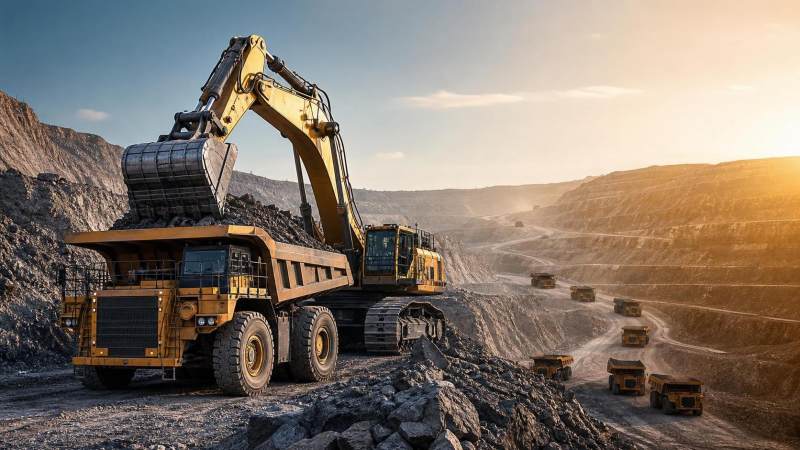
Why does open-pit mining equipment pricing vary so much between projects?
Open-pit mining equipment pricing rarely comes down to a catalog number. It reflects production targets, mine geometry, haul distance, fuel strategy, and expected asset life.
That is why two mines buying similar trucks or excavators may see very different capital budgets. One is funding output. The other is funding flexibility, uptime, or expansion headroom.
In practical terms, pricing decisions affect much more than acquisition. They shape depreciation schedules, maintenance reserves, spare parts policy, and the payback window of the whole fleet.
TF-Strategy often frames this through a heavy-industry lens: physical machine parameters only make sense when linked to operating method and project strategy.
That approach matters here. A lower purchase price can still produce weaker returns if cycle times are unstable or if support infrastructure is mismatched.
Which cost factors usually drive open-pit mining equipment pricing the most?
The headline number is usually driven by a small group of variables, but their weight changes by mine plan.
- Machine class and payload capacity. Larger haul trucks and ultra-large excavators raise unit pricing quickly.
- Powertrain choice. Diesel, trolley-assist, hybrid, and battery-electric platforms carry different upfront costs.
- Duty cycle severity. High altitude, heat, dust, and long ramps increase specification requirements.
- Digital systems. Autonomous readiness, dispatch integration, and remote diagnostics add cost but may improve control.
- Service package scope. Warranties, rebuild programs, field support, and parts stocking can materially change total offer value.
A common mistake is to isolate chassis price from the rest of the operating ecosystem. Open-pit mining equipment pricing often includes hidden commitments around tires, hydraulics, consumables, and technician coverage.
More importantly, the same technical upgrade does not create the same economic value everywhere. A premium drive system matters more on long, loaded uphill cycles than on short hauls.
That is why comparison should be scenario-based, not brochure-based.
A quick judging table helps separate price from value
Before approving capital, it helps to review open-pit mining equipment pricing against the operating condition it must survive.
How does fleet size change pricing logic?
Fleet size changes the logic from equipment purchase to system design. That is the point where open-pit mining equipment pricing becomes a planning issue, not just a sourcing issue.
With a small fleet, unit pricing matters, but downtime concentration matters more. One truck off-line can remove a meaningful share of output.
With a larger fleet, economies of scale become real. Parts pools, technician specialization, tire contracts, and digital fleet monitoring can lower cost per operating hour.
Still, scale does not automatically improve returns. A larger order may secure a better purchase discount while creating unnecessary maintenance inventory and excess parked capacity.
The more reliable way to judge fleet size is to ask whether the machine mix supports the target stripping ratio, annual tonnage, and maintenance downtime assumptions.
In other words, correct fleet size is not the cheapest bid. It is the lowest-cost fleet that still protects production continuity.
Where do larger fleets usually gain leverage?
- Multi-unit pricing negotiations and staged delivery schedules
- Shared workshops, lubrication systems, and on-site tooling
- Better use of predictive maintenance and failure trend analysis
- Standardized operator training across truck and excavator families
TF-Strategy’s broader heavy-equipment coverage often highlights this same pattern across cranes, road machinery, and mining trucks: scale improves value only when the operating model is equally mature.
Is the lowest quoted price ever the best choice?
Sometimes, but not often. The lower quote can be attractive when duty cycles are light, project duration is short, or utilization risk is modest.
In most long-life mine plans, open-pit mining equipment pricing should be judged against total cost of ownership. That means fuel, tires, wear parts, rebuilds, labor, and lost production.
A truck priced 8% lower may still cost more over five years if tire life is shorter or engine access increases service hours. Small differences compound fast in continuous operations.
Another issue is residual value. Equipment with stronger global acceptance often carries firmer resale or redeployment potential, which improves asset recovery assumptions.
This is especially relevant in a market shaped by energy transition. Diesel fleets, hybrid options, and pure electric mining trucks may age differently under future regulation and site electrification plans.
What should be challenged in a low-price offer?
- Are tires, trays, buckets, or lubrication systems excluded?
- Does the warranty cover major components or only limited failures?
- Is software licensing annual, bundled, or optional?
- Are rebuild assumptions realistic for the mine environment?
- Will parts arrive locally, or through long import lead times?
These questions usually reveal whether a cheaper quote is truly cheaper.
How can ROI be evaluated without oversimplifying the decision?
The strongest ROI model starts with mine output, not vendor claims. Open-pit mining equipment pricing only becomes meaningful when tied to tons moved, availability, and cycle stability.
A practical framework usually includes six variables:
- Acquisition and commissioning cost
- Expected operating hours per year
- Availability and utilization assumptions
- Energy, maintenance, and tire cost per hour
- Productivity per cycle and per shift
- Residual value or redeployment value
The useful step is sensitivity testing. Change fuel price, component life, or haul distance, then watch how payback moves. That exposes which assumptions are truly driving returns.
In real approvals, the best equipment choice is often the one with the most stable downside case, not the most optimistic upside case.
That is also where external intelligence helps. Market signals on steel, batteries, power systems, and component lead times can materially alter open-pit mining equipment pricing over the budget cycle.
What risks are usually missed before capital is approved?
Several risks sit outside the original quote and still damage returns after delivery.
- Road design is not upgraded to suit larger payload equipment.
- Power or charging infrastructure is underestimated for new-energy fleets.
- Operator skill and maintenance capability are assumed, not verified.
- Lead times for critical components are too long for planned uptime.
- The fleet is sized for peak output, not average economically sustainable output.
A more disciplined review checks the fit between equipment, site conditions, and strategic timeline. That is consistent with TF-Strategy’s method of linking machine capability with construction and extraction reality.
The main point is simple. Open-pit mining equipment pricing is not a static number. It is a bundled forecast of operational success or operational friction.
What is the most practical next step when comparing proposals?
Start by converting every quote into the same operating language: cost per productive hour, cost per ton, and expected payback under identical site assumptions.
Then pressure-test the proposals against realistic mine conditions, not ideal demonstrations. Include climate, ramp grade, maintenance staffing, fuel or power access, and expansion plans.
It also helps to build a short decision sheet covering payload match, service reach, technology fit, energy pathway, and residual value. That keeps open-pit mining equipment pricing tied to long-term capital logic.
When the comparison is disciplined, price becomes easier to read. Not because it gets simpler, but because it gets placed in the right operational context.
The most reliable decisions usually come from aligning fleet size, site demands, and lifecycle cost before approval, then validating those assumptions with current market intelligence.
Related News
 Sep 27, 2026Heavy Equipment Selection Factors for Matching Machine Capacity to Jobsite ConditionsHeavy equipment selection factors for matching capacity to jobsite conditions, improving productivity, safety, fleet efficiency, and total project cost control.
 Sep 26, 2026How to Select Wind Rotor Lifting Equipment for Safe Blade and Hub InstallationWind rotor lifting equipment selection guide: ensure safe blade and hub installation with the right lift method, load control, crane compatibility, wind limits, and compliance.
 Sep 25, 2026What Drives Heavy Haulage Cost on Oversized Construction Equipment Moves?Heavy haulage cost explained: discover how load dimensions, route surveys, permits, escorts, lifting plans, and scheduling shape reliable oversized equipment transport budgets.
 Sep 24, 2026Supplier Management Frameworks That Reduce Delays on Large Construction ProjectsLarge-scale construction projects supplier management frameworks help prevent costly delays with risk-based controls, milestone tracking, quality oversight, and escalation plans for critical packages.
Ms. Elena Rodriguez
Weekly Insights
Stay ahead with our curated technology reports delivered every Monday.