
What Drives Heavy Equipment Solution Reference Cost Factors in Infrastructure Projects?

Why do heavy equipment solution reference cost factors matter so much in infrastructure planning?
Infrastructure budgets rarely fail because of one dramatic number. They drift when early equipment assumptions look reasonable, then break under field reality.
That is why heavy equipment solution reference cost factors deserve close attention before approval, not after mobilization starts.
In practical terms, these factors connect asset price, site conditions, schedule pressure, and long-term operating exposure. They shape cash flow, contingency design, and delivery certainty.
For tunnel packages, open-pit mining phases, wind lifting campaigns, and road expansion works, the same question keeps returning: what is the real cost behind the machine choice?
The answer is rarely limited to purchase price. Transport, assembly, utilization, wear rate, operator skill, energy use, spare parts access, and downtime risk all carry financial weight.
TF-Strategy often frames this as the meeting point between physical parameters and project strategy. That perspective is useful because machinery cost behaves differently across geology, altitude, climate, and work method.
A crawler crane on a refinery expansion does not carry the same cost logic as a TBM under mixed ground, or a mining dump truck in extreme temperature haulage.
Which cost drivers usually move the budget first?
The fastest way to understand heavy equipment solution reference cost factors is to separate direct machine cost from operating exposure.
Direct cost includes acquisition, rental, transport, assembly, commissioning, and insurance. These are visible early, so they often dominate first-round comparisons.
Operating exposure appears later. Yet it usually decides whether the original estimate was disciplined or optimistic.
- Utilization rate: idle hours quickly dilute the value of high-capacity machines.
- Fuel or power consumption: this is critical in long campaigns and remote sites.
- Consumables and wear parts: cutter heads, tires, tracks, ropes, and ground engaging tools can swing forecasts.
- Maintenance regime: planned service is manageable; unplanned failure is expensive.
- Operator and technical support availability: weak support increases delay risk.
- Site adaptation: access roads, foundations, ventilation, dewatering, and lifting pads add hidden cost.
A common mistake is treating these items as secondary. In reality, heavy equipment solution reference cost factors become meaningful only when direct and indirect costs are reviewed together.
That is especially true for ultra-large equipment, where mobilization and downtime costs are disproportionate to unit purchase figures.
Does equipment category change the cost logic?
Very much so. The same budgeting method cannot be applied evenly across all heavy assets, even if the procurement framework looks similar.
For TBM projects, geology is the first cost amplifier. Mixed face conditions, abrasive rock, groundwater pressure, and segment logistics can alter lifecycle cost far beyond the base machine quotation.
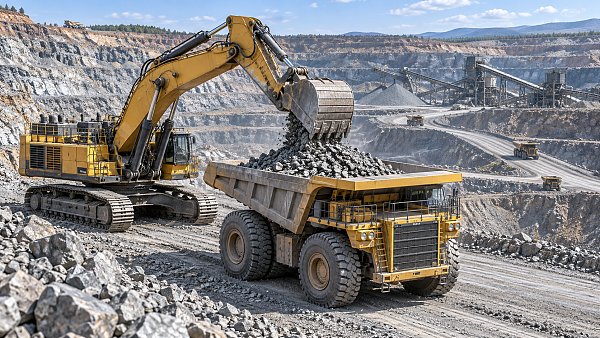
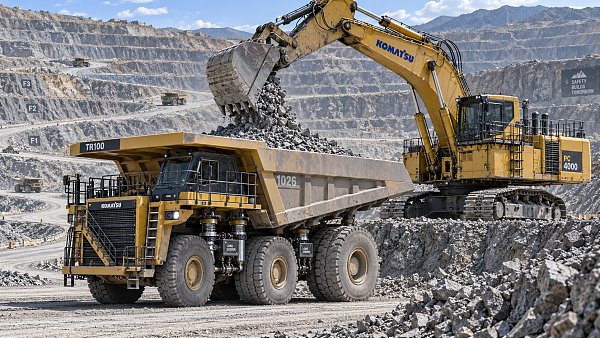
For ultra-large excavators in open-pit mining, the cost story often turns on duty cycle, material hardness, bench design, and maintenance access. High output only pays when haulage and blasting plans stay aligned.
Crawler cranes introduce another pattern. Lift radius, ground bearing pressure, component split, and erection windows can push support cost higher than expected.
Road machinery tends to look simpler on paper. Still, paving accuracy, fleet synchronization, material temperature control, and project sequencing can create expensive inefficiencies.
Mining dump trucks bring their own variables. Payload class, gradient, altitude, braking demand, tire life, and fuel strategy all shape the operating curve.
This is one reason intelligence platforms such as TF-Strategy remain relevant. Category-specific data helps turn broad heavy equipment solution reference cost factors into project-level cost judgement.
A quick comparison table helps reveal where estimates usually shift
When does the lowest quote become the most expensive option?
This happens more often than expected, especially when heavy equipment solution reference cost factors are reduced to capex only.
A lower initial quote may exclude transport complexity, local compliance upgrades, commissioning support, or spare package depth. It may also assume ideal utilization that the project cannot reach.
In heavy civil work, the financial risk of delay is often larger than the savings from a cheaper machine. One missed tunnel intervention window or one failed critical lift can reshape the budget.
There is also the issue of technical fit. Over-sized equipment can waste capital and logistics effort. Under-sized equipment may extend the schedule and overload maintenance teams.
A better comparison usually asks three questions at once: what does the machine cost, what does the operating model cost, and what does failure cost?
That framing is useful in sectors tracked by TF-Strategy, where billion-dollar projects depend on narrow tolerance for downtime, precision deviation, and supply interruption.
What should be checked before approving a heavy equipment budget line?
At this stage, the goal is not technical micromanagement. The goal is to test whether the proposal has captured the real heavy equipment solution reference cost factors behind delivery.
A disciplined review often includes the following checkpoints.
- Check the basis of productivity assumptions against actual site constraints.
- Confirm whether transport, assembly, permits, and demobilization are fully priced.
- Review spare parts strategy for long-lead or high-wear components.
- Ask whether utility supply, fuel logistics, or charging infrastructure affect uptime.
- Test sensitivity to climate, altitude, geology, and shift pattern.
- Separate routine maintenance from failure recovery cost.
- Verify whether digital control, remote operation, or safety upgrades are optional or necessary.
These checks matter even more as electrification, automation, and remote operation expand. New technology can improve TCO, but only when site readiness and maintenance capability are aligned.
That is where strategic intelligence adds value. Market tender data, materials trends, and equipment evolution reports can improve judgement before funds are committed.
How can heavy equipment solution reference cost factors be turned into a practical approval framework?
The most workable approach is to treat cost as a structured decision, not a single number on a vendor sheet.
Start with project conditions. Define the ground, load, haul, lift, or paving environment as precisely as possible.
Then compare options against lifecycle exposure, not only procurement timing. A machine that protects schedule integrity may justify a higher first cost.
It also helps to score each option against a short matrix: productivity realism, support availability, wear sensitivity, energy profile, failure consequence, and resale or redeployment value.
For complex infrastructure, that matrix should be refreshed as design maturity improves. Early reference values are useful, but they should not remain frozen when site knowledge changes.
In the end, heavy equipment solution reference cost factors are most useful when they reveal tradeoffs clearly. They should help distinguish affordable equipment from economically sound equipment.
A sensible next step is to build one review sheet for each major equipment package, then test it against schedule risk, utilization assumptions, and maintenance exposure before final approval.
That creates a cleaner basis for comparison, and it reduces the chance that hidden costs will surface only after the machine reaches site.
Related News
 Oct 12, 2026How to Assess a High-Altitude Mining Equipment Manufacturer for Remote ProjectsHigh altitude mining manufacturer assessment guide: compare derating, cold-climate reliability, remote service, parts resilience, and lifecycle risk for smarter project decisions.
 Oct 11, 2026What Drives TBM Cutter Head Material Cost and Life-Cycle Value?Cutter head material cost explained: compare TBM alloys, wear protection, downtime risk, and life-cycle value to choose the most reliable, cost-effective solution.
 Oct 12, 2026How to Read Mining Equipment Performance Reviews Beyond Headline MetricsMining equipment performance reviews explained: learn to assess productivity, availability, maintenance risk, site conditions, and total ownership cost for smarter fleet decisions.
 Oct 11, 2026Payload Management Systems: Preventing Overloads Without Slowing ProductionPayload management helps prevent overloads, protect equipment, and keep production moving. Learn how accurate targets, pass planning, alerts, and calibration improve every load.


Ms. Elena Rodriguez
Weekly Insights
Stay ahead with our curated technology reports delivered every Monday.