
Mining Truck Technology Trends: What Fleet Managers Should Prioritize for 2026
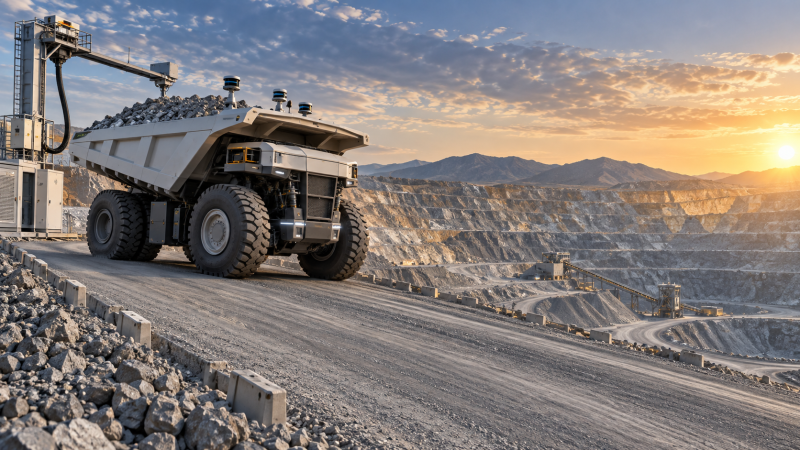
Mining Truck Technology Trends: What Fleet Managers Should Prioritize for 2026
As mining operations face rising fuel costs, stricter emissions expectations, and persistent pressure to move more material without extending shift hours, mining truck technology trends are becoming a board-level issue rather than a maintenance department discussion. The question for 2026 is not whether haulage fleets will become more digital, electrified, and automated. They will. The harder question is which investments genuinely improve total cost of ownership, safety, and availability on a specific mine site.
A large mining dump truck is not an isolated asset. Its performance depends on shovel loading practice, haul-road condition, gradient, dispatch logic, operator behavior, fuel or energy supply, workshop capability, and the mine plan itself. A technology that performs well in a deep open pit with consistent routes may deliver much less value at a developing mine where ramps change weekly. Fleet modernization therefore needs to start with operating reality, not a product brochure.
For project leaders managing capital allocation and delivery risk, 2026 should be the year of disciplined prioritization: solve the constraints that are already costing production before committing to the most visible technology on the market.
Battery-Electric Haulage Is Moving From Strategy Decks to Mine Design
Battery-electric mining trucks will remain one of the most closely watched heavy-haul developments in 2026. Their appeal is straightforward: reduced diesel dependence, lower local exhaust emissions, potentially quieter operation, and a pathway toward decarbonizing material movement. But the commercial case is not created by the truck alone. It is created by the relationship between the truck, energy infrastructure, haul profile, charging or battery-exchange method, and production schedule.
The first practical filter is duty cycle. A truck operating on a predictable route with a defined loading point, dumping point, and return leg is easier to electrify than one serving multiple changing faces. Long uphill loaded hauls, high ambient temperatures, and remote pit layouts all place different demands on battery capacity and thermal management. Conversely, downhill return routes may create opportunities for regenerative braking, although the usable benefit depends on the vehicle architecture and the site’s operating pattern.
Charging strategy needs equally careful attention. Fast charging may support fleet utilization, but it can create major demands on site power distribution and may introduce queueing risk if a charger becomes unavailable. Trolley-assist systems can be attractive on repetitive uphill sections, particularly where diesel consumption is concentrated on a limited ramp. Yet trolley infrastructure requires stable route geometry and must be considered alongside road maintenance, pit expansion plans, and traffic management. Battery swapping offers another route, but only where battery handling, storage, inspection, and logistics can be managed safely and consistently.
A common mistake is to compare an electric truck only with the fuel cost of a diesel truck. A more useful comparison includes the cost and reliability of power supply, charging downtime, fleet sizing implications, workshop readiness, battery lifecycle assumptions, and the operational consequence of an unexpected charging bottleneck. In high-altitude or extreme-temperature mines, these details deserve early engineering work rather than late-stage adjustment.
Autonomy Will Be Adopted in Layers, Not as a Single Switch
Autonomous haulage is often discussed as if a mine either has it or does not. In practice, the transition is more gradual. Many operations will continue to deploy assistance systems, remote operation, collision-awareness tools, geofencing, automated reporting, and centralized dispatch before they move to fully autonomous truck fleets. That is not a compromise. It is often the sensible path for mines where production zones, road layouts, and contractor interfaces are still evolving.
The strongest business case for autonomy is usually tied to repeatability. A stable haul circuit, well-defined exclusion zones, disciplined road rules, and reliable wireless coverage make automated operation easier to manage. Mines with frequent mixed traffic, informal route changes, or inconsistent loading practices may need to improve basic operating control before autonomy can deliver its intended value.
Safety is central, but it should not be reduced to a slogan. Removing operators from hazardous exposure can be compelling, particularly around highwalls, poor visibility, fatigue-sensitive shifts, and adverse weather. At the same time, autonomous systems create new control-room, network, maintenance, and emergency-response requirements. A stopped truck on a ramp is not merely a software event; it can become a production constraint. The mine needs clear rules for recovery, manual intervention, system isolation, and communications loss.
For 2026 planning, the most productive question may be: which portions of the haulage process are sufficiently structured to automate safely now? That could mean autonomous operation in a dedicated zone, remote dozing at a dump, or automated queue management before attempting a full fleet conversion.
Predictive Maintenance Must Connect to Maintenance Decisions
Mining trucks already generate substantial data from engine systems, electric drive components, brakes, tires, payload systems, hydraulic circuits, and onboard controllers. The issue is rarely a complete lack of information. More often, site teams have alarms, dashboards, and downloaded reports that do not translate into a timely maintenance decision.
Predictive maintenance becomes useful when it helps a planner answer specific questions: Can this truck remain in service until the next scheduled window? Is a component showing deterioration that warrants inspection before failure? Is a repeated temperature or pressure pattern linked to a particular route, load condition, or operator practice? The goal is not to predict every defect perfectly. It is to reduce unplanned interruptions and avoid replacing parts solely because a calendar says they are due.
Tire management deserves special attention. Tires are among the highest-risk cost and availability items in heavy haulage, and their condition is influenced by payload, speed, road surface, heat, pressure, turning behavior, and maintenance discipline. Tire-monitoring systems can be valuable, but only if alerts are matched to inspection routines and haul-road actions. A fleet cannot “analyze” its way out of sharp rock, poor drainage, excessive heat buildup, or loading practices that repeatedly exceed the truck’s intended payload range.
Before purchasing another analytics platform, managers should audit the current chain from sensor alert to work order to completed repair. If the process breaks at shift handover, parts availability, or technician access, more data will mostly produce more noise.
Fleet Data Integration Is Becoming an Operational Requirement
The next phase of mining truck technology is less about adding isolated sensors and more about connecting systems that already influence haulage performance. Dispatch data, payload records, fuel or energy consumption, maintenance history, road-condition observations, drill-and-blast information, and production planning are often held in separate environments. Each team can see part of the story, while no one has a complete view of why truck hours are being lost.
A truck showing poor cycle time may be constrained by loading delays rather than haul speed. High fuel burn may be related to rolling resistance on one neglected road segment, not an engine issue. Frequent brake-temperature alerts can point to a changed grade profile or an inappropriate retarder setting. These are operational interactions, and they matter more than a generic fleet dashboard.
Data integration also matters when mines operate mixed fleets, introduce electric trucks beside diesel units, or rely on contractors. Interfaces should be reviewed before procurement: who owns the data, how quickly can it be accessed, which records can be exported, and whether condition-monitoring information can be used in the site’s own planning tools. Closed systems are not always wrong, but they can limit operational visibility when the fleet becomes more complex.
At TF-Strategy, heavy-haul analysis is most useful when physical machine parameters are read alongside construction methodology and mine logistics. A truck’s rated capability is only one part of the decision. Grade resistance, loading consistency, power availability, maintenance access, and project sequencing can determine whether that capability is converted into productive tonnes.
Road Intelligence and Payload Discipline Still Deliver the Fastest Gains
Some of the most valuable 2026 priorities will not look futuristic. Haul roads remain a major determinant of truck productivity, fuel consumption, tire life, structural stress, and operator fatigue. Digital road-monitoring tools, machine guidance, onboard accelerometer data, and routine condition surveys can help identify corrugation, poor drainage, excessive rolling resistance, and problem areas near loading or dumping points.
The key is to connect road findings to a response. If a system identifies recurring roughness but road crews lack grading capacity, water management, or access windows, little changes. Similarly, payload measurement only creates value when loaders, dispatchers, and supervisors act on the variation it reveals. Chronic underloading wastes truck capacity; overloading may increase component stress, tire exposure, and braking demand. The desired outcome is not the highest payload on an individual cycle. It is reliable payload control across the fleet and across the shift.
This is where experienced operators and supervisors remain indispensable. Digital systems can flag deviation, but they do not automatically explain why a shovel operator is loading unevenly, why a road is breaking down after rain, or why a dump area is creating congestion. Technology should make those conversations more precise, not replace them with a screen in a control room.
How to Set a 2026 Technology Priority List
A practical modernization plan starts by identifying the dominant loss in the current haulage system. It may be fuel exposure, unplanned maintenance, tire failures, poor cycle-time consistency, staffing constraints, unsafe work in a specific zone, or a pending emissions commitment. Trying to solve all of these at once usually leads to overlapping systems and a workforce asked to absorb too much change too quickly.
It is also wise to stage investment around decision gates. Pilot work should test the difficult conditions, not just the easiest route or best-maintained truck. Include wet-weather performance, shift changes, network interruptions, maintenance access, and the possibility that the mine plan changes sooner than expected. A technically successful pilot can still fail commercially if it depends on unusually favorable conditions that cannot be repeated fleet-wide.
The 2026 Test: Technology That Protects Uptime
The direction of travel is clear: mining trucks will become more connected, more energy-flexible, and increasingly capable of operating with reduced human exposure. Yet fleet managers should resist treating electrification, autonomy, and analytics as separate innovation programs. They are interdependent operating systems with implications for roads, power, maintenance, workforce skills, and project scheduling.
The best investments for 2026 will be those that fit the mine’s actual constraints and improve decisions at the moment they matter: before a component fails, before a truck queues at an energy point, before a road defect becomes a tire event, or before a changing pit layout turns an automation plan into a bottleneck. In heavy haulage, advanced technology earns its place when it protects productive hours—not simply when it looks advanced on a fleet roadmap.
Related News
 Sep 19, 2026Mining Truck Technology Trends: What Fleet Managers Should Prioritize for 2026Mining truck technology trends for 2026: prioritize electrification, autonomy, predictive maintenance, and road intelligence to improve fleet uptime, safety, and cost control.
 Sep 17, 2026How TBM Guidance Technology Maintains Alignment Through Curves and Variable GroundTunnel boring machine guidance technology helps teams maintain precise alignment through curves and variable ground, reducing risk, improving lining accuracy, and protecting schedules.
 Sep 16, 2026Infrastructure Equipment Market Reference: Demand, Pricing, and Supplier BenchmarksInfrastructure equipment market reference for buyers: assess demand signals, total cost, pricing risks, and supplier benchmarks for tunnels, mining, cranes, and road projects.
 Sep 15, 2026How to Evaluate Infrastructure Equipment Suppliers for Complex Project RequirementsInfrastructure equipment solutions supplier evaluation guide for complex projects: assess technical fit, lifecycle cost, reliability, local support, and contract risk.
Prof. Marcus Chen
Weekly Insights
Stay ahead with our curated technology reports delivered every Monday.