
Mining Truck Maintenance Markets: Service Models Reshaping Fleet Availability
Mining Truck Maintenance Markets: Service Models Reshaping Fleet Availability
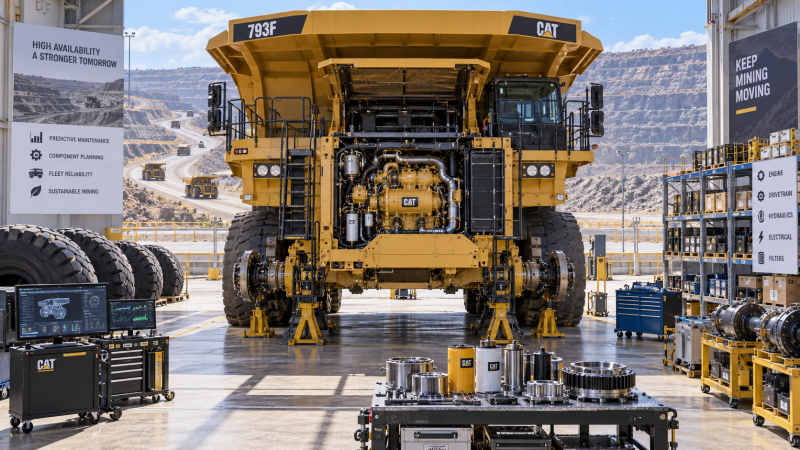
As mining operations pursue higher utilization, lower total cost of ownership, and safer production in difficult environments, truck maintenance is moving out of the workshop and into the boardroom. The mining truck fleet maintenance and repair services market is no longer defined only by parts supply, breakdown response, and scheduled overhauls. It is increasingly shaped by service models that connect machine condition, operator behavior, maintenance planning, supply-chain readiness, and production targets.
That shift matters because a haul truck rarely fails in a convenient place. A cooling-system issue discovered during a planned inspection is manageable; the same issue developing into an engine derate on a long uphill haul road can disrupt dispatching, overload the remaining fleet, and create knock-on risk for the shovel-truck balance. In high-altitude mines, desert heat, monsoon conditions, or remote greenfield sites, maintenance decisions are inseparable from operational continuity.
For decision-makers, the central question is no longer simply whether to outsource maintenance. It is which service model gives the operation enough control, technical depth, and commercial flexibility to keep critical trucks working without locking the mine into an arrangement that performs poorly when production plans, fleet age, or equipment technology changes.
Availability Has Become a Service Outcome, Not Just a Maintenance Metric
Mining organizations have always tracked availability, but the way it is managed is changing. Traditional maintenance contracts often focused on labor rates, repair turnaround, or the unit price of parts. Those terms still matter, especially for older fleets with frequent component work. Yet they do not fully describe the economic consequence of an unavailable truck. A low parts price offers little comfort if the required component is not on site, the repair team lacks the correct diagnostic access, or the repair window collides with peak stripping activity.
The more mature service arrangements are therefore built around fleet readiness. This can include planned maintenance compliance, component-health monitoring, agreed response processes, critical-parts planning, field technician coverage, and reporting that links mechanical events with operating conditions. The commercial discussion becomes more demanding as well. A contractor or original equipment manufacturer may be asked to share responsibility for outcomes, while the mine must provide reliable operating data, access to equipment, and discipline in day-to-day inspection routines.
There is a practical limit to performance-based contracting. Availability cannot fairly be guaranteed by a maintenance provider if trucks are routinely overloaded, haul roads deteriorate, operators bypass alarms, or idle time masks underlying defects. The strongest contracts recognize this shared reality. They define responsibilities clearly rather than treating availability as a number that one party can control alone.
Why the Maintenance Market Is Fragmenting into Different Service Models
The mining truck maintenance and repair services market now includes several models operating side by side. No single approach is automatically superior. The right choice depends on fleet size, truck class, mine life, remoteness, local labor capability, warranty position, and whether the site is running conventional diesel haulage, trolley-assist equipment, or an emerging battery-electric fleet.
Many mines will use a hybrid arrangement. An internal team may retain daily inspections, routine servicing, and operational control, while OEM technicians support software-intensive systems and independent rebuild specialists handle selected components. This is not necessarily a compromise. For a mixed fleet assembled over several procurement cycles, it can be the most realistic way to prevent one supplier relationship from becoming a bottleneck.
What is changing is the expectation that maintenance providers bring more than mechanics. Mines increasingly look for diagnostic competence, planning support, fluid-analysis interpretation, component-life forecasting, training, and the ability to coordinate with dispatch and production teams. The service provider is being judged on whether it helps the site see trouble early enough to act.
Predictive Maintenance Is Valuable Only When It Changes the Work Plan
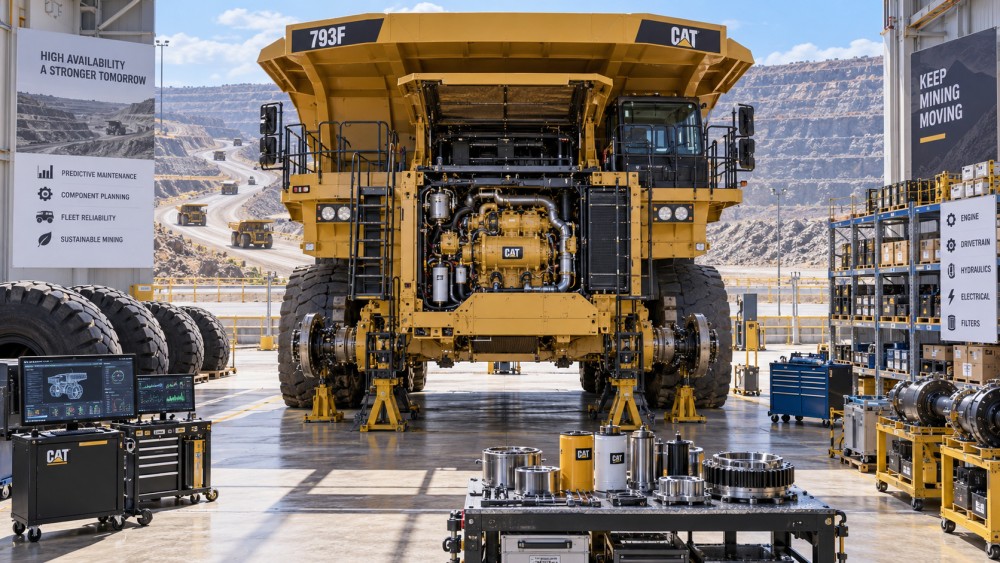
Condition monitoring has become a central feature of modern heavy-haul service offers. Truck systems can generate information on temperatures, pressures, payload patterns, brake condition, battery status, fault events, and other operating signals. Remote monitoring centers and connected diagnostic platforms can help identify abnormal trends before they become roadside failures.
But more data does not automatically mean better maintenance. A site can be flooded with alerts while planners still struggle to secure a bay, schedule a truck, obtain parts, and release labor at the right time. The useful measure is not how many warnings are generated. It is whether the warning leads to a better maintenance decision: continue under observation, inspect at the next planned stop, reduce operating exposure, or remove the machine before secondary damage develops.
This is where experienced maintenance teams separate signal from noise. They compare telemetry with the truck’s duty cycle, recent repairs, ambient conditions, payload records, and operator reports. A recurring high-temperature event may point to a cooling-system problem, but it may also be influenced by road grade, queueing, radiator contamination, or a changed production route. Digital diagnostics should sharpen judgment, not replace it.
Remote support is particularly relevant for mines that cannot keep every specialist on site. A local technician can perform an inspection while an off-site expert reviews fault history and guides testing. Yet the model depends on communications reliability, cybersecurity controls, clearly defined escalation paths, and a workforce that trusts the process. Technology that is treated as surveillance rather than maintenance support tends to produce poor reporting behavior.
Component Planning Is Where Service Promises Meet Mine Reality
Engines, transmissions, wheel motors, final drives, suspension components, braking systems, and structural elements all have different failure patterns and lead times. A maintenance agreement can look comprehensive on paper but still leave an operation exposed if the critical component strategy is vague. This is especially true at remote mines, where airfreight is expensive, border clearance can be uncertain, and a replacement unit may not be available when needed.
The most credible service models treat component management as a planning discipline rather than an emergency purchasing exercise. They identify long-lead items, establish repair-versus-replace criteria, maintain traceability for major rebuilds, and review what is actually driving removals. If the same type of component repeatedly comes off early, the answer may not be a different supplier. The mine may need to examine contamination control, installation practice, operator use, road conditions, or the compatibility of the component with the duty cycle.
This is also why total cost of ownership should not be reduced to a comparison of contract prices. Deferred maintenance, poorly timed rebuilds, excess inventory, avoidable towing, and production disturbance can all distort the apparent savings from a cheaper service arrangement. Conversely, paying for premium technical coverage makes little sense if the fleet’s operating hours are low and a capable local team can handle most work internally.
Electrification Will Change the Service Mix, Not Eliminate Maintenance
The commercial logic of battery-electric mining trucks is attracting close attention as mines assess emissions, energy infrastructure, ventilation needs, and long-term operating economics. The maintenance implications are often oversimplified. Some conventional powertrain tasks may change or diminish, but high-voltage systems introduce new inspection requirements, isolation procedures, diagnostic needs, thermal-management concerns, and workforce competency requirements.
Chassis, tires, suspension, braking, steering, frames, and haul-road-related wear do not disappear because the truck is electric. In certain applications, the operating pattern may make mechanical and structural condition even more important. Service providers that understand both conventional heavy-haul maintenance and the evolving electrical architecture will have an advantage, particularly during early fleet transitions when sites operate mixed technologies.
Before signing a service package for new-energy trucks, operators should ask practical questions: who owns battery-health data, who is qualified to perform high-voltage work, what happens when remote diagnostics are unavailable, and how are charging or energy-system faults separated from truck faults? These details are less glamorous than an electrification announcement, but they determine whether the fleet can work consistently.
Choosing a Service Partner Requires More Than a Commercial Comparison
A strong procurement process should test how a provider operates under pressure. Decision-makers should examine technical depth at the actual mine location, escalation access to engineering support, spare-parts strategy, shift coverage, training plans, data ownership, and the way disputes over availability or component condition will be resolved. Generic presentations about “uptime solutions” are not enough.
It is worth asking for a clear maintenance governance rhythm: daily operational interfaces, weekly planning reviews, component-health discussions, and periodic commercial reviews. If the contractor, maintenance team, and production department meet only after a major failure, the contract is already operating too late. The objective is to surface trade-offs early—for example, whether to take a truck down now for a controlled intervention or run it through a short production campaign with additional monitoring.
The Global Terra-Force Hub, through its focus on mining dump trucks, ultra-large excavators, and the wider earth-engineering equipment chain, tracks this convergence of physical machine parameters and project strategy. For large mining developments, truck maintenance cannot be assessed in isolation from loading equipment, haul-road design, power supply, climate exposure, and the operating philosophy of the mine itself. The relevant intelligence is not merely which service model is being marketed, but where that model has a credible operating fit.
The Market Is Moving Toward Shared Visibility and Clearer Accountability
The future of the mining truck fleet maintenance and repair services market will be shaped less by a simple choice between internal and outsourced maintenance than by how effectively responsibilities are connected. Mines want earlier fault detection, faster technical support, predictable component planning, and lower disruption from unplanned events. Service providers want access to accurate operating data, stable scope, and site practices that do not undermine equipment reliability.
The best arrangements make those dependencies visible. They do not promise that every truck will run flawlessly in every condition. They create a disciplined system for deciding what to inspect, what to repair, what to stock, and when to intervene. For a fleet that carries production every shift, that is a far more useful definition of service than a fast response after the truck has already stopped.
Related News
 Oct 15, 2026Crane Selection for Petrochemical Turnarounds: Capacity, Radius, and Site AccessExplore petrochemical lifting solutions cranes can deliver, with expert guidance on capacity, working radius, and site access to help you plan a safer, more efficient turnaround.
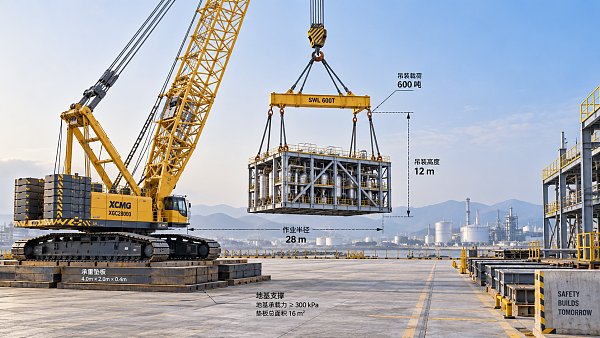
 Oct 14, 2026High-Capacity Heavy Lifting Solutions: Matching Load, Radius, and Ground ConditionsDiscover heavy lifting solutions high capacity projects demand—compare load charts, working radius, and ground conditions to select a feasible, cost-effective system.
 Oct 13, 2026OEM Equipment Suppliers in Europe: Vetting Quality, Lead Times, and SupportCompare OEM equipment Europe suppliers on quality, lead times, and after-sales support. Discover practical vetting steps to reduce downtime and buy heavy equipment with confidence.
 Oct 12, 2026How to Assess a High-Altitude Mining Equipment Manufacturer for Remote ProjectsHigh altitude mining manufacturer assessment guide: compare derating, cold-climate reliability, remote service, parts resilience, and lifecycle risk for smarter project decisions.

Prof. Marcus Chen
Weekly Insights
Stay ahead with our curated technology reports delivered every Monday.