
Mining Machinery Advancements Report: Which Technologies Are Reshaping Cost and Productivity?
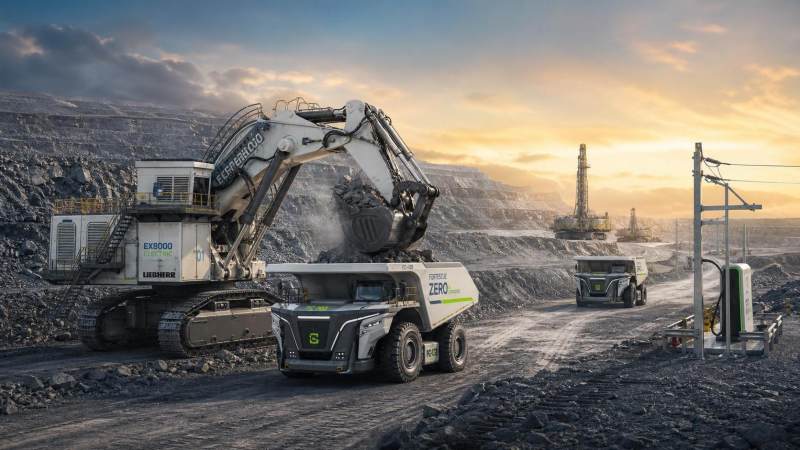
The latest mining machinery advancements report points to a clear shift in how mine productivity is judged. Output still matters, but so do energy intensity, availability, cycle stability, and lifetime cost.
That change is especially relevant across heavy industry, where equipment decisions now sit between commodity pressure, decarbonization targets, labor constraints, and stricter safety expectations.
In practical terms, the question is no longer which machine is largest or fastest on paper. The more useful question is which technologies improve total cost of ownership without creating new operational fragility.
For operators tracking open-pit fleets, support infrastructure, and adjacent earth-engineering assets, this mining machinery advancements report offers a grounded view of where value is becoming measurable.
Why technology now drives mining economics
Mining has always been capital intensive, but the economics have become more sensitive to downtime, fuel volatility, spare parts lead times, and site-specific energy constraints.
A one-point gain in availability can be more valuable than a headline increase in nominal payload. The same is true when maintenance intervals become more predictable.
This is why a mining machinery advancements report now extends beyond equipment specifications. It has to connect mechanical design, digital systems, workforce deployment, and infrastructure readiness.
That broader lens is consistent with TF-Strategy’s role in linking machine parameters, construction methodology, and infrastructure strategy across global heavy equipment markets.
The technologies changing cost and productivity first
Electrification and hybrid power
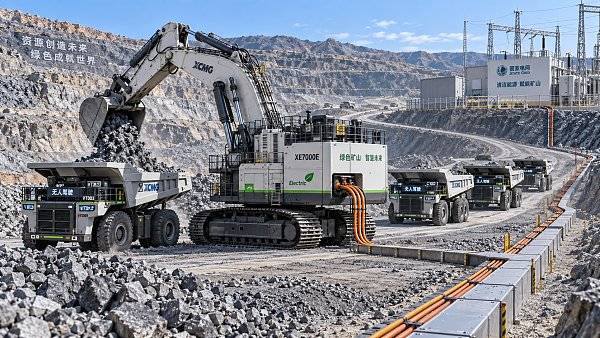
Electrification is moving from pilot discussion to fleet planning. In haulage, pure electric and trolley-assisted systems are reducing diesel exposure and improving energy conversion efficiency.
The main benefit is not fuel savings alone. Lower thermal stress, fewer engine-related service events, and smoother torque delivery can reshape long-run operating profiles.
Still, project value depends on charging design, grid stability, elevation, ambient temperature, and haul route geometry. Electrification without infrastructure discipline can shift cost rather than remove it.
Automation and autonomous haulage
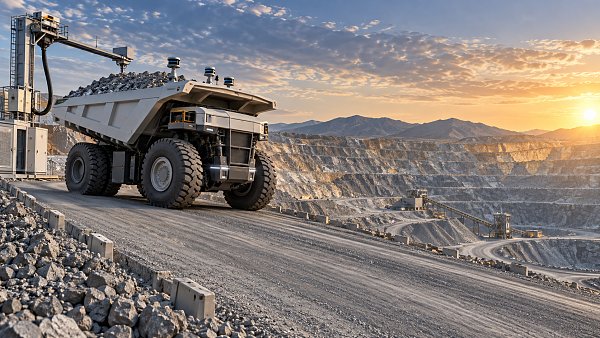
Autonomous haulage systems are no longer judged only by technical novelty. Their commercial value comes from consistent cycle times, reduced idle behavior, and safer operation in repetitive routes.
Autonomy also improves production planning because dispatch quality becomes less dependent on shift variability. That matters on large mines where small delays multiply across dozens of units.
The strongest results usually appear where roads, traffic logic, and maintenance processes were standardized before autonomy was deployed.
Remote control and 5G-enabled operations
Remote-controlled excavation and drilling are gaining traction where safety, remoteness, or climate stress make conventional operation less efficient.
A mature mining machinery advancements report now treats connectivity as production infrastructure. Low-latency control, stable video feeds, and resilient edge computing affect utilization as directly as hydraulics.
This is one reason TF-Strategy tracks 5G remote-controlled excavation as an evolutionary trend, not a side topic.
Predictive maintenance and condition intelligence
Sensor-rich fleets are making maintenance less reactive. Vibration, temperature, hydraulic pressure, tire behavior, and lubrication data now support earlier fault detection.
This affects cost in two ways. It lowers catastrophic failure risk, and it improves parts planning in a period of uneven global supply chains.
The larger point is simple: maintenance intelligence has become a productivity tool, not just an engineering support function.
Where these changes show up on site
The impact of any mining machinery advancements report becomes clearer when viewed by equipment class and operating context rather than by technology label alone.
Open-pit operations see the fastest financial effect because excavation, loading, and haulage are tightly linked. One bottleneck quickly erodes gains made elsewhere.
That is why comparisons across excavators, dump trucks, road machinery, and lifting support assets can be more valuable than a narrow machine-only review.
What a serious evaluation should measure
A useful mining machinery advancements report should not stop at claimed efficiency gains. It should test whether those gains survive real operating conditions.
- Energy source fit: diesel, hybrid, trolley, or full electric under local power conditions.
- Availability quality: planned uptime versus uptime lost to software, charging, or component bottlenecks.
- Maintenance burden: technician skill needs, spare inventory, and service interval realism.
- Digital reliability: network resilience, cybersecurity exposure, and integration with fleet systems.
- Safety effect: operator distance from hazards, visibility, and emergency response continuity.
- Scalability: whether one pilot unit can translate into a multi-asset operating model.
This is where many assessments drift off course. A technology may work technically while failing commercially because the site is not ready for the supporting ecosystem.
Why adjacent heavy equipment trends matter
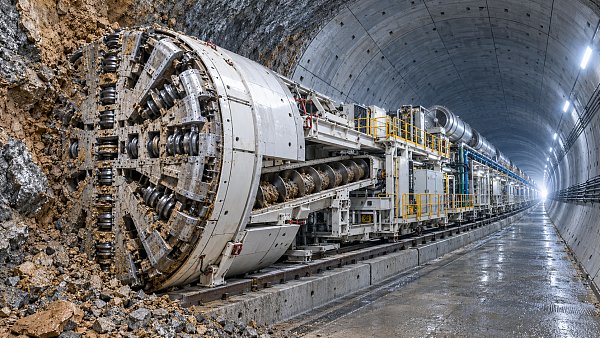
Mining does not evolve in isolation. The same digital, material, and energy transitions affecting TBM systems, crawler cranes, and large road machinery influence mine economics too.
For example, stronger cutter materials and smarter wear analysis in tunneling reflect a broader market push toward component longevity and data-backed replacement timing.
Likewise, large lifting projects in wind and petrochemical construction are accelerating expectations around remote diagnostics, safety interlocks, and project-level equipment coordination.
TF-Strategy’s cross-sector intelligence model matters here because investment logic is increasingly shared across earth engineering, transport corridors, energy infrastructure, and resource extraction.
Signals that deserve closer attention over the next cycle
Not every innovation will reshape economics at the same speed. Some are already affecting procurement logic, while others remain sensitive to region, ore body, and energy pricing.
Near-term signals
- Faster adoption of electric haulage where energy supply is stable and carbon accounting matters.
- Broader use of teleoperation in harsh climates and safety-critical zones.
- Expansion of predictive maintenance from premium fleets to mid-scale operations.
Medium-term signals
- Closer integration between fleet software, mine planning, and energy management.
- More procurement tied to lifecycle guarantees rather than unit price alone.
- Rising interest in platform designs that simplify mixed-fleet service and data collection.
How to use this mining machinery advancements report in decision work
The best use of a mining machinery advancements report is to build a decision frame before comparing brands, models, or pilot proposals.
Start with the cost drivers that matter most on the target site. Usually that means haul energy, downtime concentration, maintenance logistics, and production variability.
Then map each technology against actual constraints. A battery truck, autonomous haulage package, or remote excavation system only creates value when site readiness is visible and measurable.
It also helps to compare mining assets within the wider heavy-equipment landscape. Lessons from tunneling, lifting, and road machinery often reveal where mining technology is becoming commercially mature.
The next step is not to chase every innovation. It is to define a short list of technologies, test them against TCO, infrastructure fit, and operational resilience, and keep watching the signals that TF-Strategy tracks across global earth engineering.
Related News
 Oct 08, 2026How to Evaluate a Heavy Machinery Information Platform for Project Equipment SourcingHeavy machinery information platform guide: compare equipment fit, source reliability, lifecycle costs, supplier capability, and compliance to make smarter sourcing decisions.
 Oct 07, 2026How to Evaluate a Hydraulic System Component Supplier for Heavy Equipment UptimeChoose a hydraulic system component supplier with proven quality, technical fit, and reliable delivery to reduce heavy equipment downtime and lifecycle costs.
 Oct 06, 2026Selecting Petrochemical Overhead Cranes for Hazardous Areas and Heavy Process LoadsPetrochemical overhead cranes for hazardous areas: learn how to match capacity, duty, controls, corrosion protection, and maintenance access for safer, reliable lifts.
 Oct 05, 2026Tunneling Equipment Specification Planning: Key Criteria for Ground and Project RisksEquipment specification planning tunneling: learn how to match TBM systems to ground risks, geometry, safety, logistics, and lifecycle cost for more reliable project delivery.
Prof. Marcus Chen
Weekly Insights
Stay ahead with our curated technology reports delivered every Monday.