
Open Pit Haulage Systems: How to Choose the Right Fleet and Route Strategy
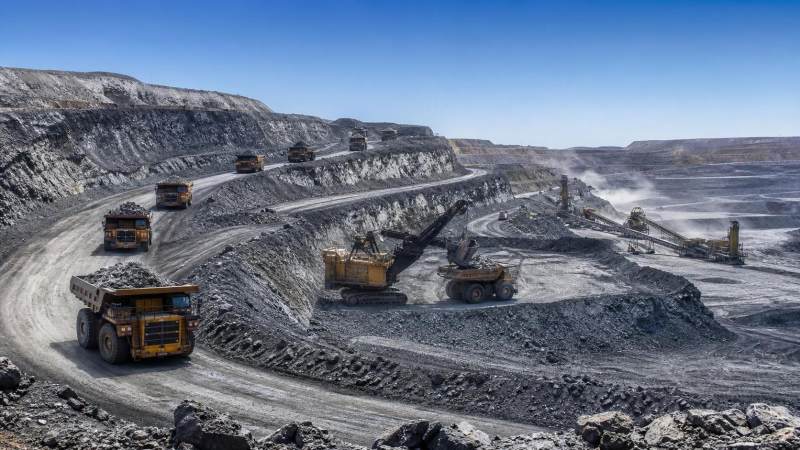
Open pit haulage systems sit at the center of mine productivity because every blasted tonne must move through a route network before it becomes revenue. A strong haulage plan does more than assign trucks to shovels. It shapes fuel burn, tire life, maintenance intervals, cycle stability, and exposure to safety risk. In today’s mining environment, where cost pressure, decarbonization targets, and schedule certainty all matter, choosing the right fleet and route strategy has become a planning decision with long operational consequences.
Why haulage strategy now deserves closer attention
Many pits still lose performance through small, repeated inefficiencies rather than one dramatic failure. Trucks queue at the loading face. Road gradients drift beyond the original design intent. Haul distances increase as the pit deepens, but dispatch rules remain unchanged.
That matters because open pit haulage systems usually represent one of the largest operating cost centers in surface mining. Diesel, tires, maintenance labor, road upkeep, and idle time compound quickly when fleet choices are mismatched to the mine plan.
From the broader heavy industry perspective, this is also where physical machinery parameters meet site engineering. That linkage is central to TF-Strategy’s view of infrastructure intelligence: machine capability only creates value when it is matched with terrain, route geometry, and production logic.
What open pit haulage systems really include
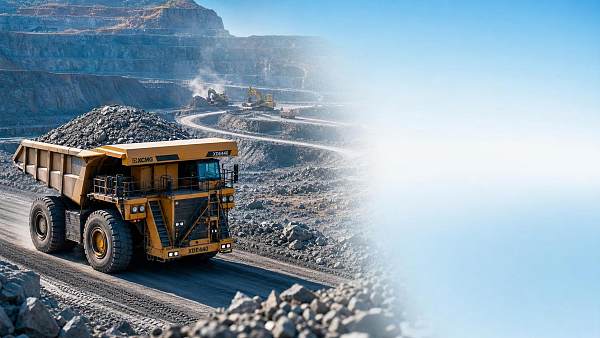
The term covers far more than the truck fleet. In practice, open pit haulage systems combine loading tools, haul trucks, road networks, dumping points, dispatch software, fueling support, maintenance access, and traffic control rules.
A mine can buy efficient trucks and still underperform if the road width is too narrow, the ramp is too steep, or dumping congestion erodes cycle time. The system works as a chain. Weakness in one link spreads across the whole circuit.
This is why fleet selection should never be isolated from route strategy. Payload, turning radius, braking performance, and powertrain behavior all interact with road conditions and daily traffic patterns.
Fleet choice starts with mine geometry, not catalog capacity
The first decision is rarely about the biggest truck available. It is about the truck that can sustain target throughput across the real mine layout. Bench width, pit depth, turning space, and crusher location often narrow the best options quickly.
Large trucks can reduce unit haulage cost on stable, long-life pits with wide roads and predictable loading conditions. Smaller or mid-size fleets may perform better where selective mining, tighter geometries, or frequent route changes demand more flexibility.
Key fleet selection variables
- Average and peak haul distance across the mine life
- Ramp gradient, rolling resistance, and seasonal road quality
- Match factor between loaders and truck payload class
- Fuel or energy infrastructure for diesel, trolley, or battery models
- Maintenance support, parts supply, and technician capability
- Ore and waste movement balance over short and long planning horizons
A useful rule is to size the fleet around sustained system output, not theoretical truck availability. Nameplate payload means little if loading tools cannot fill the body efficiently or if roads force slow uphill travel during peak hours.
Route design has as much impact as truck specification
Route strategy is where many open pit haulage systems gain or lose value. A few percentage points in gradient reduction or a modest improvement in drainage can change cycle time, tire wear, and braking stress across the full fleet.
Road design should reflect not only current traffic but future pit phases. Haul roads that work well in year one may become bottlenecks in year four if deepening pits create longer climbs and more cross-traffic around pushbacks or waste dumps.
Route factors that deserve early modeling
In practical terms, route strategy should be reviewed with the same rigor used for truck procurement. A cheaper road decision can become an expensive fleet problem for years.
Matching the loading fleet and haul trucks
An efficient hauling system depends on balance. If loaders wait for trucks, capital is underused. If trucks wait for loaders, the mine pays for idle engines, delayed tonnage, and unstable shift performance.
The loader-truck match should be tested around pass count, bucket fill factor, fragmentation variability, and dump body utilization. Consistent loading in four to six passes is often preferred, but local conditions can justify different targets.
This is especially important in mixed fleets. When mines use more than one truck class, dispatch complexity rises. The benefit is flexibility, but only if loading points and routes are clearly assigned.
Technology is reshaping open pit haulage systems
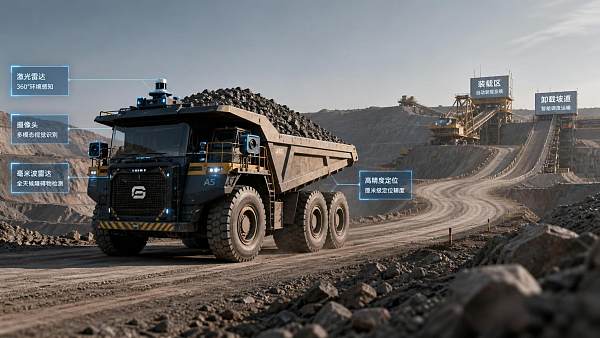
Current industry attention goes beyond conventional dispatch. Mines are testing autonomous haulage, 5G-enabled remote coordination, collision avoidance layers, and real-time road condition monitoring. These tools can improve consistency, but they do not fix weak system design.
The same applies to energy transition decisions. Battery-electric and trolley-assisted trucks are drawing interest because they can reduce diesel dependence and emissions. Yet their value depends on route profile, charging logic, and grid or power infrastructure.
TF-Strategy’s heavy haulage perspective is useful here. New technology should be judged through total asset performance, not novelty. The right question is whether the system lowers lifecycle cost while protecting output reliability.
Common mistakes in haulage planning
Several issues appear repeatedly across open pit haulage systems, especially when mines scale quickly or change phases faster than support functions can adapt.
- Buying trucks before confirming long-term route geometry
- Using short-term contractor performance as the main sizing reference
- Ignoring weather effects on rolling resistance and drainage demand
- Treating dispatch software as a substitute for road discipline
- Focusing on hourly peaks instead of stable weekly throughput
- Underestimating tire management and road maintenance interaction
Most of these mistakes are not technical mysteries. They come from fragmented decision-making, where planning, operations, and maintenance optimize separately instead of around one haulage outcome.
A practical framework for choosing fleet and route strategy
A workable decision process usually starts with three layers. First, define the mine sequence and material movement profile over multiple years. Second, test fleet classes against route constraints. Third, compare scenarios using cost, safety, and resilience together.
Questions worth answering before selection
- How will haul distance change as pushbacks advance?
- Which route segments create the highest energy penalty?
- What truck class best matches loading tools across ore and waste circuits?
- Where will queueing likely occur during peak shifts?
- Can road maintenance standards support the chosen fleet consistently?
- Which technology options improve control without overcomplicating operations?
This kind of framework keeps open pit haulage systems tied to mine economics rather than isolated equipment preferences. It also supports better communication with OEMs, contractors, and internal planning teams.
Where to focus next
The best next step is usually a structured review of current haulage assumptions. Recheck route gradients, road widths, loading match, and delay patterns against the latest mine plan. Then compare those findings with fleet capability, maintenance capacity, and energy strategy.
Open pit haulage systems perform well when engineering discipline, operating data, and equipment selection are treated as one decision set. That is where stronger productivity and lower total cost usually emerge. For teams tracking heavy equipment trends through platforms such as TF-Strategy, the most useful intelligence is often the intelligence that connects machine detail to site reality.
Related News
 Oct 08, 2026How to Evaluate a Heavy Machinery Information Platform for Project Equipment SourcingHeavy machinery information platform guide: compare equipment fit, source reliability, lifecycle costs, supplier capability, and compliance to make smarter sourcing decisions.
 Oct 07, 2026How to Evaluate a Hydraulic System Component Supplier for Heavy Equipment UptimeChoose a hydraulic system component supplier with proven quality, technical fit, and reliable delivery to reduce heavy equipment downtime and lifecycle costs.
 Oct 06, 2026Selecting Petrochemical Overhead Cranes for Hazardous Areas and Heavy Process LoadsPetrochemical overhead cranes for hazardous areas: learn how to match capacity, duty, controls, corrosion protection, and maintenance access for safer, reliable lifts.
 Oct 05, 2026Tunneling Equipment Specification Planning: Key Criteria for Ground and Project RisksEquipment specification planning tunneling: learn how to match TBM systems to ground risks, geometry, safety, logistics, and lifecycle cost for more reliable project delivery.
Heavy Haulage Strategist
Weekly Insights
Stay ahead with our curated technology reports delivered every Monday.