
Why global infrastructure spending is shifting toward resilience
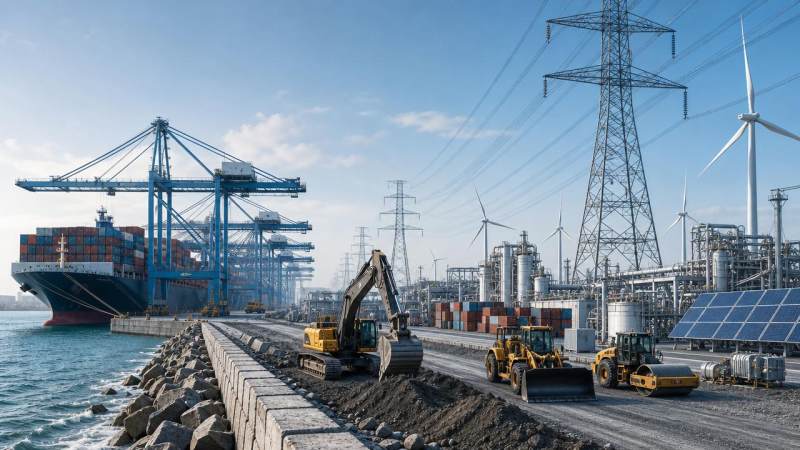
Why is global infrastructure spending moving away from pure expansion and toward resilience? From climate shocks and supply-chain disruption to energy transition and strategic security, governments and contractors are redefining project value. For researchers tracking global infrastructure, this shift reveals how durability, adaptability, and lifecycle efficiency are becoming the new benchmarks for investment.
A clear shift is emerging across global infrastructure priorities
For decades, infrastructure policy was often judged by speed, scale, and visible expansion. More roads, more ports, more power assets, and faster delivery were treated as the main indicators of progress. That logic is still present, but it is no longer sufficient. Across global infrastructure markets, the emphasis is changing from building more at any cost to building systems that can continue to perform under pressure.
This is not a cosmetic policy adjustment. It reflects a deeper reassessment of risk. Floods, heatwaves, grid instability, commodity volatility, geopolitical friction, and labor constraints have exposed how fragile many assets and supply networks can be. As a result, infrastructure planners are giving more weight to resilience: the ability of physical systems, equipment fleets, and construction programs to absorb shocks, adapt to change, and recover faster.
In practical terms, this means that project value in global infrastructure is increasingly measured through lifecycle performance rather than upfront capacity alone. A tunnel, mine haul corridor, lifting program, or transport link is now evaluated not just by whether it can be built, but by whether it can stay productive under tougher operating conditions and evolving policy expectations.
Why resilience is rising now instead of later
Several trend signals explain why resilience has moved to the center of decision-making. First, climate exposure is no longer a future scenario; it is a present operating condition. Extreme rainfall affects tunneling schedules, heat stresses road surfaces and workers, and storms disrupt ports, power lines, and heavy-lift logistics. Infrastructure owners can no longer assume stable environmental baselines.
Second, the supply chain lessons of recent years changed procurement logic. Delays in steel, components, hydraulic systems, semiconductors, and energy inputs revealed that low-cost sourcing does not always produce low-risk delivery. In global infrastructure, resilience now includes supply continuity, spare parts access, local service capability, and the flexibility to substitute materials or redesign workflows when disruptions appear.
Third, the energy transition is raising performance expectations. New transmission links, offshore wind foundations, pumped storage, metro systems, and low-emission mining operations require infrastructure that can support electrification, digital controls, and more variable demand patterns. This favors equipment and engineering strategies that can operate efficiently while meeting stricter environmental and safety standards.
Fourth, strategic security has become a budget driver. Water systems, transport corridors, mineral extraction zones, and industrial logistics networks are now viewed through a national resilience lens. Governments are funding projects not only for growth, but also for continuity, redundancy, and strategic autonomy.
The definition of infrastructure quality is broadening
A major change in global infrastructure is that quality is no longer judged only by engineering completion. It now includes operational intelligence, maintainability, repair speed, energy efficiency, workforce safety, and interoperability with digital systems. This broader definition is influencing the heavy-equipment ecosystem in important ways.
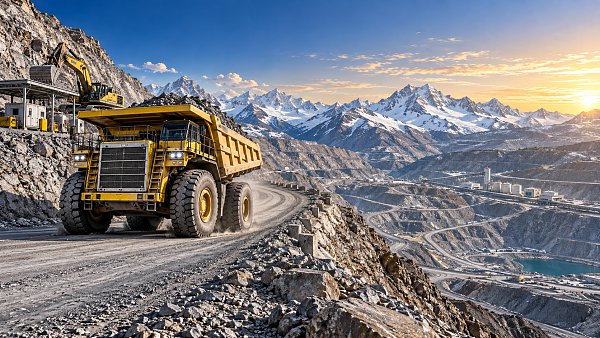
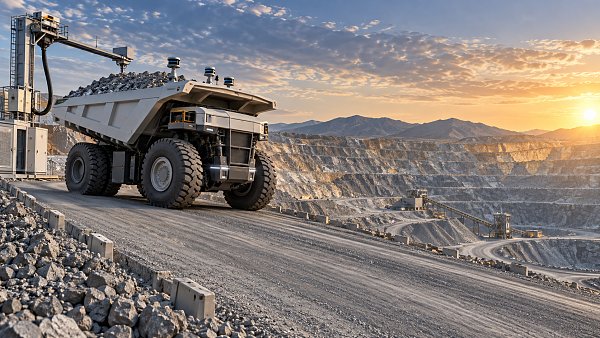
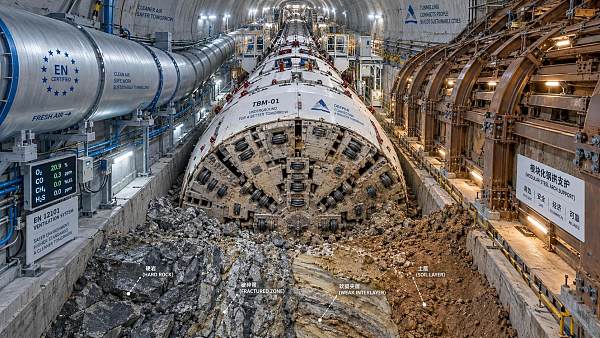
For tunnel boring machines, resilience means more than excavation speed. It includes cutter-head durability under changing geology, remote diagnostics, spare-part planning, and the ability to keep tunneling windows reliable in dense urban or mountainous environments. For open-pit mining fleets, it means haul systems that can maintain output under altitude, heat, and power-transition pressures. For crawler cranes, it means lifting strategies and machine reliability strong enough to support complex wind, nuclear, or petrochemical schedules without cascading delay risks.
This is exactly where intelligence-led analysis becomes more valuable. Platforms such as TF-Strategy are relevant because resilience is not just a design topic; it is a cross-functional decision topic linking machinery parameters, geological realities, construction methods, and strategic investment priorities. Researchers and contractors increasingly need stitched intelligence, not fragmented data.
Who feels the impact most across the value chain
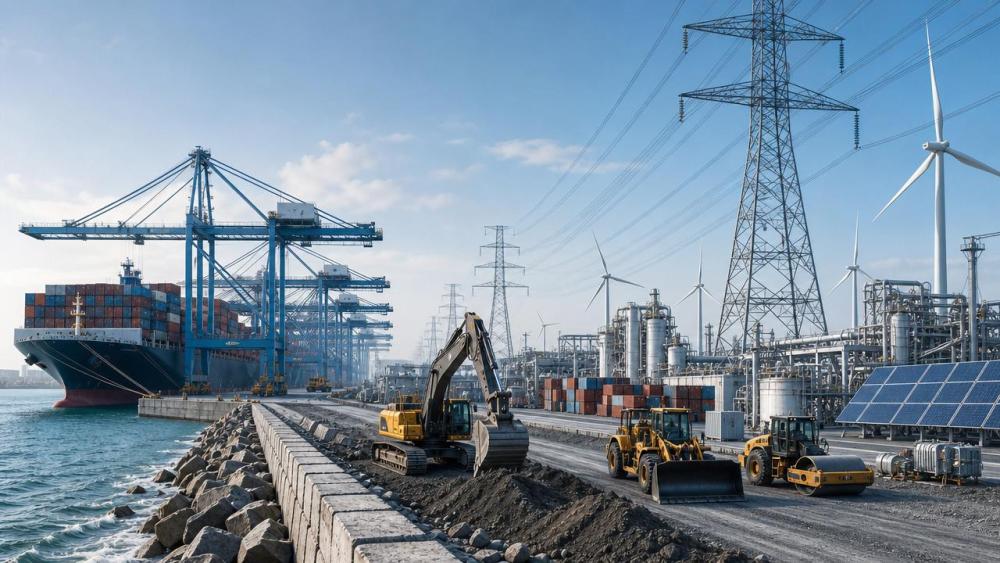
The resilience shift in global infrastructure does not affect all participants in the same way. Some actors see new opportunity, while others face higher compliance pressure or procurement scrutiny. The strongest impact is visible where project interruption is expensive, where asset life is long, and where failure consequences are politically or financially severe.
How procurement logic is changing in resilient global infrastructure
One of the most important trend changes is happening in procurement. Lowest-price logic still matters, especially in cost-sensitive markets, but it is being moderated by resilience metrics. Buyers increasingly ask different questions: How quickly can a fleet be repaired? Is technical support local or remote? Can software updates improve uptime? How exposed is the machine to energy cost swings? What happens if a key component is delayed for months?
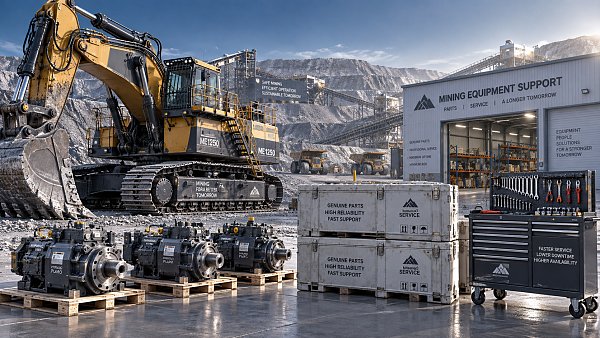
In global infrastructure, that shift favors suppliers that can demonstrate performance under difficult operating conditions. Documentation quality, service networks, predictive maintenance capability, and component traceability are becoming more strategic. This is particularly relevant in sectors covered by TF-Strategy, where downtime can create major cost overruns. In tunneling, mining, heavy lifting, and road construction, procurement decisions are moving closer to total cost of ownership and continuity assurance.
Another change is the growing value of modularity and upgradeability. Buyers want assets that can adapt to regulation, digital integration, or changing energy systems instead of becoming obsolete too early. That mindset supports more resilient capital allocation and explains why some newer platforms gain attention even when their upfront cost is higher.
Technology is no longer optional to resilience
Resilience in global infrastructure is increasingly technology-enabled. Sensors, remote monitoring, fleet analytics, geotechnical data integration, and semi-autonomous control systems help operators anticipate failure before it becomes disruption. In heavy equipment, the value of digitalization is shifting from convenience to continuity. If machine health data can prevent an expensive stoppage, the digital layer becomes part of infrastructure resilience rather than an add-on.
This matters in sectors where operating conditions are extreme or access windows are narrow. A TBM project cannot tolerate avoidable component failure deep underground. A mining dump truck fleet operating in remote, high-temperature zones needs predictive insight into tire, battery, or drivetrain stress. A crawler crane involved in high-value component installation must support exacting safety and uptime requirements. The common theme is that resilience now depends on decision intelligence as much as on steel and concrete.
What signals researchers should monitor next
For information researchers following global infrastructure, the most useful signals are not always the biggest headline budgets. It is often more revealing to watch how spending criteria are changing. Are tenders asking for lifecycle emissions, adaptation measures, remote service capability, or redundancy planning? Are project owners revising technical standards after climate events? Are financiers and insurers tightening assumptions around downtime and operational recovery?
Regional variation also matters. Some markets prioritize climate adaptation, while others emphasize resource security, industrial localization, or transport reliability. Yet across these different policy narratives, the same underlying direction appears: global infrastructure spending is favoring systems that remain functional under stress and can evolve with future demands.
Researchers should also pay attention to where resilience spending becomes embedded rather than labeled. It may not always appear as a separate category. Instead, it shows up in stricter material requirements, backup power design, drainage upgrades, digital maintenance platforms, local content rules, or multi-source procurement conditions.
How companies can respond without overreacting
The right response is not to treat resilience as a slogan. Companies participating in global infrastructure should translate the trend into specific operational questions. Which assets create the highest interruption risk? Which supply dependencies are least visible but most dangerous? Which machine capabilities matter most under new climate, safety, or energy constraints? Which bids are being won because of service credibility rather than equipment price alone?
A practical approach is to build a resilience lens into market assessment. For equipment suppliers, that means mapping where durability, electrification readiness, remote diagnostics, and local aftersales support create measurable advantage. For contractors, it means improving scenario planning, supplier diversification, and schedule design. For intelligence teams, it means connecting project data with technology trends, material risks, and policy evolution instead of tracking them separately.
The long-term direction is durable, not temporary
The move toward resilience in global infrastructure should not be dismissed as a short-term response to recent disruptions. It aligns with longer structural forces: climate adaptation, strategic competition, energy system redesign, urban complexity, and tighter expectations around safety and asset productivity. These forces will continue to influence how projects are justified, financed, engineered, and operated.
For sectors linked to heavy machinery and earth engineering, the implication is clear. Future competitiveness will depend less on isolated machine specifications and more on the ability to support resilient outcomes across the project lifecycle. That is why integrated intelligence matters. Understanding how physical equipment, construction methods, raw materials, and policy signals connect is becoming essential for sound judgment.
If your business is trying to assess how this trend will affect its position in global infrastructure, the most useful next step is to confirm three things: where resilience is already changing customer expectations, which operational weaknesses could become commercial disadvantages, and what data is needed to turn uncertainty into better decisions. For researchers, contractors, and equipment stakeholders alike, that is where trend awareness becomes strategic action.
Related News
 Sep 22, 2026How to Evaluate a High-Altitude Mining Solutions Manufacturer for Remote ProjectsEvaluate a high-altitude mining solutions manufacturer with proven derating, cooling, service logistics, and lifecycle-cost support for remote projects.
 Sep 21, 2026Industrial Supplier Evaluation: A Risk-Based Scorecard for Quality, Capacity, and DeliveryIndustrial supplier evaluation made practical: use a risk-based scorecard to assess quality, capacity, and delivery reliability, reduce project risk, and select suppliers with confidence.
 Sep 20, 2026Comparing Heavy Equipment Warranty Suppliers: Coverage, Claims, and Downtime RiskSupplier comparison for heavy equipment warranty: evaluate coverage, claims speed, service networks, and downtime risk to protect uptime and project costs.
 Sep 19, 2026Mining Truck Technology Trends: What Fleet Managers Should Prioritize for 2026Mining truck technology trends for 2026: prioritize electrification, autonomy, predictive maintenance, and road intelligence to improve fleet uptime, safety, and cost control.
Prof. Marcus Chen
Weekly Insights
Stay ahead with our curated technology reports delivered every Monday.