
Mining equipment upgrades that improve output without adding fleet size
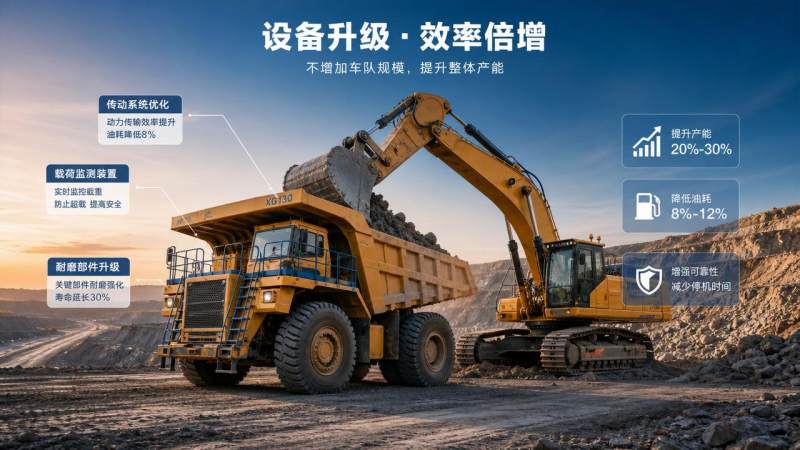
For mining leaders under pressure to raise tonnage without expanding capital-heavy fleets, targeted mining equipment upgrades offer a practical path to stronger output, lower downtime, and better cost control. From drivetrain improvements to digital monitoring and payload optimization, the right retrofit strategy can unlock hidden capacity while supporting safer, more efficient operations across demanding mine environments.
Why scenario differences matter before upgrading mining equipment
Not every mine gains output from the same upgrade path. A hard-rock open-pit operation moving long uphill hauls faces very different constraints than a coal site focused on cycle speed, or a mature mine struggling with aging excavators and truck queues. For enterprise decision-makers, the main question is not simply which mining equipment upgrade is available, but which upgrade fits the production bottleneck that is actually limiting throughput.
In practice, output shortfalls usually come from one of five operating realities: loading delays, haulage inefficiency, maintenance-related downtime, underused digital data, or poor operator consistency. When those conditions are mixed together, buying more units can look like the fastest answer. Yet fleet expansion often raises maintenance complexity, parts demand, labor pressure, fuel burn, and traffic congestion. A focused retrofit strategy can be a better commercial decision when the goal is to increase tons moved per hour without materially increasing fleet count.
This is where a scenario-based view becomes valuable. The best mining equipment improvements are rarely universal. They are chosen according to haul profile, material density, weather exposure, bench design, maintenance maturity, and production discipline. Leaders who separate these scenarios clearly can prioritize high-return upgrades instead of spreading capital across low-impact modifications.
A practical scenario map for mines seeking more output
The table below outlines common operating scenarios and the upgrade priorities that usually create the fastest production gains. It is designed for decision-makers evaluating where mining equipment retrofits can improve output without adding fleet size.
Scenario 1: Long-haul open-pit mines where truck cycles limit output
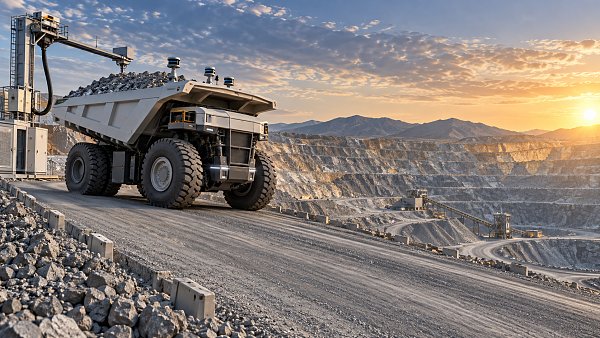
In many open-pit operations, the limiting factor is not loading capacity but haulage efficiency. If trucks spend too much time climbing grades, slowing for poor road conditions, or operating below ideal payload, output losses compound across every shift. In this setting, the most effective mining equipment upgrades often focus on how trucks move rather than how many trucks are deployed.
Relevant upgrades include transmission calibration, engine control tuning within OEM-approved limits, tire condition monitoring, improved retarder systems, and onboard payload management. These changes help stabilize speed, avoid underloading, reduce overheating risk, and support better operator decisions on variable haul roads. Some mines also improve body design to reduce carryback and optimize material release at the dump point.
Decision-makers should be cautious, however, about expecting dramatic gains from power upgrades alone. If roads are poorly maintained, intersections are inefficient, or dumping points are congested, mechanical improvements may deliver only partial value. In this scenario, truck-focused mining equipment upgrades work best when paired with haul road maintenance standards and dispatch discipline.
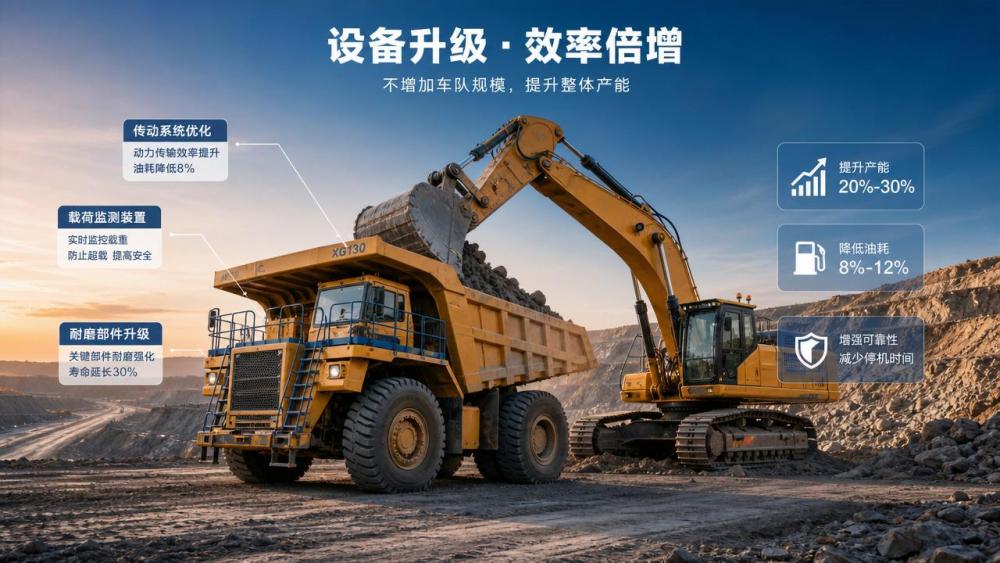
Scenario 2: Loading-intensive operations where excavator productivity is the constraint
Some mines have enough trucks on paper but still miss tonnage because primary loading units are not feeding the fleet efficiently. This happens when bucket fill factors are inconsistent, swing times are too long, hydraulic response is sluggish, or tool wear reduces digging effectiveness. Here, mining equipment upgrades for excavators, shovels, or loaders can unlock more tons per pass and improve truck utilization without adding mobile units.
High-value retrofit options include hydraulic system improvements, attachment geometry refinement, upgraded wear packages, smarter bucket designs, and payload feedback tools that let operators hit target loads more consistently. In abrasive or fragmented rock conditions, tooth systems and lip protection can significantly affect penetration and cycle efficiency. In softer overburden or coal applications, the focus may shift toward fill consistency and reduced spillage.
This scenario is especially important for mines where trucks queue at the face. If dispatch data shows frequent waiting time at loading points, upgrading the loading tool may create a bigger production gain than modifying the haul fleet. For executives evaluating return on investment, this is often one of the clearest examples of scenario-specific mining equipment prioritization.
Scenario 3: Mature sites with aging mining equipment and costly downtime
Older fleets can still deliver strong output if reliability is managed intelligently. In mature operations, the central issue is often not peak machine capacity but unstable availability. A truck or excavator that performs well for part of the month but fails unpredictably creates hidden losses through standby labor, dispatch disruption, maintenance overtime, and missed production windows.
For this scenario, the best mining equipment upgrades are reliability-centered. Predictive maintenance sensors, automated lubrication, oil analysis integration, hydraulic hose life tracking, and thermal monitoring can reduce surprise failures. Engine refresh packages, cooling improvements, and electrical harness retrofits may also extend machine usefulness without the capital burden of full replacement.
What decision-makers should watch closely is the economic break point. If a mine is already spending heavily on emergency repairs and component cannibalization, upgrades must be evaluated against replacement timing and residual fleet life. The right question is not whether old mining equipment can be upgraded, but whether the remaining service window is long enough to capture the operational payback.
Scenario 4: Data-poor operations where hidden inefficiency reduces output
Many sites underperform not because machines are fundamentally weak, but because management lacks reliable visibility into where minutes, fuel, and payload are being lost. In these cases, digital mining equipment upgrades can produce measurable output gains without changing the core machine structure. The aim is to convert operational blind spots into controllable production levers.
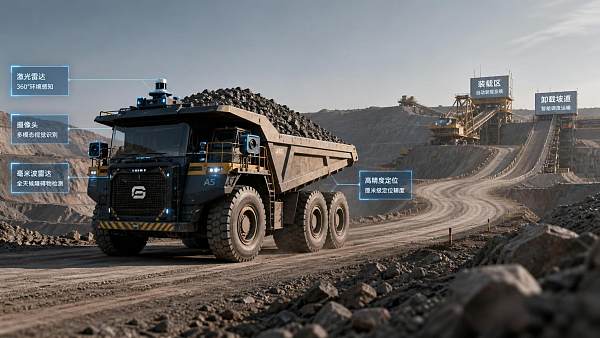
Useful upgrades include real-time fleet management systems, machine health dashboards, payload tracking, idle-time analytics, geofencing, and operator performance reporting. These tools support dispatch refinement, reduce unnecessary idling, identify recurring delay points, and improve the match between loading tools and trucks. For large multi-bench mines, this kind of visibility can be more valuable than another unit added to the fleet, especially when traffic interaction already limits movement.
This scenario is highly relevant for enterprise groups managing several assets across regions. A standardized data layer across mining equipment makes benchmarking possible, helps compare contractor performance, and supports investment decisions with stronger evidence. It also aligns with broader heavy industry trends toward intelligent operations, lower total cost of ownership, and more disciplined capital allocation.
Scenario 5: Harsh environments where stability and safety drive productivity
At high altitude, in extreme cold, under heavy dust, or in wet tropical conditions, output depends heavily on how mining equipment performs under environmental stress. Production losses in these settings often come from overheating, traction issues, poor visibility, electronic faults, accelerated wear, or safety slowdowns. The right upgrades must therefore balance productivity with survivability.
Common high-value improvements include upgraded cooling systems, cold-start packages, filtration enhancements, traction control support, high-durability seals, corrosion-resistant wiring, and advanced camera systems. Lighting upgrades, collision avoidance tools, and operator-assist functions can also increase effective working hours when visibility or terrain conditions are challenging.
Leaders should avoid evaluating these upgrades only through a narrow maintenance lens. In harsh environments, every prevented breakdown and every safer operating hour can protect daily production continuity. That means environmental adaptation is not merely a defensive maintenance measure; it is often a direct output strategy for mining equipment working at the edge of operating tolerance.
How demand differs by company type and operating model
Different organizations approach mining equipment upgrades with different priorities. Large owner-operators typically focus on lifecycle cost, digital integration, and long-term fleet standardization. Mid-sized producers may prioritize fast-payback retrofits that raise availability within existing maintenance capacity. Contractors often emphasize flexibility, transportability, and upgrades that improve equipment utilization across changing project scopes.
For companies working across multiple commodities, application needs also diverge. Iron ore and copper operations may focus on high-tonnage consistency and haul optimization. Coal and overburden movement may place greater weight on cycle speed and loading rhythm. Quarries or smaller pits may care more about maintenance simplicity and operator versatility than enterprise-scale software architecture.
This is why upgrade selection should not be based only on OEM brochures or benchmark claims from other mines. Decision-makers need a business-fit lens: production target, site complexity, maintenance maturity, labor profile, and capital discipline all shape which mining equipment improvements are practical and profitable.
Common misjudgments when choosing mining equipment upgrades
A common error is upgrading for headline capacity rather than real bottlenecks. More engine power, for example, may not help if queue times dominate the shift. Another mistake is treating digital systems as stand-alone productivity solutions without ensuring supervisors will use the data in dispatch, maintenance, and shift planning decisions.
Some mines also underestimate integration risk. A payload system, hydraulic change, or software layer may require training, calibration, connectivity, and process adaptation. Without those supporting actions, the upgrade may exist on the machine but not in the operation. There is also the risk of overspending on heavily aged assets that are too close to retirement to justify significant retrofit capital.
Finally, leaders sometimes evaluate output gains in isolation from safety and total cost of ownership. High-performing mining equipment must also remain maintainable, compliant, and predictable under real production pressure. Sustainable tonnage growth depends on this balance.
A decision framework for matching upgrades to site conditions
Before approving an upgrade program, enterprise teams should confirm five points. First, identify the dominant production bottleneck using dispatch and maintenance evidence. Second, test whether the issue is machine-based, process-based, or mixed. Third, estimate payback in terms of tons per hour, uptime, and cost per ton rather than isolated component savings. Fourth, verify that the site can support implementation through training, spare parts, and technical service. Fifth, confirm that the chosen mining equipment upgrade aligns with fleet life and broader production plans.
This structured approach reduces the risk of reactive spending and helps organizations sequence projects logically. In many cases, the strongest results come from phased improvement: start with visibility, fix the process bottleneck, reinforce machine reliability, and then optimize payload or cycle performance.
FAQ: what decision-makers ask before investing
Can mining equipment upgrades really replace fleet expansion?
In many scenarios, yes. If lost output comes from downtime, underloading, slow cycles, or poor dispatch visibility, targeted upgrades can recover meaningful capacity. If demand growth exceeds site design limits, additional fleet may still be required.
Which upgrade usually pays back fastest?
There is no universal answer, but payload management, predictive maintenance tools, and loading-haul match improvements often generate quick returns because they address everyday production losses across multiple shifts.
When should companies be cautious?
Be cautious when the fleet is near replacement age, when site processes are unstable, or when the organization lacks the maintenance and data discipline needed to capture retrofit value. In those cases, process correction may need to come before equipment spending.
Closing perspective for mining leaders
The most effective mining equipment strategy is not always to add more assets. For many operations, the smarter path is to identify the scenario that is truly limiting production and then apply upgrades that fit that operating reality. Whether the issue is long-haul inefficiency, loading delays, aging machines, weak data visibility, or harsh environmental stress, targeted improvements can release hidden output already trapped inside the current fleet.
For enterprise decision-makers, the opportunity lies in disciplined matching: matching bottlenecks to retrofit options, site conditions to technical priorities, and investment timing to fleet lifecycle. When that alignment is achieved, mining equipment upgrades become more than maintenance projects. They become strategic tools for tonnage growth, cost control, and stronger operating resilience.
Related News
 Sep 22, 2026How to Evaluate a High-Altitude Mining Solutions Manufacturer for Remote ProjectsEvaluate a high-altitude mining solutions manufacturer with proven derating, cooling, service logistics, and lifecycle-cost support for remote projects.
 Sep 21, 2026Industrial Supplier Evaluation: A Risk-Based Scorecard for Quality, Capacity, and DeliveryIndustrial supplier evaluation made practical: use a risk-based scorecard to assess quality, capacity, and delivery reliability, reduce project risk, and select suppliers with confidence.
 Sep 20, 2026Comparing Heavy Equipment Warranty Suppliers: Coverage, Claims, and Downtime RiskSupplier comparison for heavy equipment warranty: evaluate coverage, claims speed, service networks, and downtime risk to protect uptime and project costs.
 Sep 19, 2026Mining Truck Technology Trends: What Fleet Managers Should Prioritize for 2026Mining truck technology trends for 2026: prioritize electrification, autonomy, predictive maintenance, and road intelligence to improve fleet uptime, safety, and cost control.

Heavy Haulage Strategist
Weekly Insights
Stay ahead with our curated technology reports delivered every Monday.