
Heavy Equipment Operations Safety Checklist for Daily Inspections and Shift Handover
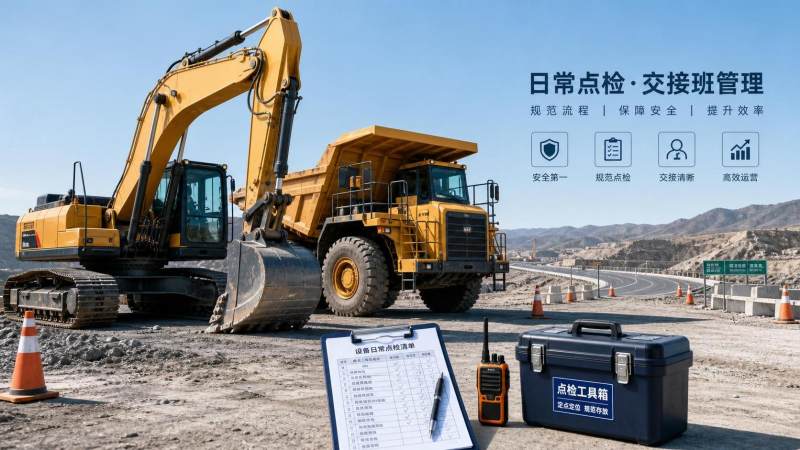
Why does heavy equipment operations safety begin before startup?
Heavy equipment operations safety is rarely won in the cab. It is usually won during inspection, documentation, and handover.
On tunnel, mining, lifting, and road projects, small defects can escalate quickly. A loose pin, a leaking hose, or a missed alarm history can stop production or trigger a serious event.
That is why daily inspections and shift handover matter. They connect machine condition, site conditions, and operator awareness into one workable control point.
In practice, the strongest heavy equipment operations safety routines are simple enough to repeat, but detailed enough to catch changing risks.
Across TBM support fleets, ultra-large excavators, crawler cranes, and mining dump trucks, the principle stays consistent: inspect early, communicate clearly, and release equipment only when its condition is understood.
TF-Strategy often frames this as the link between physical parameters and construction decisions. That view is useful because safety failures rarely come from one isolated cause.
More often, they come from weak stitching between machine status, terrain, workload, and shift communication.
What should a daily inspection checklist actually cover?
A useful checklist should follow the machine from outside to inside, then from static condition to live function.
That order reduces omissions. It also supports heavy equipment operations safety by making every inspection repeatable, even when crews rotate.
- Ground and surroundings: soft edges, overhead lines, berm condition, water, mud, loose rock, and traffic interface.
- Structural condition: cracks, deformation, loose bolts, damaged guards, missing covers, and weld concerns.
- Fluids and leaks: engine oil, hydraulic oil, coolant, fuel, grease points, and signs of hose abrasion.
- Running gear and contact points: tracks, tires, rollers, pins, bucket teeth, wire rope, hooks, and locking devices.
- Electrical and warning systems: lights, cameras, alarms, interlocks, display faults, and battery isolation.
- Cab readiness: seat belt, mirrors, controls, fire extinguisher, emergency exits, and cleanliness around pedals.
- Functional checks: steering, braking, hoisting, slew, boom response, travel, backup alarm, and limit devices.
Need to go deeper? High-duty assets need equipment-specific points. A crawler crane should emphasize load moment indicators, reeving, and outrigger or track bearing condition.
An excavator in open-pit mining should prioritize attachment wear, hydraulic heat, undercarriage buildup, and blind-spot visibility.
For road machinery, spray systems, screed controls, and sensor calibration can directly affect both safety and paving quality.
A daily list should not try to replace planned maintenance. Its role is to detect immediate operating risk before the shift creates exposure.
A quick judgment table for release or hold decisions
Many teams struggle with the same question: when is a defect minor, and when should the machine be held back?
This kind of table improves heavy equipment operations safety because it reduces subjective release decisions under schedule pressure.
Where do shift handovers usually break down?
Most handovers fail for ordinary reasons. Notes are too vague, defect severity is not explained, or production pressure hides unresolved issues.
The outgoing operator may write “machine okay” even after noticing slower swing response, unusual vibration, or intermittent alarms.
That is not enough for heavy equipment operations safety. Handover should translate observations into operational meaning.
A useful handover answers five practical questions:
- What changed during the shift?
- What defect was observed, and when?
- Did the defect stay stable, worsen, or disappear?
- What temporary controls were used?
- What should the next operator check first?
In high-consequence sectors such as tunneling and heavy lifting, verbal handover should support written records, not replace them.
This matters when weather changes, geology shifts, or site traffic patterns are updated between shifts.
TF-Strategy’s industry coverage often highlights how modern fleets are becoming more digital. Even so, digital logs only help when crews record specific, decision-ready information.
How should the checklist change by machine type and site condition?
One generic form is rarely enough. The base structure can stay the same, but risk emphasis should shift with duty cycle, environment, and machine physics.
For example, heavy equipment operations safety in a TBM support zone is strongly affected by confinement, slurry, ventilation, and utility interfaces.
In open-pit mining, fatigue loading, haul road condition, and visibility at scale become bigger factors. With crawler cranes, ground bearing pressure and lift path control dominate.
A practical way to adjust the checklist is to add three site-specific layers:
- Environmental layer: dust, heat, altitude, freezing conditions, confined space, or corrosive exposure.
- Operational layer: repetitive digging, long travel, suspended loads, night work, or remote-controlled functions.
- Interface layer: pedestrians, support vehicles, blasting windows, power lines, or temporary works nearby.
This approach keeps heavy equipment operations safety grounded in actual exposure, not just paperwork compliance.
It also helps explain why the same machine may be released on one site and restricted on another.
What are the most common mistakes in daily heavy equipment operations safety checks?
The first mistake is treating the checklist as proof of completion instead of a tool for finding abnormal conditions.
The second is checking only the machine and ignoring the operating envelope. Ground, access, traffic, and weather can change risk faster than the machine itself.
Another common problem is poor defect language. “Needs attention” tells the next shift very little.
A better note would be: “Left travel motor area shows fresh oil after two hours; no pressure drop yet; recheck before slope work.”
There is also a planning mistake. Teams sometimes run the same heavy equipment operations safety checklist during normal work, extreme weather, and post-maintenance return to service.
Those conditions deserve different scrutiny. After maintenance, for example, missing pins, loose guards, and untested interlocks become more likely than during steady-state operation.
One more issue is delay in escalation. If inspection data never reaches maintenance planners or site leadership, recurring defects simply roll from shift to shift.
How can teams make the process stronger without slowing production?
The best improvements are usually procedural, not dramatic. Heavy equipment operations safety gets better when decisions become faster and more consistent.
A short implementation standard can help:
- Use one core checklist for the fleet, then add machine-specific annexes.
- Separate “record and monitor” defects from “hold and repair” defects.
- Require defect descriptions to include location, behavior, and operating impact.
- Add a mandatory handover item for temporary controls and operating restrictions.
- Review repeat findings weekly to identify chronic failure points.
Where fleets are digitized, telemetry can support inspection priorities. Repeated overheating, harsh braking, or overload history should trigger focused checks at shift start.
That said, digital data should sharpen field judgment, not replace it. A machine can pass system diagnostics and still present unsafe physical wear.
For organizations following global equipment trends through TF-Strategy, this is also where intelligence becomes operational. Safety improves when field inspections, utilization patterns, and maintenance signals are interpreted together.
What should happen next if the current checklist is not delivering results?
If incidents, near misses, or repeat defects keep appearing, the checklist probably has a design problem, an execution problem, or both.
Start by reviewing three things: whether the questions reflect actual site risks, whether handover notes are decision-ready, and whether hold criteria are clearly defined.
Then compare the inspection form against real machine history. If frequent failures never appear on the form, the checklist is not aligned with the fleet.
Heavy equipment operations safety improves when the routine stays close to reality. It should reflect equipment age, site environment, load pattern, and current failure trends.
The next practical step is to tighten the release standard, refine machine-specific checkpoints, and make every handover answer what changed, what matters, and what must be checked next.
That is how daily inspections stop being paperwork and start functioning as real control over downtime, compliance, and site risk.
Related News
 Sep 30, 2026What Does an Ultra-Large Excavator Really Cost Over Its Service Life?Ultra-large excavators cost far more than purchase price. Explore lifecycle expenses, uptime risks, energy use, maintenance, and cost-per-tonne insights.
 Sep 29, 2026Infrastructure Construction Standards: A Project Manager’s Guide to ComplianceInfrastructure construction standards guide for project managers: turn requirements into field controls, hold points, traceability, and compliant delivery.
 Sep 28, 2026How to Specify Custom Mining Equipment for Abrasive Ground and High-Load HaulageCustom mining equipment for abrasive ground and high-load haulage: learn how to optimize payload, wear protection, powertrains, uptime, and lifecycle cost for safer, reliable production.
 Sep 30, 2026When does a lower construction machinery price raise lifecycle costs?Construction machinery pricing can hide costly risks. Discover how downtime, fuel use, maintenance, productivity, and resale value shape total lifecycle costs.




Heavy Haulage Strategist
Weekly Insights
Stay ahead with our curated technology reports delivered every Monday.