
Open-Pit Mining Intelligence Explained: Key Systems, Data Uses, and Deployment Limits

Open-pit mining intelligence sits at the point where field operations, heavy equipment data, and business judgment finally meet. It turns dispatch logs, payload readings, slope monitoring, fuel records, and location signals into decisions that matter on the bench, in the pit office, and at portfolio level. For a sector shaped by cost pressure, safety obligations, and energy transition, that shift from raw data to usable intelligence has become a strategic issue rather than a technical add-on.
That is why the topic now reaches beyond mine operations alone. It connects excavators, haul trucks, road machinery, remote control systems, and infrastructure planning in the wider heavy industry ecosystem. From the perspective of TF-Strategy, which tracks the operational logic of large machines and earth engineering, open-pit mining intelligence is best understood as an information layer linking machine performance, material movement, and project-level outcomes.
What Open-Pit Mining Intelligence Really Covers
The phrase can sound broader than it is. In practice, open-pit mining intelligence refers to the systems, models, and workflows used to interpret mine data for operational and strategic decisions.
It usually combines several layers. One layer captures machine activity. Another tracks material quality and movement. A third evaluates risk, cost, and production alignment over time.
This matters because modern open-pit mines no longer depend on isolated reports. They depend on linked signals from drills, shovels, dump trucks, crushers, stockpiles, weather feeds, maintenance records, and geotechnical instruments.
In other words, open-pit mining intelligence is not only about visibility. It is about context. A truck delay means little without route conditions, loader availability, payload variance, and ore destination.
Why the Industry Is Paying Closer Attention
Several pressures are pushing intelligence systems higher on the mining agenda. Ore bodies are becoming harder to optimize, fuel and labor costs remain volatile, and environmental scrutiny is rising.
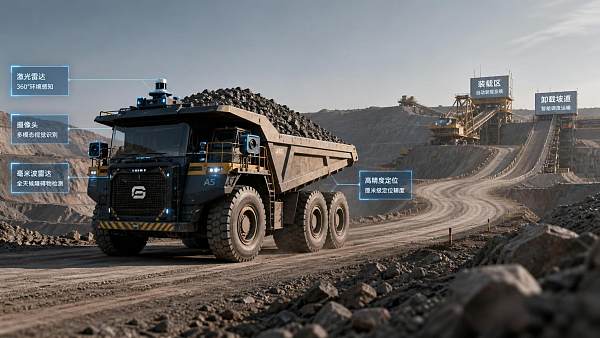
At the same time, equipment fleets are becoming more digital. High-capacity excavators, mining dump trucks, autonomous functions, and 5G-enabled control environments generate more data than legacy reporting methods can absorb.
More importantly, executives and site teams now expect clearer links between equipment behavior and business performance. They want to know where cycle time is lost, why dilution rises, when slope alerts become actionable, and how electrification changes haulage economics.
This is where intelligence platforms gain relevance. They allow a mine to compare daily events with design assumptions, maintenance planning, and long-range production targets.
The Core Systems Behind the Data Flow
Most open-pit mining intelligence environments are built from connected rather than single systems. The quality of the result depends on how well those systems share time, location, and asset references.
Operational data sources
- Fleet management systems that track dispatch, queue time, cycle time, and payload.
- Machine health systems that monitor engine load, temperature, fuel burn, and maintenance alerts.
- Ore control and grade systems linked to blast blocks, sample data, and destination routing.
- Geotechnical and environmental monitoring, including radar, prism, dust, vibration, and rainfall signals.
- Planning software covering pit phases, haul roads, dump locations, and short-interval schedules.
When these systems remain separate, each team sees only part of the mine. Open-pit mining intelligence becomes more useful when dispatch data can be read alongside grade movement and ground condition changes.
Integration matters more than dashboard volume
A common mistake is to treat intelligence as a dashboard project. In reality, the hard work lies in timestamp consistency, equipment naming, location references, and rule logic for events.
Without that structure, a mine may display more charts while learning very little. Good open-pit mining intelligence depends on disciplined data architecture as much as advanced analytics.
Where the Value Usually Appears First
The first gains rarely come from abstract AI claims. They come from practical areas where poor visibility creates daily friction or recurring loss.
These are not isolated benefits. Better ore routing affects crusher stability. Better dispatch affects fuel. Better slope awareness affects road availability and blast planning.
How Different Mine Functions Use the Same Intelligence Differently
One reason open-pit mining intelligence can be difficult to evaluate is that each function reads the same data through a different lens. Operations looks for pace and bottlenecks. Geology looks for ore confidence. Finance looks for cost leakage.
That makes shared definitions essential. If one team defines productive time differently from another, the platform creates internal disagreement instead of clarity.
In wider heavy industry research, this is a familiar pattern. Whether the asset is a TBM, crawler crane, or ultra-large excavator, intelligence only becomes strategic when operational data is translated into decision-ready language across teams.
TF-Strategy’s broader heavy equipment focus is useful here because open-pit mines are not only digital sites. They are machine systems under economic constraints, where physical performance and commercial outcomes constantly interact.
The Main Deployment Limits to Watch
The market often presents mining intelligence as a smooth path from sensors to optimization. Real deployment is more uneven. Several limits appear repeatedly across sites.
Data quality problems arrive early
Missing payload records, duplicated equipment IDs, delayed sync, and poor location accuracy can distort conclusions. An impressive model built on weak event data usually amplifies confusion.
Connectivity is not uniform across the pit
Remote benches, changing road geometry, and harsh weather complicate real-time monitoring. Even with strong network investment, some workflows still require partial offline tolerance.
Operational adoption is harder than software installation
If crews see the platform as surveillance rather than decision support, usage declines. Trust depends on whether alerts are credible, practical, and aligned with site routines.
Not every mine needs the same analytical depth
A large multi-pit operation may justify predictive haulage models and advanced digital twins. A smaller site may gain more from reliable dispatch visibility and cleaner maintenance data.
This is an important point. Open-pit mining intelligence should match operational complexity, not marketing ambition.
A Practical Way to Assess Systems and Claims
When comparing tools, frameworks, or intelligence providers, a few questions reveal more than feature lists.
- Which operational decisions will improve within ninety days?
- What source systems are required, and how clean is their data today?
- Can the platform explain why an alert or recommendation was produced?
- How does it handle mixed fleets, contractor equipment, or phased digital maturity?
- What happens when connectivity drops or sensors fail?
- Which metrics are operationally meaningful, and which are only visually attractive?
This kind of evaluation keeps open-pit mining intelligence tied to mine reality. It also helps separate infrastructure-grade solutions from software that mainly repackages reports.
What to Track Next
The next phase of open-pit mining intelligence will likely be shaped by three linked trends. One is deeper integration between operational technology and planning systems. Another is electrified and autonomous fleet management. The third is stronger use of intelligence in capital allocation and TCO analysis.
That broader view matters because open-pit performance is no longer judged only by tonnage moved. It is judged by energy efficiency, safety resilience, ore precision, and the ability to adapt equipment strategy to shifting project economics.
A sensible next step is to map where critical mine decisions still depend on fragmented spreadsheets, delayed reports, or informal judgment. From there, it becomes easier to define which data links, machine signals, and intelligence outputs deserve priority. In that process, open-pit mining intelligence becomes less of a trend term and more of a practical framework for reading the mine clearly.
Related News
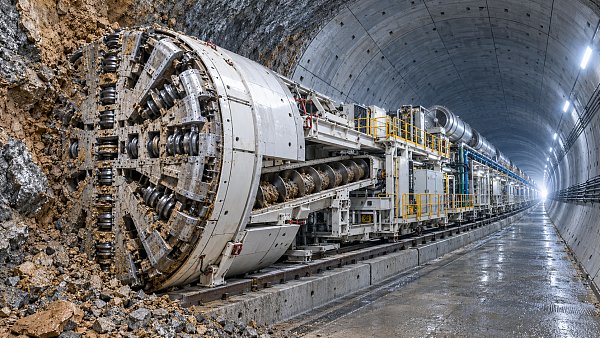
 Oct 05, 2026Tunneling Equipment Specification Planning: Key Criteria for Ground and Project RisksEquipment specification planning tunneling: learn how to match TBM systems to ground risks, geometry, safety, logistics, and lifecycle cost for more reliable project delivery.
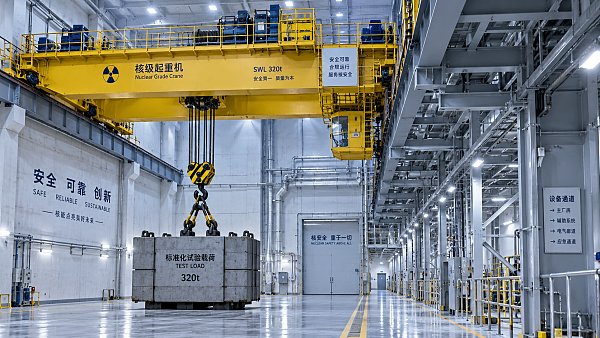
 Oct 04, 2026Nuclear Lifting Equipment Cost: Budgeting for Compliance, Testing, and Lifecycle RiskNuclear lifting equipment cost explained: budget for compliance, proof-load testing, installation, documentation, and lifecycle risk to make confident procurement decisions.
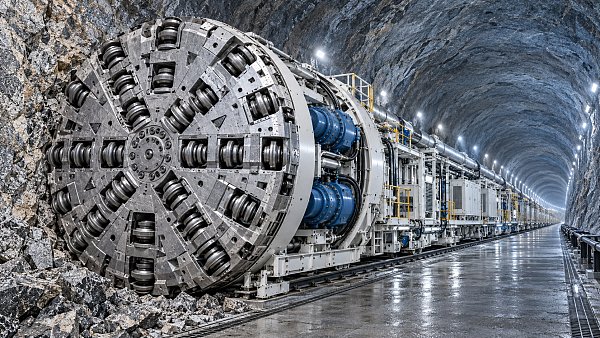
 Oct 03, 2026How to Assess TBM Manufacturers for Hard-Rock Tunneling Projects?Choose the right tunnel boring machine manufacturer for hard-rock projects. Explore key criteria for design, lifecycle cost, factory quality, and service support.
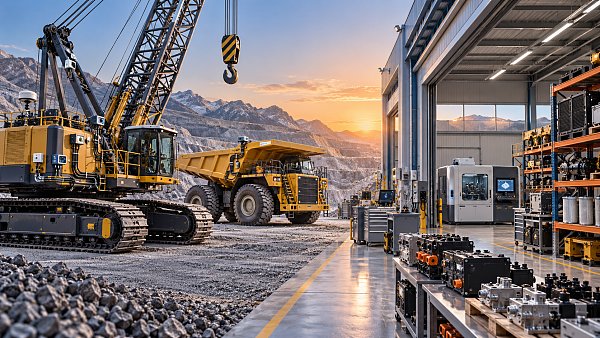
 Oct 02, 2026How to Evaluate Heavy Equipment Technology Suppliers for Fleet Uptime and SupportHeavy equipment technology suppliers can make or break fleet uptime. Learn how to assess diagnostics, data access, parts, service coverage, and support terms before you buy.
Heavy Haulage Strategist
Weekly Insights
Stay ahead with our curated technology reports delivered every Monday.