
Open Pit Mining Machinery Selection: Key Specs for Hauling and Loading Efficiency
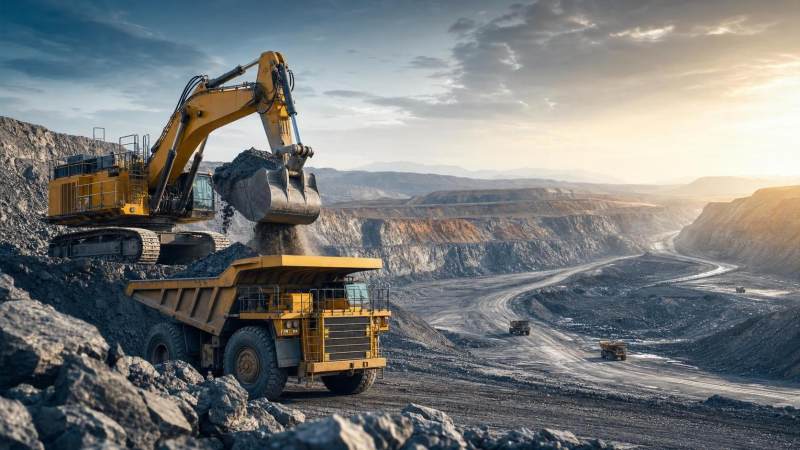
Open Pit Mining Machinery Selection: Key Specs for Hauling and Loading Efficiency
Selecting the right open pit mining machinery directly affects haul cycle times, loading match factors, fuel efficiency, and total cost of ownership.
For technical evaluation, machine size alone is never enough.
The real decision sits in the relationship between payload, pass match, digging force, road conditions, altitude, and maintenance support.
That is why open pit mining machinery selection must start with production logic, not catalog rankings.
In current mining projects, stronger pressure on fuel cost, emissions, and uptime makes specification discipline even more important.
Start With the Material Movement Target
Every open pit mining machinery decision should begin with tonnes per hour, annual strip ratio, and haul distance.
These numbers define whether the site needs high-volume loading, flexible dispatch, or a balanced mixed fleet.
A short-haul mine with steep ramps usually values torque, brake performance, and fast spotting.
A long-haul operation may gain more from payload stability, fuel burn control, and tire life.
This also means the best open pit mining machinery on one site can be the wrong choice on another.
Core production inputs to lock first
- Required bank cubic meters and loose tonnes per shift
- Ore and waste density variation
- Fragmentation after blasting
- Ramp gradient, rolling resistance, and haul profile
- Expected weather, elevation, and temperature range
- Planned mine life and relocation frequency
Hauling Specs That Actually Change Efficiency
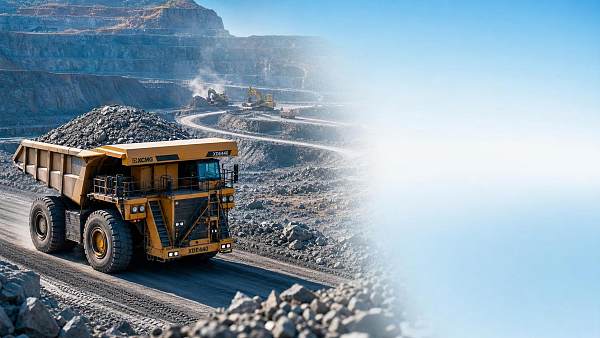
Mining dump trucks often dominate fleet cost, so haulage specifications deserve careful attention.
In open pit mining machinery selection, payload rating is the first filter, but not the final answer.
A truck that carries more on paper may underperform if roads are rough, loading is inconsistent, or tire heat builds too quickly.
1. Rated payload and target payload factor
Look beyond nominal payload.
Check how often the truck achieves target payload without chronic overloading or underfilling.
Payload factor affects cycle productivity, tire wear, frame stress, and body life.
2. Gross machine weight and road interaction
Heavier trucks need stronger haul roads, wider berms, and tighter maintenance control.
If road quality is unstable, theoretical efficiency can disappear in reduced speed and component damage.
3. Powertrain, torque, and retarding performance
For uphill loaded travel, usable torque matters more than headline engine horsepower.
For downhill return, retard capacity is a safety and productivity issue.
In high-altitude mines, power derating can materially change open pit mining machinery recommendations.
4. Body volume and material behavior
Body design must fit density and fragmentation.
Low-density overburden and dense ore do not need the same body profile.
Poor body matching creates carryback, spillage, and avoidable loading delays.
Loading Specs That Control Pass Match
Loading equipment sets the rhythm of the fleet.
Whether the site uses hydraulic excavators, rope shovels, or large wheel loaders, pass match remains central.
Efficient open pit mining machinery selection usually targets four to six passes per truck.
Too many passes slow the queue.
Too few passes often reduce payload control and increase structural shock.
1. Bucket capacity versus real fill factor
Published bucket volume is only a starting point.
Actual fill depends on fragmentation, swell factor, operator technique, and face preparation.
A smaller bucket with higher fill consistency can outperform a larger bucket on difficult faces.
2. Digging force and breakout force
These values matter when blast quality varies.
If digging resistance is high, cycle time stretches, fuel use rises, and bucket fill becomes less predictable.
3. Swing time and dump clearance
Fast cycle charts only matter when the machine can load the selected truck cleanly.
Check reach, dump height, spotting tolerance, and body side impact risk.
4. Ground pressure and bench conditions
Soft ground, wet benches, and frequent moves change the loader decision.
This is one reason wheel loaders remain relevant in some open pit mining machinery fleets.
Fleet Compatibility Is Where Good Specs Become Good Decisions
Individual machine excellence does not guarantee system efficiency.
The smarter approach is to evaluate open pit mining machinery as a connected production chain.
This includes loader-truck match, dispatch logic, fuel service layout, tire handling, and workshop capacity.
Compatibility checks worth running
- Pass match under average and worst fragmentation conditions
- Queue time at face, dump point, and fuel bay
- Truck turning radius at shovel approach roads
- Shared parts commonality across the fleet
- Workshop lifting capacity for major component replacement
- Telematics compatibility for payload and health monitoring
From a cost perspective, common platforms often reduce downtime more than marginal gains in peak performance.
Operating Conditions Can Rewrite the Ranking
Site conditions frequently overturn initial preferences.
An equipment model that looks efficient in a standard spec sheet may struggle in remote or extreme environments.
That is especially true for open pit mining machinery working in high altitude, deep cold, or abrasive dust.
Conditions that must be rated explicitly
- Altitude derating for engines and cooling systems
- Cold-start behavior and hydraulic warm-up time
- Dust sealing, filtration, and radiator cleaning access
- Water management on roads and loading areas
- Seasonal mobility limits during rain or thaw periods
In practical terms, operating conditions should sit beside payload and bucket size in every comparison matrix.
Look Beyond Purchase Price to Total Ownership
The wrong machine can appear cheap at acquisition and expensive after six months.
For open pit mining machinery, total cost of ownership depends on utilization, maintenance hours, consumables, and lost production during failures.
Fuel burn per tonne, tire life, GET wear, and component overhaul intervals should be normalized against site output.
Important ownership questions
- What is the expected cost per moved tonne?
- How long is major component lead time?
- Is local field support strong enough for continuous operation?
- Can the mine carry critical spares without locking too much capital?
- Will future decarbonization targets affect the selected platform?
More clearly now, the market is rewarding machinery decisions that stay flexible under fuel, labor, and emissions pressure.
A Practical Selection Framework for Open Pit Mining Machinery
A solid evaluation process keeps debate focused on measurable output.
- Define target production, haul profile, and material class.
- Build loader-truck combinations around pass match and road limits.
- Adjust for altitude, climate, and maintenance capability.
- Model cost per tonne using real utilization assumptions.
- Check supplier support, spare strategy, and telematics depth.
- Run field validation before final fleet commitment.
The best open pit mining machinery choice is usually the one that keeps tonnes moving predictably every shift.
That outcome comes from matching specifications to the mine’s real operating envelope.
When hauling and loading are evaluated together, machinery selection becomes less about equipment size and more about production certainty.
Related News
 Oct 09, 2026Ultra-Large Excavator Bucket Size: Capacity, Width, and Site Fit ExplainedUltra large excavator bucket size explained: compare capacity, width, payload, truck matching, and site conditions to select a reliable, high-productivity bucket.
 Oct 08, 2026How to Evaluate a Heavy Machinery Information Platform for Project Equipment SourcingHeavy machinery information platform guide: compare equipment fit, source reliability, lifecycle costs, supplier capability, and compliance to make smarter sourcing decisions.
 Oct 07, 2026How to Evaluate a Hydraulic System Component Supplier for Heavy Equipment UptimeChoose a hydraulic system component supplier with proven quality, technical fit, and reliable delivery to reduce heavy equipment downtime and lifecycle costs.
 Oct 06, 2026Selecting Petrochemical Overhead Cranes for Hazardous Areas and Heavy Process LoadsPetrochemical overhead cranes for hazardous areas: learn how to match capacity, duty, controls, corrosion protection, and maintenance access for safer, reliable lifts.
Heavy Haulage Strategist
Weekly Insights
Stay ahead with our curated technology reports delivered every Monday.