
When Does Mining Hauling Equipment Need Repair, Rebuild, or Full Overhaul?
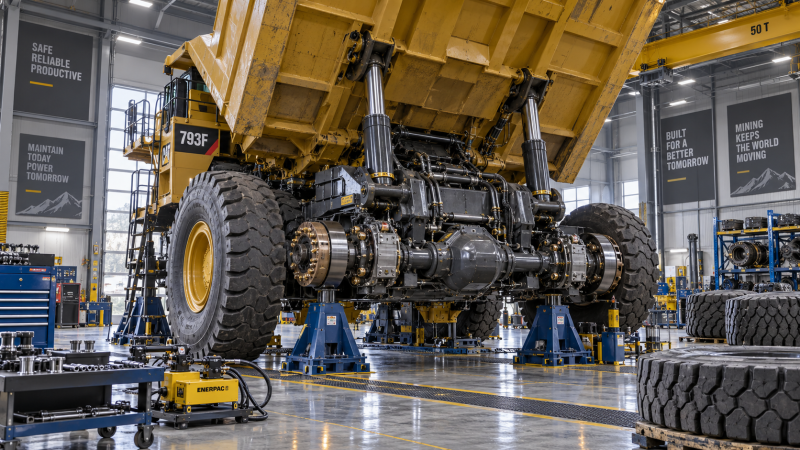
When Does Mining Hauling Equipment Need Repair, Rebuild, or Full Overhaul?
For technical evaluators, deciding whether mining hauling equipment requires repair, rebuild, or a full overhaul depends on much more than visible wear. A haul truck can look serviceable while its drivetrain trends, frame inspection findings, brake performance, or repeat-failure history suggest a much larger intervention is approaching. Conversely, a machine with a high hour count may still justify targeted repair if its operating profile, component history, and remaining economic life are favorable.
The central question is not simply “What is broken?” It is “What level of work restores safe, predictable availability at an acceptable lifecycle cost?” That distinction matters in the mining hauling equipment repair and overhaul market, where a wrong maintenance decision can create a long downtime event, consume scarce workshop capacity, or defer a structural issue until it becomes a safety concern.
A practical decision begins with the actual duty cycle. Payload consistency, haul distance, rolling resistance, road condition, altitude, ambient temperature, loading practices, and operator behavior all influence how quickly trucks consume their structural and mechanical life. Two nominally identical machines can require very different intervention strategies if one repeatedly handles steep, high-temperature routes and the other runs short, well-maintained haul roads.
Start With Condition, Not Age Alone
Age and operating hours are useful planning references, but they are not a complete diagnosis. Original equipment manufacturer recommendations, component-hour targets, and fleet maintenance plans should inform the decision, yet none of them replace inspection evidence. A truck that has experienced chronic overloading, harsh retarder use, poor lubrication control, or prolonged operation on deteriorated roads may reach a major intervention threshold earlier than expected.
Technical teams should combine several evidence streams: maintenance records, oil and coolant analysis, fault-code history, operator reports, payload data, temperature trends, vibration findings, and dimensional inspection results. The most useful signal is usually not a single abnormal result. It is a pattern: rising metal debris in oil samples alongside repeated transmission alarms, for example, or recurring frame-area repairs combined with worsening ride quality and suspension irregularities.
The same principle applies to the truck body. Body liner wear can often be managed through localized replacement or reinforcement. However, deformation around mounting areas, cracks at high-stress zones, persistent body-to-frame alignment problems, or damage linked to impact events calls for a more complete engineering review. Cosmetic repairs should never conceal a load-path or fatigue problem.
Repair: When the Fault Is Localized and the Base Machine Is Sound
Repair is appropriate when the defect is identifiable, contained, and does not indicate broad deterioration elsewhere in the machine. Typical examples include replacement of a leaking hydraulic hose, correction of an electrical connection issue, welding and finishing of a minor non-critical body defect, replacement of worn brake components, or repair of a localized cooling-system failure. The objective is to return the equipment to its established operating condition with the shortest reasonable interruption.
A repair decision is strongest when three conditions are met. First, inspection confirms that adjacent systems remain within acceptable condition. Second, the repaired component has a clear failure mechanism rather than an unexplained repeat-failure pattern. Third, the remaining service life of the machine supports continued operation without triggering disproportionate future expense.
The common mistake is treating repeated localized repairs as independent events. A recurring wheel-motor issue, suspension concern, or cooling-system fault may be caused by a wider operating condition: excessive payload variation, road-induced shock, contaminated fluids, inadequate heat rejection, or improper maintenance practices. If the source is systemic, another spot repair may only move the downtime to the next shift.
For this reason, repair planning should include a limited root-cause check even when the scope appears straightforward. It does not need to become an open-ended investigation, but it should answer whether the defect is isolated, accelerated by a neighboring system, or likely to recur under current site conditions.
Rebuild: When Major Systems Need Renewal but the Platform Still Has Value
A rebuild sits between repair and full overhaul. It generally focuses on one or several major systems—such as the engine, transmission, final drives, hydraulic circuit, suspension assemblies, electrical architecture, or truck body—without necessarily stripping the entire machine to its bare structural elements. The scope may be modular, but it is not minor. A rebuild is usually selected when the truck still has a viable structural foundation and a clear role in the production plan, yet one or more high-cost systems can no longer deliver dependable performance.
This option becomes compelling when availability is being eroded by repeated failures within the same subsystem, when component condition monitoring indicates advancing wear, or when a planned shutdown can be coordinated with a major component exchange. It can also be appropriate after a change in mine conditions, such as longer haul routes or higher material density, if the machine needs targeted upgrades to continue operating within a safer and more controlled envelope.
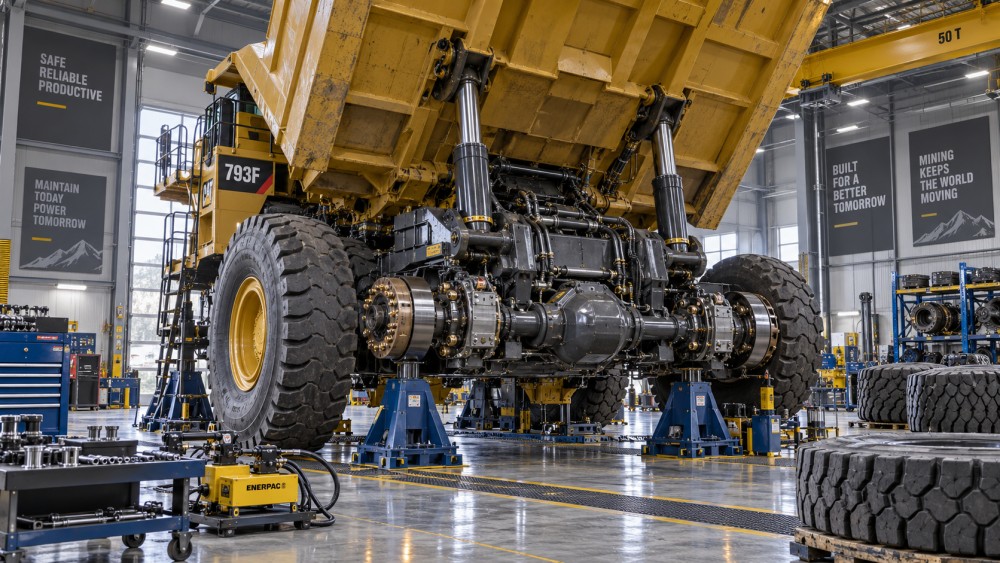
A rebuild should not be defined only by the parts being replaced. It should include a decision on what will be measured, remanufactured, upgraded, tested, and documented. For example, rebuilding a powertrain while overlooking cooling capacity, intake cleanliness, electrical harness integrity, or torque-management calibration can leave the fleet with a renewed core system surrounded by unresolved constraints.
The quality of a rebuild plan depends heavily on scope discipline. Technical teams should establish acceptance criteria before disassembly where possible: wear limits, crack-inspection requirements, dimensional tolerances, component traceability expectations, test procedures, and criteria for replacing rather than reusing parts. Once the truck is opened, additional findings are common. A predefined escalation path helps prevent rushed decisions when those findings affect cost or downtime.
Questions That Separate a Rebuild From a Series of Repairs
- Are failures concentrated in one major system, or appearing across unrelated systems?
- Does the machine’s frame, chassis, and body condition support another planned operating period?
- Can the rebuild be completed within a production window without creating an unacceptable fleet shortfall?
- Will the work restore measurable reliability, or only replace parts that are already known to be worn?
- Are critical parts, specialist labor, inspection capability, and post-rebuild testing available when needed?
Full Overhaul: When Reliability, Safety, and Asset Life Must Be Reset Together
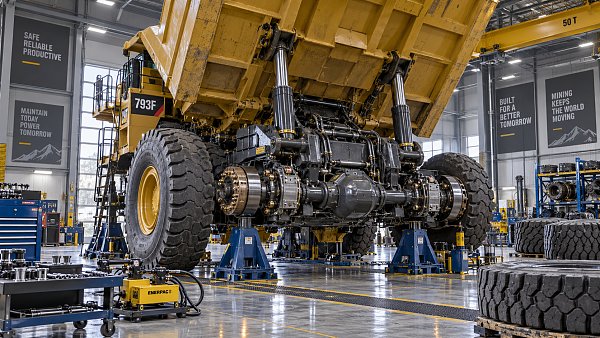
A full overhaul is justified when deterioration is widespread, multiple life-limited systems are approaching renewal, or the machine requires a deeper restoration to remain safe and commercially useful. Depending on the equipment type and project scope, this can involve extensive disassembly, structural inspection, frame and body assessment, remanufacture or replacement of key components, wiring and hose renewal, drivetrain work, brake and steering restoration, and comprehensive commissioning.
It is not simply a larger maintenance shutdown. A proper overhaul treats the truck as an integrated system. The frame, suspension, propulsion system, retarding capability, tires, controls, lubrication, cooling, and safety systems all affect one another under load. A machine may pass a basic functional test while still carrying a high risk of repeat downtime if those interactions are not assessed.
Full overhaul becomes harder to avoid when structural fatigue findings are significant; when unscheduled downtime is becoming a regular production constraint; when major components are nearing the end of their planned service interval at the same time; or when previous rebuilds have not stabilized reliability. It may also be considered after a major incident, but post-incident decisions must be based on formal inspection and applicable site procedures rather than assumptions from external appearance.
The main risk is authorizing an overhaul without a credible post-overhaul life plan. If a mine is nearing closure, the fleet is being replaced, or haulage requirements will materially change, an extensive restoration may not be the right capital allocation. In those cases, a constrained rebuild, controlled repair strategy, reassignment to lighter duty, or replacement evaluation may be more rational.
A Decision Matrix for Technical Evaluation
This matrix is not a substitute for engineering judgment. It is a way to make the trade-off visible. A technically possible repair is not automatically the right economic choice, and an overhaul that appears comprehensive may be poor value if the truck will not remain in a suitable duty cycle long enough to benefit from it.
Cost Should Be Measured Against Availability and Risk
Direct maintenance cost is only one part of the comparison. Technical evaluation should account for lost haulage capacity, standby equipment requirements, labor demand, lead times for critical components, workshop congestion, and the operational consequences of unplanned failure. The relevant measure is often total cost of ownership over the remaining asset life, not the invoice value of the next intervention.
Risk is equally important. Brake performance, steering response, retarding capacity, tire condition, visibility systems, fire protection arrangements, and structural integrity should not be deferred because a short-term repair looks cheaper. Site safety requirements, manufacturer guidance, and local regulatory obligations need to be confirmed for the machine and location concerned.
Supply-chain realities can alter the preferred option. A theoretically ideal rebuild may become impractical if a critical component has a long lead time, while a planned overhaul may be sensible if remanufactured assemblies can be secured and scheduled around production. Technical specifications therefore need to be checked alongside parts availability, transport logistics, specialist service capacity, and commissioning support.
Why the Market Is Moving Toward More Evidence-Based Decisions
The mining hauling equipment repair and overhaul market is increasingly shaped by connected equipment data, condition monitoring, remote diagnostics, and stronger pressure to control downtime without compromising safety. These tools are useful, but they do not remove the need for inspection. A sensor trend can identify where attention is needed; it cannot by itself establish the remaining life of a fatigue-affected structure or confirm the quality of a previous repair.
Electrification and automation add another layer to the decision. For conventional diesel haul trucks, assessment may focus heavily on engines, transmissions, torque converters, cooling, and mechanical braking systems. For electric or hybrid fleets, the review may also need to consider traction systems, high-voltage safety procedures, battery condition where applicable, thermal management, controls, and software compatibility. The repair-versus-overhaul framework remains valid, but the inspection capability and service ecosystem may differ substantially.
At TF-Strategy, analysis of mining dump trucks sits alongside research into ultra-large excavators, TBMs, crawler cranes, and road machinery because heavy equipment decisions rarely exist in isolation. Haul truck condition affects excavator loading discipline, road-maintenance priorities, fuel or energy planning, workshop strategy, and ultimately the reliability of the wider earth-engineering system. The most useful intelligence connects physical parameters with the way equipment is actually deployed.
Before Authorizing the Work Scope
Before selecting repair, rebuild, or full overhaul, define the machine’s required duty after release: expected payload range, route profile, operating hours, production horizon, and any pending change in mine design. Then verify the asset’s condition through documented inspections and historical evidence rather than relying on a single estimate of age or utilization.
A sound decision also specifies what “returned to service” means. It should include functional testing, safety checks, performance verification where relevant, documentation of replaced or remanufactured components, and clear responsibility for any follow-up monitoring. When the work scope is aligned with the truck’s actual future role, maintenance becomes a controlled investment rather than a reaction to the latest failure.
Related News
 Oct 13, 2026OEM Equipment Suppliers in Europe: Vetting Quality, Lead Times, and SupportCompare OEM equipment Europe suppliers on quality, lead times, and after-sales support. Discover practical vetting steps to reduce downtime and buy heavy equipment with confidence.
 Oct 12, 2026How to Assess a High-Altitude Mining Equipment Manufacturer for Remote ProjectsHigh altitude mining manufacturer assessment guide: compare derating, cold-climate reliability, remote service, parts resilience, and lifecycle risk for smarter project decisions.
 Oct 11, 2026What Drives TBM Cutter Head Material Cost and Life-Cycle Value?Cutter head material cost explained: compare TBM alloys, wear protection, downtime risk, and life-cycle value to choose the most reliable, cost-effective solution.
 Oct 14, 2026When Does Mining Hauling Equipment Need Repair, Rebuild, or Full Overhaul?Mining hauling equipment repair and overhaul market insights: learn when to choose repair, rebuild, or full overhaul to improve safety, uptime, and lifecycle value.

Heavy Haulage Strategist
Weekly Insights
Stay ahead with our curated technology reports delivered every Monday.