
TBM Cutter Head Materials Explained: Wear Resistance, Toughness, and Ground Suitability
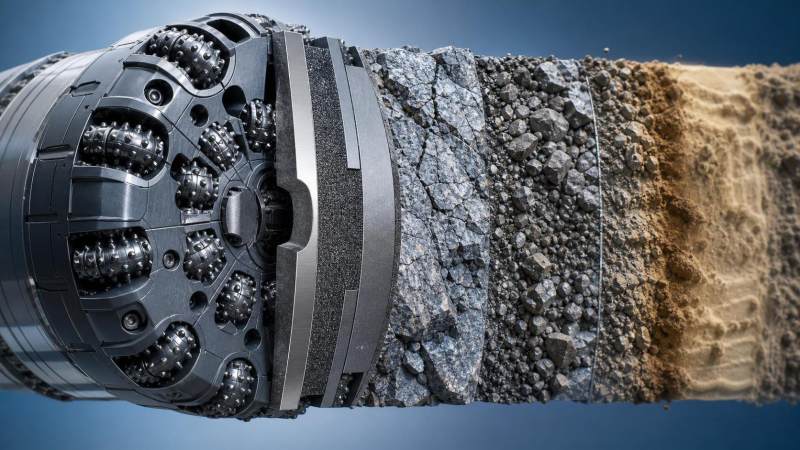
TBM Cutter Head Materials Explained: Wear Resistance, Toughness, and Ground Suitability
Choosing the right TBM cutter head materials is critical for balancing wear resistance, toughness, and performance across variable ground conditions.
For technical evaluation, material choice shapes cutter life, maintenance intervals, penetration stability, and overall project risk.
It also affects downtime, spare part planning, and the cost of intervention inside the shield.
In practice, no single material is ideal everywhere.
The best TBM cutter head materials are selected by matching hardness, toughness, and weldability to real ground behavior, not only laboratory values.
Why TBM Cutter Head Materials Matter So Much
A cutter head works under repeated impact, sliding abrasion, pressure fluctuation, and unpredictable face conditions.
That means TBM cutter head materials must resist both steady wear and sudden fracture.
If hardness is too high, brittle cracking can appear around openings, weld zones, or spoke transitions.
If toughness is too high but hardness is too low, wear accelerates and cutter geometry degrades quickly.
This balance is especially important in mixed ground, where a machine can shift from soft clay to abrasive rock in one drive.
Key Performance Targets
- Wear resistance under quartz-rich or highly abrasive formations
- Impact toughness in blocky, fractured, or boulder-bearing ground
- Fatigue strength under cyclic loading and vibration
- Good weldability for repair and field hardfacing
- Stable mechanical properties after fabrication and heat treatment
Main Categories of TBM Cutter Head Materials
Most cutter heads do not rely on one material alone.
They use a combination of structural steel, wear-resistant plates, hardfacing alloys, and specialized cutter ring materials.
1. High-Strength Structural Steel
This is the backbone of many cutter heads.
Low-alloy high-strength steels are widely used for main plates, ribs, spokes, and support sections.
They offer solid toughness, acceptable weldability, and predictable fabrication performance.
However, untreated structural steel alone is rarely enough in highly abrasive geology.
2. Wear-Resistant Steel Plate
Wear plates are commonly added to high-loss areas.
These include face openings, muck channels, peripheral zones, and transition surfaces around cutters.
Higher hardness improves abrasion resistance, but it can reduce impact tolerance if overused.
That is why layout matters as much as material grade.
3. Hardfacing Alloys and Overlay Systems
Hardfacing is often the most flexible way to upgrade TBM cutter head materials.
Chromium carbide, complex carbide, and other overlay systems can protect zones with severe sliding wear.
Still, overlay thickness, dilution, and cracking behavior must be controlled carefully.
A hard surface on a weak base will not deliver reliable life.
4. Cutter Ring and Tooling Materials
Disc cutter rings usually use alloy steels with controlled heat treatment.
Here, the goal is very different from plate design.
The material must maintain edge stability under concentrated contact stress while resisting spalling and plastic deformation.
This part of TBM cutter head materials often determines replacement frequency in hard rock drives.
Wear Resistance Versus Toughness: The Core Tradeoff
The central material decision is rarely about maximum hardness alone.
It is about where hardness should sit without pushing the cutter head into brittle failure.
Recent projects show a clearer shift toward zoned design.
High-wear areas receive stronger protection, while main load-bearing structures keep more ductility.
How the Tradeoff Plays Out
For most major infrastructure tunnels, balanced TBM cutter head materials outperform extreme choices over the full project cycle.
Ground Suitability: Matching Materials to Geology
Ground suitability is where material strategy becomes operational.
A strong material on paper can still underperform if it does not match the failure mode in the face.
Abrasive Hard Rock
In granite, quartzite, and silica-rich formations, abrasion dominates.
TBM cutter head materials should emphasize wear-resistant plate and durable cutter ring metallurgy.
The key risk is rapid profile loss, leading to lower penetration and more frequent tool changes.
Fractured Rock and Boulder Zones
Impact loading becomes more severe in broken ground.
Here, TBM cutter head materials need stronger crack resistance and better energy absorption.
Excessive hardfacing in impact zones can create local failure points.
Soft Ground With Abrasive Inclusions
This case is often underestimated.
Clay or silt may seem mild, yet sand lenses and gravel can drive intense localized wear.
Material selection should focus on muck flow surfaces, openings, and edge protection.
Mixed Face Conditions
Mixed face conditions create the hardest decisions for TBM cutter head materials.
One side may see compression and wear, while another side sees impact, voids, or instability.
This usually favors modular wear protection and tougher primary structure design.
What Technical Evaluation Should Check
A sound review goes beyond nominal hardness numbers.
It should connect material data to fabrication quality, repair strategy, and project geology.
- Check the geology report for abrasivity, block size, groundwater, and mixed-face probability.
- Review where each TBM cutter head material is applied, not only which grade is listed.
- Confirm heat treatment control, welding procedure, and hardness consistency near joints.
- Assess hardfacing renewal plans and accessibility for intervention under pressure.
- Link material selection to expected cutter consumption, stoppage risk, and total cost of ownership.
This is where project intelligence becomes practical. Material choice should support the full operating strategy, not just procurement compliance.
Common Mistakes in TBM Cutter Head Materials Selection
- Using high-hardness material across the whole head without impact zoning
- Ignoring weld heat-affected zones during specification review
- Assuming cutter ring performance alone will solve structural wear issues
- Copying a previous tunnel specification with different geology
- Evaluating initial material price without service-life economics
These mistakes usually appear when material selection is isolated from boring data, maintenance records, and site intervention constraints.
A Practical Decision Framework
The most reliable approach is layered.
Start with geology, define failure modes, then assign TBM cutter head materials by function and wear map.
After that, compare fabrication complexity with expected maintenance savings.
This also means field feedback should loop into future specifications.
Projects that track wear patterns and intervention timing make better material choices in the next drive.
At TF-Strategy, that connection between material behavior, machine design, and ground reality is where useful intelligence is built.
In the end, the best TBM cutter head materials are not the hardest or the most expensive. They are the ones that fit the geology, survive the operating cycle, and reduce risk over the whole tunnel program.
Related News
 Oct 12, 2026How to Assess a High-Altitude Mining Equipment Manufacturer for Remote ProjectsHigh altitude mining manufacturer assessment guide: compare derating, cold-climate reliability, remote service, parts resilience, and lifecycle risk for smarter project decisions.
 Oct 11, 2026What Drives TBM Cutter Head Material Cost and Life-Cycle Value?Cutter head material cost explained: compare TBM alloys, wear protection, downtime risk, and life-cycle value to choose the most reliable, cost-effective solution.
 Oct 13, 2026Mining Haulage Services Procurement Checklist for Uptime and Cost ControlMining haulage services procurement checklist for stronger uptime, safer fleet selection, transparent pricing, and better cost control across changing mine conditions.
 Oct 12, 2026How to Read Mining Equipment Performance Reviews Beyond Headline MetricsMining equipment performance reviews explained: learn to assess productivity, availability, maintenance risk, site conditions, and total ownership cost for smarter fleet decisions.



Geological Boring Fellow
Weekly Insights
Stay ahead with our curated technology reports delivered every Monday.