
Tunnel boring machine delays often start with cutter wear

When a tunnel boring machine falls behind schedule, the first warning sign is often cutter wear rather than a major system failure. For aftermarket maintenance teams, understanding how wear patterns affect penetration, torque, vibration, and replacement cycles is essential to reducing downtime and protecting project margins. This article explores why cutter wear triggers cascading delays and how smarter inspection and service decisions can keep TBM performance on track.
Why cutter wear matters before bigger failures appear
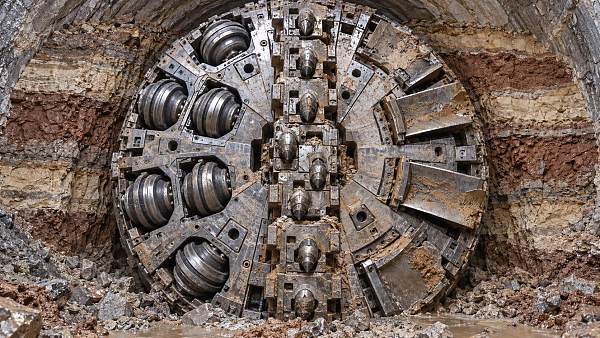
In any tunnel boring machine, cutters are the front line of rock breaking. They absorb concentrated contact forces, heat, shock, and abrasion every hour the machine advances. Because of that, cutter wear is not just a consumable issue. It is an early performance signal that reflects geology, operating practice, machine setup, and maintenance quality at the same time. A TBM can still run with worn cutters, but it usually does so less efficiently, with more stress pushed into the cutterhead, drive system, bearings, and muck handling chain.
For aftermarket maintenance personnel, this is where delays often begin. A tunnel boring machine rarely loses schedule in one dramatic moment. More often, productivity erodes gradually: penetration per revolution drops, torque demand rises, vibration increases, cutter changes become more frequent, and planned interventions turn into emergency stops. By the time a project team recognizes a meaningful delay trend, the root cause may already be visible in worn rings, damaged housings, blocked rotation, or uneven wear distribution across the cutterhead.
This matters across the broader heavy engineering sector followed by TF-Strategy. Just as excavator teeth, crane wire ropes, or dump truck tires reveal operational health, cutter consumption on a tunnel boring machine becomes a strategic maintenance indicator. It links physical wear to project delivery, cost control, and infrastructure reliability.
What cutter wear means in a tunnel boring machine context
Cutter wear refers to the progressive loss of effective cutting geometry and structural integrity at the TBM cutter interface. In hard rock machines, this usually involves disc cutter ring wear, edge rounding, flat formation, thermal cracking, bearing degradation, or seizure. In mixed ground or abrasive formations, wear can accelerate because the tunnel boring machine faces alternating loads, broken rock recirculation, and unstable contact conditions. Even in EPB or slurry systems, where pressure control gets much attention, cutter wear remains fundamental because ground conditioning does not eliminate abrasive interaction at the face.
A useful way to think about wear is not simply as “used up metal,” but as lost cutting efficiency. Once the cutter no longer penetrates rock cleanly, the tunnel boring machine needs more energy for each meter advanced. That change can be small at first, yet over long drives it becomes a schedule risk. Maintenance teams therefore need to read wear as an operating condition, not merely a replacement event.
Why the industry is paying closer attention to wear-driven delays
Global tunneling projects are becoming more complex. Urban metro drives must pass close to sensitive structures. Long mountain tunnels demand stable advance over extended periods. Cross-border infrastructure and energy corridors require strict timeline discipline. In all of these contexts, a tunnel boring machine is expected to deliver predictable output despite variable geology. That expectation raises the value of precise aftermarket support.
At the same time, contractors are under pressure to lower total cost of ownership and avoid disruptive stoppages. Replacing cutters too early wastes parts and intervention time. Replacing them too late can damage mounts, overload drives, and trigger secondary failures. The maintenance challenge is therefore strategic: create a replacement rhythm based on wear behavior, not assumptions. This is why intelligence-driven platforms such as TF-Strategy increasingly connect field data, geology, and service planning when interpreting tunnel boring machine performance.
How wear creates a chain reaction inside a tunnel boring machine
The first step in the chain reaction is reduced rock-breaking efficiency. Worn cutters produce less effective penetration, which means the tunnel boring machine must compensate with more thrust, more torque, or longer cutting time. This affects production directly. If the machine previously achieved target advance with balanced loading, it may now consume extra hours per ring or per stroke.
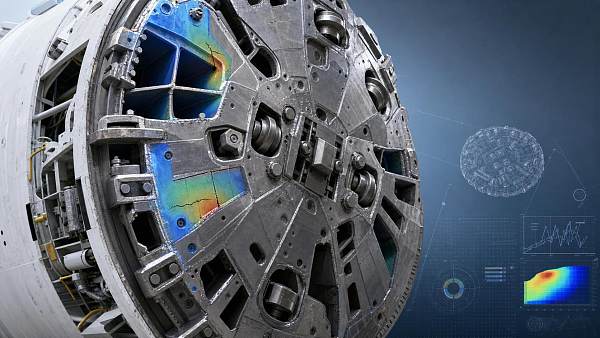
The second step is dynamic instability. Uneven wear across the cutterhead creates nonuniform contact. Some cutters dig, some skid, and some stop rotating freely. This introduces vibration and shock loads that maintenance teams often detect in data before visible structural damage appears. Bearings, housings, and mounting points then experience stress concentrations that were never intended under ideal cutting conditions.
The third step is intervention escalation. Once the tunnel boring machine begins to consume cutters unpredictably, shift planning becomes harder. Safe access windows, hyperbaric interventions where needed, spare inventory, and labor coordination all become more difficult. In many projects, the delay is not caused by one cutter change but by the accumulation of small service interruptions and reduced confidence in machine stability.
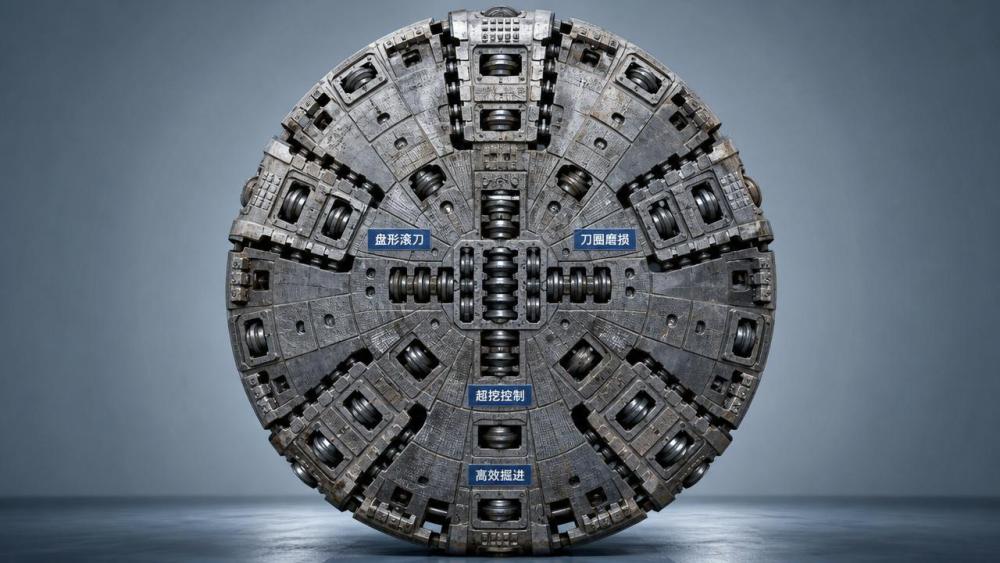
Typical wear patterns maintenance teams should classify early
A high-performing aftermarket team does more than note that a cutter is worn. It identifies the wear mode and connects it to operating conditions. Normal uniform wear may simply confirm expected geology and acceptable change intervals. Eccentric wear can point to misalignment or unstable face conditions. Flat wear often signals inadequate rotation or excessive abrasive grinding. Thermal damage may suggest prolonged slippage, while broken rings can indicate impact loading, trapped blocks, or overload events.
Classification matters because each pattern leads to a different maintenance response. A tunnel boring machine in highly abrasive quartz-rich ground may require interval compression and better debris control. A machine showing bearing seizure on selected cutter positions may need closer inspection of seal integrity, lubrication condition, or local load distribution. Without that differentiation, teams risk treating all consumption as normal and missing avoidable delay drivers.
Where aftermarket maintenance adds the most value
For the target audience, the practical value lies in turning wear information into decisions. The most effective aftermarket maintenance teams for a tunnel boring machine usually contribute in five areas.
First, they build inspection discipline. Consistent documentation of cutter condition, position, geology, advance rate, torque, and intervention interval creates a usable wear history. Second, they support forecasting. Instead of reacting to the last bad cutter change, they estimate which zones of the cutterhead are likely to require action next. Third, they improve spare readiness. The right cutter assemblies, seals, tools, and handling procedures reduce the duration of each stop.
Fourth, they help identify operating adjustments. Sometimes the best maintenance action is not immediate replacement but a change in thrust, RPM, conditioning, or muck management to reduce abnormal wear. Fifth, they protect downstream components. Early attention to cutter issues prevents avoidable stress on motors, gearboxes, bearings, and structural interfaces. In this sense, tunnel boring machine maintenance is both a frontline and system-level function.
Practical service recommendations for reducing wear-driven delay
A practical program starts with condition-based intervals rather than fixed assumptions. Geological variability means that one tunnel boring machine can consume cutters at very different rates within the same project. Maintenance teams should combine meter-based intervals with live indicators such as torque trend, penetration trend, vibration behavior, and cutterhead temperature signals where available.
Inspection quality is equally important. During each intervention, record actual wear dimensions, freedom of rotation, seal condition, local debris packing, and any signs of mount damage. A short, repeatable inspection checklist often delivers better long-run value than a vague visual review. The goal is to convert every cutter change into diagnostic feedback.
Inventory planning should also reflect risk concentration. Certain cutter positions, especially gauge or high-load zones, may consume faster than center positions depending on geology and cutterhead design. Stocking strategy should therefore follow wear distribution, not only total cutter count. This reduces the chance that a tunnel boring machine loses time waiting for the specific components most likely to fail first.
Finally, communication between field service, operations, and engineering must stay tight. When maintenance sees abnormal wear, that information should reach decision-makers quickly enough to adjust operational parameters, intervention timing, or technical support strategy. Delay prevention is strongest when the tunnel boring machine is managed as a data-linked system rather than a set of isolated repairs.
Common evaluation points before delays become expensive
Before a schedule slips materially, teams should ask several structured questions. Is the drop in advance rate linked to ground change or to rising cutter resistance? Are wear patterns concentrated in specific cutterhead zones? Has intervention frequency increased without a proportional change in geology? Are spare cutters and service tools aligned with actual field consumption? Is vibration indicating only wear, or possible structural follow-on damage?
These questions move the discussion from symptoms to causes. For contractors and service providers alike, that shift is essential. In many projects, the cost of one extended outage far exceeds the cost of better wear tracking, better field reporting, and earlier replacement decisions. A tunnel boring machine is too capital-intensive to manage cutter wear casually.
A stronger maintenance mindset for sustained TBM performance
Cutter wear is often the earliest operational language a tunnel boring machine speaks when something is drifting off target. For aftermarket maintenance teams, listening to that language means more than swapping parts. It means interpreting wear patterns, linking them to geology and machine behavior, and acting before minor losses become schedule damage. In modern infrastructure projects, that capability has real business value: less downtime, better component life, steadier advance, and stronger control of project margins.
For organizations that rely on tunnel boring machine productivity, the most effective next step is to strengthen wear intelligence at the field level. Better records, clearer classification, tighter service planning, and closer coordination between operations and maintenance can transform cutter wear from a recurring disruption into a manageable performance variable. That is the kind of practical engineering discipline that keeps heavy equipment delivering on strategy as well as on site.
Related News
 Sep 22, 2026How to Evaluate a High-Altitude Mining Solutions Manufacturer for Remote ProjectsEvaluate a high-altitude mining solutions manufacturer with proven derating, cooling, service logistics, and lifecycle-cost support for remote projects.
 Sep 21, 2026Industrial Supplier Evaluation: A Risk-Based Scorecard for Quality, Capacity, and DeliveryIndustrial supplier evaluation made practical: use a risk-based scorecard to assess quality, capacity, and delivery reliability, reduce project risk, and select suppliers with confidence.
 Sep 20, 2026Comparing Heavy Equipment Warranty Suppliers: Coverage, Claims, and Downtime RiskSupplier comparison for heavy equipment warranty: evaluate coverage, claims speed, service networks, and downtime risk to protect uptime and project costs.
 Sep 19, 2026Mining Truck Technology Trends: What Fleet Managers Should Prioritize for 2026Mining truck technology trends for 2026: prioritize electrification, autonomy, predictive maintenance, and road intelligence to improve fleet uptime, safety, and cost control.

Geological Boring Fellow
Weekly Insights
Stay ahead with our curated technology reports delivered every Monday.