
Electric Hydraulic Power Systems Explained: Key Components, Pressure Control, and Sizing
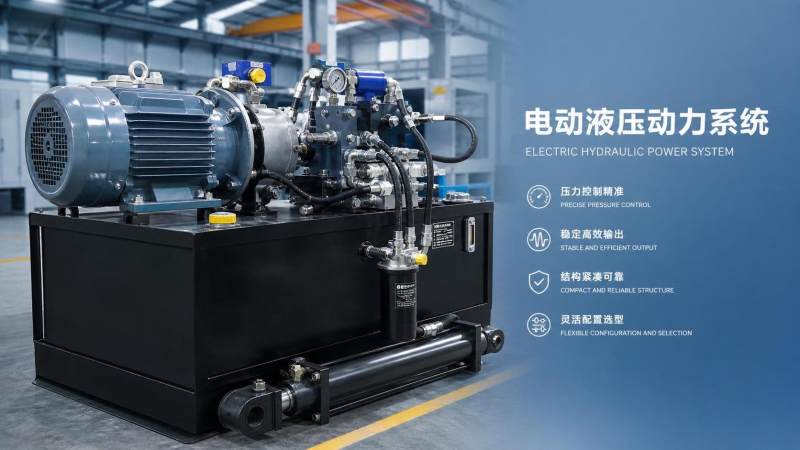
Electric Hydraulic Power Systems Explained: Key Components, Pressure Control, and Sizing
Electric hydraulic power systems sit at the center of modern heavy equipment.
They convert electrical energy into controlled hydraulic force for lifting, drilling, steering, clamping, and actuation.
In tunnel boring machines, mining fleets, cranes, and road machinery, that conversion has to be stable under punishing duty cycles.
That is why technical reviews rarely stop at motor power alone.
The real question is whether the electric hydraulic power systems are correctly configured for force, control, heat, and durability.
A well-designed package improves efficiency, cycle consistency, and safety margins.
A weak design creates pressure instability, wasted energy, overheating, and premature wear.
So it helps to evaluate these systems as an integrated power chain rather than a collection of catalog parts.
What Electric Hydraulic Power Systems Actually Do
At a basic level, electric hydraulic power systems use an electric motor to drive a hydraulic pump.
The pump moves fluid from the reservoir into the circuit.
Pressure builds only when flow meets resistance at an actuator or valve restriction.
That distinction matters because flow determines speed, while pressure reflects the load requirement.
Many evaluation mistakes happen when those two variables are treated as interchangeable.
In practical terms, electric hydraulic power systems deliver dense force where electric actuators alone may become bulky or less robust.
They also allow remote placement of power and flexible routing to multiple functions.
This remains valuable in compact machine structures and heavy-load applications.
Key Components That Shape Performance
To assess electric hydraulic power systems properly, start with the main building blocks.
Each one influences efficiency, controllability, and maintenance behavior.
Electric Motor
The motor provides input torque and speed for the pump.
Key checks include rated power, starting torque, duty class, insulation, enclosure, and VFD compatibility.
For variable-demand equipment, motor controllability can have a major effect on total energy use.
Hydraulic Pump
The pump converts mechanical rotation into hydraulic flow.
Gear pumps are simple and cost-effective.
Vane pumps offer quieter operation in some industrial settings.
Piston pumps support higher pressures and better variable-displacement control.
Pump selection often separates commodity electric hydraulic power systems from high-performance ones.
Reservoir and Filtration
The reservoir stores fluid, releases heat, and helps air and contaminants separate.
Filtration protects valves, pumps, and actuators from wear particles.
Poor contamination control can ruin otherwise sound electric hydraulic power systems.
Valves and Actuators
Directional, pressure, and flow-control valves shape system behavior.
Cylinders and hydraulic motors then turn fluid power into linear or rotary work.
Valve response, leakage characteristics, and actuator sizing strongly affect precision.
Sensors and Controls
Modern electric hydraulic power systems increasingly depend on pressure sensors, temperature sensors, encoders, and electronic controllers.
These elements support closed-loop control, diagnostics, remote monitoring, and condition-based maintenance.
Pressure Control: The Core of Stability and Safety
Pressure control is where electric hydraulic power systems either prove their quality or expose hidden weaknesses.
The goal is not maximum pressure at all times.
The goal is stable, appropriate pressure that matches load demand without damaging components or wasting energy.
Relief and Reducing Functions
Relief valves cap pressure and protect the circuit from overload.
Pressure reducing valves maintain lower pressure in selected branches.
Without proper settings, the system may run hot or become erratic during peak loads.
Load-Sensing and Variable Displacement
A major efficiency step comes from load-sensing control.
Here, the pump supplies only the flow and pressure margin needed by the active function.
Compared with fixed-displacement systems, this reduces throttling losses and lowers fluid temperature.
In heavy-duty cycles, that difference is commercially significant.
Electrohydraulic Closed-Loop Control
More advanced electric hydraulic power systems use proportional or servo valves with continuous feedback.
This improves pressure modulation, actuator smoothness, and repeatability.
It becomes especially relevant in boring, lifting, and positioning tasks where shock loads must be limited.
How to Size Electric Hydraulic Power Systems Correctly
Sizing is not a simple nameplate exercise.
It requires matching duty profile, peak force, motion speed, operating environment, and control philosophy.
Oversizing raises cost and heat from low-efficiency operation.
Undersizing creates pressure collapse, slow cycles, and short component life.
Start With Load and Motion
First define the required actuator force or torque.
Then define the target speed, stroke, rotation rate, and simultaneous movements.
This establishes pressure demand, flow demand, and the true peak operating envelope.
Calculate Power From Real Duty Cycles
Do not size only for theoretical maximum load.
Use actual duty cycle data, including idle time, acceleration, hold periods, and transient spikes.
This is where electric hydraulic power systems often gain from variable-speed motor control.
Check Thermal Balance
Every inefficiency becomes heat.
That includes pump leakage, valve throttling, motor losses, and return-line pressure drop.
A credible sizing review always checks whether the cooling path can manage continuous and peak thermal loads.
Account for Fluid, Altitude, and Temperature
Viscosity changes affect leakage, response, and suction performance.
High altitude changes cooling behavior and can worsen cavitation risk.
Cold starts and extreme ambient heat must be built into the final margin.
Common Evaluation Risks
From recent equipment upgrades, a clearer pattern has emerged.
Many electric hydraulic power systems look adequate on paper yet struggle in real operations.
The causes are usually predictable.
- Sizing from nominal values instead of dynamic duty cycles.
- Ignoring contamination class and filter maintenance intervals.
- Using high relief settings to mask force shortfalls.
- Underestimating heat rejection requirements in enclosed spaces.
- Treating control software as secondary to hydraulic hardware.
- Failing to validate pressure ripple, noise, and shock behavior.
These issues matter more in TBM support units, mining equipment, and large lifting machinery.
Those applications demand long uptime, tight control, and predictable maintenance windows.
A Practical Review Checklist
When comparing electric hydraulic power systems, a structured checklist saves time and improves consistency.
- Confirm required force, speed, and simultaneity of functions.
- Verify motor power, starting behavior, and VFD strategy.
- Match pump type to pressure range and control needs.
- Review relief settings, pressure margins, and shock protection.
- Check filtration rating, reservoir design, and fluid cleanliness targets.
- Model heat generation and cooling capacity under worst-case duty.
- Assess sensor coverage, alarm logic, and diagnostic access.
- Validate lifecycle cost, not just initial package price.
This approach makes electric hydraulic power systems easier to compare across suppliers and application classes.
Final Takeaway
Electric hydraulic power systems are not defined by pressure rating alone.
Their real value comes from how well components, controls, pressure logic, and thermal margins work together.
In heavy industry, that systems view is what separates acceptable performance from reliable long-term operation.
For any technical review, focus on load profile, control method, energy efficiency, and maintainability as one decision set.
That is usually the fastest path to judging whether electric hydraulic power systems will hold up in demanding field conditions.
Related News
 Sep 30, 2026What Does an Ultra-Large Excavator Really Cost Over Its Service Life?Ultra-large excavators cost far more than purchase price. Explore lifecycle expenses, uptime risks, energy use, maintenance, and cost-per-tonne insights.
 Sep 29, 2026Infrastructure Construction Standards: A Project Manager’s Guide to ComplianceInfrastructure construction standards guide for project managers: turn requirements into field controls, hold points, traceability, and compliant delivery.
 Sep 28, 2026How to Specify Custom Mining Equipment for Abrasive Ground and High-Load HaulageCustom mining equipment for abrasive ground and high-load haulage: learn how to optimize payload, wear protection, powertrains, uptime, and lifecycle cost for safer, reliable production.
 Sep 30, 2026When does a lower construction machinery price raise lifecycle costs?Construction machinery pricing can hide costly risks. Discover how downtime, fuel use, maintenance, productivity, and resale value shape total lifecycle costs.


Hydraulic Power Analyst
Weekly Insights
Stay ahead with our curated technology reports delivered every Monday.