
Hydraulic Power Systems for Lifting: Key Pressure, Flow, and Safety Factors Explained
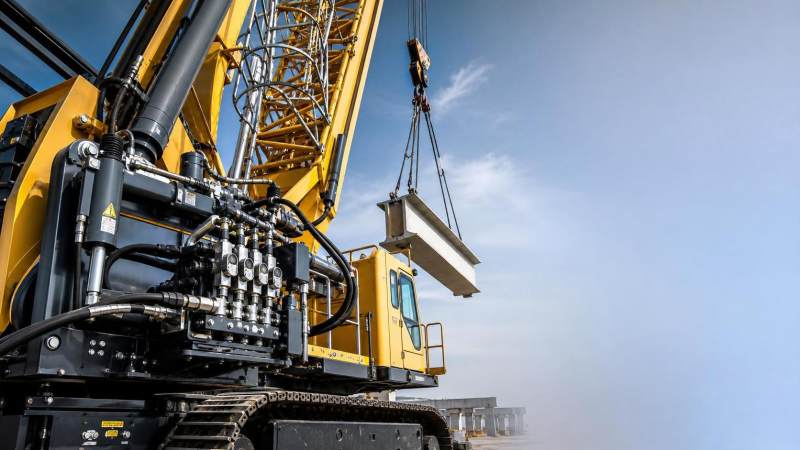
Hydraulic power systems lifting performance sits at the center of modern heavy handling. In crawler cranes, mining support units, tunnel logistics platforms, and large construction equipment, lifting quality depends on how pressure, flow, and safety controls work together under load.
That matters more now because global infrastructure projects are getting larger, schedules are tighter, and equipment operates in harsher environments. In the TF-Strategy view of heavy industry, physical parameters are not isolated numbers. They shape uptime, lifting precision, energy use, and operational risk.
A clear grasp of hydraulic power systems lifting behavior helps turn routine checks into better decisions. It also makes it easier to judge whether a machine is performing normally, approaching its limit, or drifting toward failure.
Why Hydraulic Lifting Deserves Close Attention
Hydraulic systems remain the preferred solution for high-force lifting because they deliver dense power in a compact package. They can raise heavy loads smoothly, hold them steadily, and respond well to controlled motion commands.
In practical terms, hydraulic power systems lifting capability affects more than lifting height or rated load. It influences boom motion, winch response, attachment stability, and the machine’s ability to keep movements predictable across changing site conditions.
This is especially relevant in sectors tracked by TF-Strategy, where lifting tasks support wind power installation, petrochemical assembly, mine maintenance, and heavy transport support. A small mismatch between hydraulic demand and system capacity can slow a project or create a dangerous load event.
Pressure Creates Force, but It Is Not the Whole Story
Pressure is the factor most often linked with lifting force. Simple logic applies: when hydraulic pressure acts on a cylinder piston area, it generates the push or pull needed to raise a load.
Still, higher pressure does not automatically mean better hydraulic power systems lifting results. Actual lifting force also depends on cylinder size, mechanical leverage, hose condition, relief valve settings, and the geometry of the boom or lifting structure.
A machine can show normal pressure at one point in the circuit while losing usable force elsewhere. Internal leakage, worn seals, or heat-thinned oil may reduce effective force even when gauge readings look acceptable.
That is why pressure should be read as part of a system pattern. Sudden spikes, unstable readings, or pressure that rises without motion often point to blockage, overload, or valve problems.
What pressure tells you on site
- Whether the system has enough force reserve for the intended lift.
- Whether relief settings are protecting the circuit correctly.
- Whether abnormal resistance is developing in cylinders, hoses, or valves.
- Whether the load is being handled inside the machine’s designed envelope.
Flow Determines Speed and Motion Quality
If pressure creates force, flow determines how fast hydraulic oil moves through the circuit. That directly affects lifting speed, lowering speed, and how smoothly the machine transitions between movements.
In hydraulic power systems lifting applications, poor flow management often appears before force loss becomes obvious. Jerky starts, delayed response, uneven boom motion, or slow function changes usually indicate that flow is restricted, unstable, or poorly matched to the task.
Flow also matters for fine control. Heavy lifts rarely fail because a machine cannot move at all. More often, problems begin when motion is too abrupt, too slow under load, or inconsistent during positioning.
This is where pump health, valve response, hose routing, and oil cleanliness become operational issues rather than maintenance footnotes. Small contamination or wear can change flow behavior enough to affect lifting precision.
Pressure and flow work as a pair
Looking at only one variable can be misleading. Stable hydraulic power systems lifting performance comes from balance, not from maximizing a single number.
Safety Controls Are Part of Performance
Safety in lifting is often discussed as a separate topic, but in hydraulic systems it is built into performance itself. Relief valves, counterbalance valves, load-holding valves, pressure sensors, and overload monitoring all influence how safely a lift can proceed.
A well-designed hydraulic power systems lifting setup does not simply raise a load. It controls unintended motion, limits peak forces, and helps maintain stability if the operating state changes suddenly.
This becomes critical in wind turbine erection, petrochemical module handling, and underground support logistics, where suspended loads move near structures, personnel pathways, or narrow work envelopes. In those cases, safe hydraulic behavior protects schedule integrity as much as it protects equipment.
Digital monitoring is also becoming more relevant. TF-Strategy closely tracks how sensing, remote diagnostics, and data-driven maintenance improve safety decisions in heavy equipment. For lifting circuits, that means earlier detection of pressure drift, overheating, and response delays before they trigger incidents.
Safety factors worth checking routinely
- Relief valve setting matches machine specification.
- Load-holding devices respond without delay or chatter.
- Hydraulic oil temperature remains within the recommended band.
- No visible hose abrasion, leakage, or coupling looseness.
- System alarms, interlocks, and pressure indicators remain functional.
Where Hydraulic Power Systems Lifting Shows Its Value
The value of hydraulic power systems lifting is easiest to see in demanding work cycles. Heavy infrastructure rarely offers ideal ground, ideal weather, or ideal loading conditions. The lifting system must remain controllable when the environment is not.
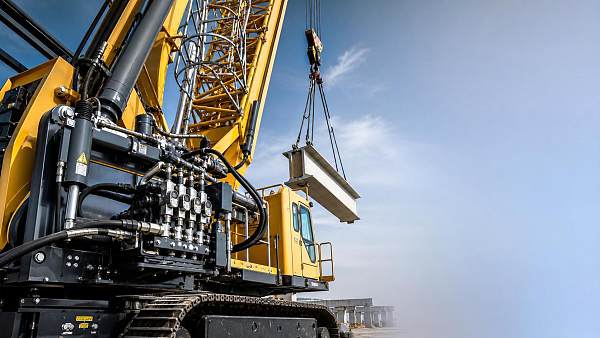
Crawler cranes are a clear example. They rely on hydraulic circuits for boom functions, travel support, and auxiliary actuation while handling large components with limited tolerance for movement error. Pressure reserve and flow stability directly affect placement accuracy.
In mining, hydraulic lifting functions support maintenance lifts, attachment positioning, and service operations under dust, vibration, and temperature stress. Here, reliability often matters more than top speed.
In TBM support environments, lifting circuits may handle segment installation tools, service platforms, or related auxiliary systems where predictable movement is essential in confined spaces. A slight control issue can become a serious access or safety problem.
These examples show why the topic belongs in broader heavy-industry analysis. Lifting hydraulics affect productivity, machine life, operator confidence, and the total cost profile of large projects.
How to Read System Condition in Daily Operation
Good judgment usually starts with trend awareness rather than a single inspection point. A hydraulic system rarely moves from healthy to failed without giving smaller warnings first.
When evaluating hydraulic power systems lifting condition, compare current behavior with the machine’s normal baseline. Changes in noise, warm-up time, lift response, oil temperature, or holding stability often say more than a standalone gauge reading.
Pay close attention to symptoms that appear only under real load. Some circuits seem normal without weight on the hook, then reveal weak pressure retention or unstable flow once the system is stressed.
It is also worth separating hydraulic problems from structural or operational ones. A lift that feels unstable may involve outriggers, load distribution, rigging geometry, or ground conditions rather than a pure hydraulic fault.
Useful checkpoints during operation
- Watch whether lifting speed stays consistent from light load to working load.
- Note whether the load drifts after stopping movement.
- Check for repeated temperature rise during long duty periods.
- Listen for cavitation, valve chatter, or pump strain.
- Review maintenance records for recurring seal, hose, or contamination issues.
What to Compare Before the Next Decision
Whether assessing an existing fleet or reviewing a new lifting platform, the next step is usually comparison. Hydraulic power systems lifting quality should be judged through several linked questions, not a single rated figure.
Start with the application envelope. Consider actual load range, lift frequency, ambient temperature, terrain, and duty cycle. Then compare hydraulic pressure capacity, flow control quality, safety architecture, and service visibility.
It also helps to follow broader intelligence signals. TF-Strategy’s focus on hydraulic analysis, heavy haulage, and equipment evolution reflects a simple reality: lifting systems are being shaped by digital monitoring, energy transition goals, and rising safety expectations across global infrastructure.
That makes informed comparison more valuable than ever. The strongest choice is rarely the machine with the highest headline number. It is the one whose hydraulic behavior stays stable, transparent, and controllable in the real conditions where work gets done.
A practical next move is to build a simple review checklist around pressure behavior, flow consistency, thermal control, valve protection, and monitoring feedback. That framework turns hydraulic power systems lifting from a technical detail into a reliable basis for safer operation and better project outcomes.
Related News
 Sep 27, 2026Heavy Equipment Selection Factors for Matching Machine Capacity to Jobsite ConditionsHeavy equipment selection factors for matching capacity to jobsite conditions, improving productivity, safety, fleet efficiency, and total project cost control.
 Sep 26, 2026How to Select Wind Rotor Lifting Equipment for Safe Blade and Hub InstallationWind rotor lifting equipment selection guide: ensure safe blade and hub installation with the right lift method, load control, crane compatibility, wind limits, and compliance.
 Sep 25, 2026What Drives Heavy Haulage Cost on Oversized Construction Equipment Moves?Heavy haulage cost explained: discover how load dimensions, route surveys, permits, escorts, lifting plans, and scheduling shape reliable oversized equipment transport budgets.
 Sep 24, 2026Supplier Management Frameworks That Reduce Delays on Large Construction ProjectsLarge-scale construction projects supplier management frameworks help prevent costly delays with risk-based controls, milestone tracking, quality oversight, and escalation plans for critical packages.
Hydraulic Power Analyst
Weekly Insights
Stay ahead with our curated technology reports delivered every Monday.