
What to Consider Before Choosing Ultra Large Excavators for Mining Projects
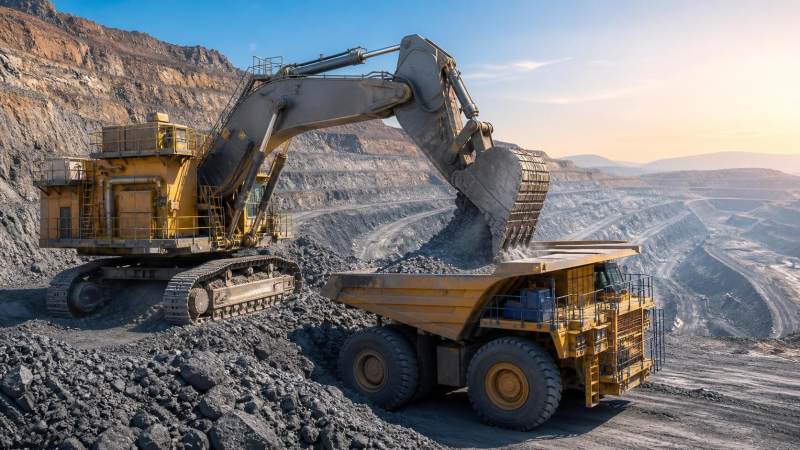
Choosing ultra large excavators for mining projects is rarely a simple equipment purchase. For procurement teams, it is a long-term operational decision that can shape production stability, fuel spend, maintenance workload, and even the rhythm of the whole haul cycle. In open-pit mining, where downtime is expensive and working conditions can shift with geology, weather, and pit design, the wrong machine can create years of friction. The right one, by contrast, becomes part of the site’s operating logic.
That is why buyers should look beyond bucket size and engine power. An ultra large excavator may look impressive on paper, but mining projects demand a more practical question: will this machine fit the ore body, the loading profile, the maintenance strategy, and the project horizon you are actually working with?
Start with the mine, not the machine
The most common mistake in selecting ultra large excavators is beginning with the equipment catalogue instead of the mining plan. A machine that performs well in one pit can underperform in another simply because the operating environment is different.
Ore hardness, fragmentation size, bench height, digging depth, and floor conditions all influence real productivity. If the site involves hard rock, abrasive material, or highly variable digging conditions, the excavator’s structural durability and breakout force matter as much as raw capacity. In softer overburden or high-volume stripping work, cycle speed and loading consistency may matter more.
Procurement teams should also examine how the excavator will interact with the site layout. Truck matching is not a minor detail. A machine with the wrong reach or swing configuration can extend loading time, increase tire wear on haul trucks, and reduce the efficiency of the entire fleet. In mining, a small mismatch often multiplies across hundreds of cycles.
Productivity is more than theoretical output
Brochures often highlight tonnage per hour, but mining productivity depends on repeatable performance under real site stress. When evaluating ultra large excavators, ask how stable the machine remains across a full shift, not just during ideal test conditions.
Key questions include: Does the hydraulic system maintain smooth response under heavy load? Can the excavator sustain high digging force without overheating? How quickly does performance degrade when the bench becomes uneven or the material becomes sticky?
For procurement managers, availability is just as important as nominal output. A machine that is slightly smaller but consistently operational may outperform a larger unit that spends too much time waiting on service, parts, or troubleshooting. In high-volume mining, uptime is often where the real value sits.
Fuel efficiency and operating economics deserve equal weight
Ultra large excavators are power-hungry by nature, but fuel consumption should still be treated as a strategic metric, not just an operating bill. Over the life of a mine, even moderate differences in efficiency can reshape total cost of ownership.
Look at how the engine and hydraulic systems are tuned for load management. Some machines deliver strong breakout performance but consume more fuel because they operate with less efficient power distribution. Others may sacrifice a bit of aggressiveness in exchange for steadier energy use over long cycles.
It also helps to examine the machine’s compatibility with operating discipline. If the pit team is trained to avoid unnecessary idle time, match loading patterns carefully, and use remote monitoring effectively, a more advanced excavator platform can deliver noticeable savings. But if the site lacks that discipline, the theoretical gains may never appear.
Procurement should consider not only diesel use, but also lubricant consumption, component wear rates, and consumables tied to the machine’s duty cycle. These costs are often less visible at the buying stage and more visible when budgets are already under pressure.
Maintenance access can decide the real winner
One of the quietest but most important factors in selecting ultra large excavators is serviceability. Mining operations live or die by maintenance windows. If the machine is difficult to inspect, slow to service, or dependent on highly specialized procedures, the site pays for that complexity every time a component needs attention.
Pay attention to access points for filters, hoses, pumps, and major wear parts. Consider how quickly routine inspections can be completed. Evaluate whether the maintenance team can safely perform common tasks without excessive lifting, dismantling, or waiting for external support.
For remote mines, the support model matters as much as the machine itself. A strong parts supply chain, technical response capability, and predictable maintenance documentation can be more valuable than a marginal improvement in rated power. In isolated regions, waiting for one critical component can stop production for days.
The best procurement decisions are often made by teams that ask a simple but practical question: how easy is it to keep this machine running when conditions are not ideal?
Operator experience affects output more than many buyers expect
An excavator is never just hardware. It becomes part of the human workflow on site. If the cab layout is cramped, visibility is poor, or control response feels inconsistent, operators work harder to achieve the same result. Fatigue rises, precision falls, and cycle consistency suffers.
For mining projects running long shifts, ergonomics matter. A comfortable, logically arranged cab may seem secondary during procurement, but it influences productivity and safety in direct ways. Visibility to the loading area, response smoothness, noise levels, and climate control all contribute to whether operators can stay consistent across the shift.
Training compatibility is another overlooked factor. If a machine introduces a steep learning curve, the site may need more time before it sees stable results. This is especially important when a project is ramping up quickly or when operator turnover is high.
Match the machine to the project timeline
Not every mining project has the same lifespan. Some are long-horizon operations with evolving pit stages; others are shorter campaigns focused on fast extraction. That difference should shape the purchase decision.
If the mine plan is expected to expand, buyers should consider whether the excavator platform can support future production levels without forcing an early replacement. Flexibility in attachment options, service intervals, and fleet integration can extend the machine’s usefulness as the operation changes.
For projects with uncertain ore continuity or shorter timelines, it may be wiser to prioritize reliability and deployment speed over maximum capacity. In such cases, the procurement objective is not to buy the biggest machine available, but the one that best preserves capital while still meeting production targets.
Technology only matters when the site can use it
Remote diagnostics, load monitoring, and digital maintenance systems are now common in ultra large excavators, but they should be evaluated with realism. Advanced features are useful when the mine has the people, network infrastructure, and operating discipline to use them well.
If the site already tracks performance data, manages maintenance digitally, and supports remote supervision, these systems can help reduce unplanned stoppages and improve fleet coordination. If not, the features may remain underused.
Procurement teams should therefore assess the site’s readiness, not just the machine’s capability. Technology is most valuable when it fits into a broader operational strategy for production, safety, and asset control.
A practical shortlist before signing off
Before finalizing an order, it helps to compare ultra large excavators against a simple set of purchase filters:
Does the machine match the mine’s material type and bench conditions? Can it maintain stable performance across long shifts? Is its fuel use acceptable for the project’s operating budget? Will maintenance be manageable with local resources and support? Does the supplier offer realistic parts and service coverage for the mine location? And most importantly, will this excavator still make sense when the project moves into its next phase?
These questions keep the discussion grounded in the realities of mining rather than the appeal of a specification sheet.
For procurement professionals, the best choice is rarely the biggest model or the newest one. It is the ultra large excavator that fits the project’s geology, fleet rhythm, and support capacity while protecting uptime over the long run. In mining, that balance is what turns a purchase into a dependable production asset.
Related News
 Sep 30, 2026What Does an Ultra-Large Excavator Really Cost Over Its Service Life?Ultra-large excavators cost far more than purchase price. Explore lifecycle expenses, uptime risks, energy use, maintenance, and cost-per-tonne insights.
 Sep 29, 2026Infrastructure Construction Standards: A Project Manager’s Guide to ComplianceInfrastructure construction standards guide for project managers: turn requirements into field controls, hold points, traceability, and compliant delivery.
 Sep 28, 2026How to Specify Custom Mining Equipment for Abrasive Ground and High-Load HaulageCustom mining equipment for abrasive ground and high-load haulage: learn how to optimize payload, wear protection, powertrains, uptime, and lifecycle cost for safer, reliable production.
 Sep 30, 2026When does a lower construction machinery price raise lifecycle costs?Construction machinery pricing can hide costly risks. Discover how downtime, fuel use, maintenance, productivity, and resale value shape total lifecycle costs.
Ms. Elena Rodriguez
Weekly Insights
Stay ahead with our curated technology reports delivered every Monday.