
How ultra-large excavators affect cycle time and fuel use
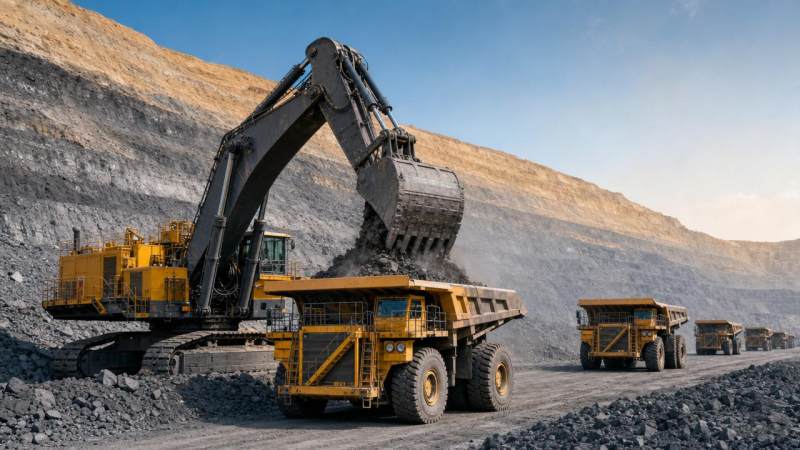
For project managers balancing output, cost, and equipment utilization, ultra-large excavators can reshape mine productivity far beyond simple bucket-size gains. Their influence on cycle time and fuel use affects loading efficiency, truck matching, shift planning, and overall operating cost. This article examines how machine scale changes real-world performance and what decision-makers should evaluate before expanding fleet capacity.
Why ultra-large excavators require a checklist-based evaluation
Ultra-large excavators promise fewer passes per truck, better bench productivity, and stronger output during peak stripping or ore movement. Yet scale alone does not guarantee lower cost per ton.
Cycle time and fuel use depend on swing angle, bucket fill factor, truck queue discipline, operator rhythm, haul road condition, and material fragmentation. A structured review prevents expensive oversizing.
In heavy industry intelligence, this matters because equipment decisions connect machine physics to mine strategy. Ultra-large excavators sit at the center of loading systems, and one mismatch can spread losses across the fleet.
Core checklist: how ultra-large excavators affect cycle time and fuel use
- Measure actual pass count per truck, not rated bucket volume, because ultra-large excavators only shorten cycle time when bucket payload matches body capacity with minimal topping-off.
- Track average swing angle at the face, since even powerful ultra-large excavators lose their time advantage when loading geometry forces repeated wide-angle rotation.
- Compare digging depth, bench height, and floor condition, because poor face preparation increases crowd resistance, extends fill time, and raises fuel burn per effective ton moved.
- Check truck arrival spacing, because ultra-large excavators can stand idle between loads if dispatching cannot maintain a steady queue at high production rates.
- Review engine load profile rather than total fuel only, since fuel efficiency improves when the machine works in stable high-productivity windows instead of stop-start waiting cycles.
- Validate payload consistency through onboard monitoring, because underfilled or overloaded trucks erase the cycle time benefit that ultra-large excavators are supposed to deliver.
- Examine material fragmentation from blasting, as oversized rock slows bucket penetration, increases pass variability, and drives higher fuel use in every loading sequence.
- Assess operator technique across shifts, because smooth crowding, controlled swing deceleration, and accurate spotting often separate efficient ultra-large excavators from fuel-hungry ones.
- Model maintenance downtime into the fleet plan, since a larger loading unit concentrates production risk and can disrupt truck utilization if availability falls below target.
- Benchmark cost per ton against the full loading circuit, not the excavator alone, because fuel savings at the machine can disappear through truck queuing or crusher delays.
What changes in the loading cycle
The biggest operational gain from ultra-large excavators is usually fewer passes per truck. If a haul truck needs four passes instead of six, loading time can drop sharply.
However, each pass may not be equally fast. Larger buckets can need more precise positioning, and heavier swings may slow if the operator protects structure life or face conditions worsen.
As a result, the real question is not bucket size alone. It is whether total truck loading time falls after accounting for spotting, digging resistance, swing distance, and final payload correction.
How fuel use shifts with scale
Ultra-large excavators consume more fuel per hour than mid-size units. That is expected. The relevant comparison is fuel per ton, fuel per truck loaded, and fuel per productive hour.
When truck matching is correct, ultra-large excavators often reduce fuel intensity by moving more material in less time. When queues break down, hourly fuel remains high while tonnage falls.
This is why strategic fleet analysis matters. Some industry observers use resources such as 无 to compare equipment performance signals across mines and loading systems.
Scenario-based guidance for different operations
High-volume overburden stripping
This is where ultra-large excavators often perform best. Material is usually consistent, face planning is repeatable, and truck demand is high enough to keep the loading unit busy.
In this setting, shorter truck loading time can improve downstream haulage balance. Fuel use per ton usually improves if road conditions and dispatch discipline remain stable through the shift.
Selective ore mining
Selective loading introduces precision constraints. Ultra-large excavators may move material quickly, but larger bucket geometry can reduce selectivity where narrow ore boundaries matter.
Cycle time gains may therefore be offset by dilution risk, extra rehandling, or tighter spotting needs. Fuel efficiency should be assessed together with grade control and rework impact.
Remote or high-altitude mines
At remote sites, support infrastructure becomes part of the equation. Fuel logistics, maintenance access, and parts lead times can alter the value of ultra-large excavators significantly.
Altitude and temperature also affect engine performance, cooling behavior, and hydraulic response. A machine that looks efficient on paper may show different cycle time and fuel use in harsh conditions.
Mixed fleets and phased expansion
Many operations do not replace the entire loading fleet at once. In mixed fleets, ultra-large excavators can create uneven truck demand if dispatch systems are not tuned carefully.
A phased approach works better when performance data is captured by pit zone, material class, and truck class. That shows where the larger machine truly changes cycle time and fuel use.
Commonly overlooked risks
Ignoring spot time is a frequent mistake. Fast bucket cycles mean little if trucks need repeated repositioning before the first pass begins.
Overlooking shovel-floor quality is another issue. Uneven loading areas slow swing return, increase tire wear on trucks, and raise fuel use across the loading zone.
Using nominal payload instead of measured payload also distorts analysis. Ultra-large excavators should be judged by actual tonnage delivered, not brochure capacity.
Separating excavator metrics from blast performance creates false conclusions. Poor fragmentation can make even the best ultra-large excavators look inefficient on both cycle time and fuel.
Treating fuel burn as a standalone KPI is risky. A higher hourly burn may still be positive if output rises enough and truck waiting time drops materially.
Practical execution steps
- Run a time-and-motion study for at least two full shift cycles, separating dig, swing, dump, return, and truck spot time.
- Collect fuel data by productive hour and by ton moved, then compare against truck queue duration and payload variability.
- Map loading performance by material type, because ultra-large excavators may excel in one zone and underperform in another.
- Test truck matching scenarios before fleet expansion, especially where existing haul trucks were sized around smaller loading tools.
- Review support readiness, including lubrication, GET replacement, hose service, and planned downtime coverage for concentrated production assets.
If external benchmarking is needed, one neutral starting point can be 无, used only to structure comparison logic rather than substitute site data.
Conclusion and next action
Ultra-large excavators can cut cycle time and improve fuel use per ton, but only when the entire loading system supports their scale. Truck matching, face design, fragmentation, and dispatch discipline decide the outcome.
The most reliable next step is simple: audit one operating zone, measure actual loading cycles, calculate fuel per ton, and test whether ultra-large excavators improve total system productivity instead of isolated machine output.
That checklist-based approach turns equipment sizing into a strategic decision grounded in field performance, cost control, and long-term mine resilience.
Related News
 Sep 29, 2026Infrastructure Construction Standards: A Project Manager’s Guide to ComplianceInfrastructure construction standards guide for project managers: turn requirements into field controls, hold points, traceability, and compliant delivery.
 Sep 28, 2026How to Specify Custom Mining Equipment for Abrasive Ground and High-Load HaulageCustom mining equipment for abrasive ground and high-load haulage: learn how to optimize payload, wear protection, powertrains, uptime, and lifecycle cost for safer, reliable production.
 Sep 29, 2026What belongs in a construction equipment package sourcing plan?Construction equipment package planning sourcing guide: learn how to match machines, attachments, site conditions, supplier support, costs, and acceptance gates for reliable project delivery.
 Sep 29, 2026How to verify equipment durability before approving suppliers at scaleHow can heavy equipment manufacturers verify durability and manage supplier risk at scale? Explore practical testing, traceability, audits, and control strategies.


Hydraulic Power Analyst
Weekly Insights
Stay ahead with our curated technology reports delivered every Monday.