
How to Choose Earthmoving Equipment for Site Conditions, Payload, and Cycle Time
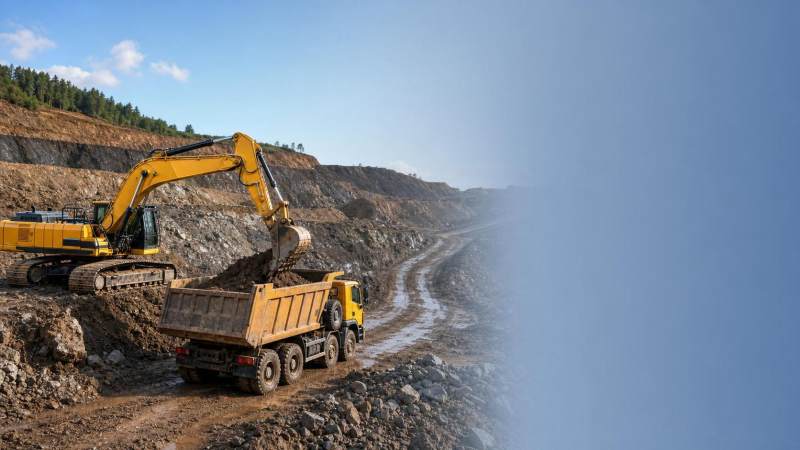
How to Choose Earthmoving Equipment for Site Conditions, Payload, and Cycle Time
Choosing the right earthmoving equipment is not only about size or brand.
The real decision starts with ground conditions, material behavior, haul distance, and production targets.
When these factors are matched well, equipment delivers lower fuel burn, smoother cycles, and better cost control.
When they are ignored, even premium machines become expensive bottlenecks.
For earthmoving equipment selection, the most useful approach is practical and data-led.
This guide explains how to compare equipment options through site conditions, payload needs, and cycle time performance.
Start with Site Conditions, Not Machine Size
Every earthmoving equipment decision should begin with the jobsite itself.
Soil type, moisture, slope, altitude, and traffic layout shape real machine performance.
A large excavator may look productive on paper.
But on soft ground or narrow bench roads, it may lose efficiency fast.
This is where many selection mistakes begin.
Key site variables to evaluate
- Ground bearing capacity and rutting risk
- Material density, fragmentation, and abrasiveness
- Working face height and loading position
- Road width, turning radius, and grade resistance
- Weather exposure, dust, heat, or freezing cycles
- Local service access and parts availability
In actual operations, site limits often matter more than rated horsepower.
For example, wet clay can reduce traction and slow truck loading consistency.
Rocky, abrasive material may shift the decision toward reinforced buckets, stronger undercarriages, and higher wear-part planning.
Match Earthmoving Equipment to Payload Demand
Payload is where productivity and cost meet.
If payload is too low, unit cost rises because more cycles are needed.
If payload is too high, structural stress, tire wear, and safety risks increase.
Good earthmoving equipment selection finds the operating sweet spot, not the maximum label rating.
How to think about payload
Start with target tons per hour or bank cubic meters per hour.
Then convert this target into required bucket size, truck body capacity, and expected fill factor.
Do not use loose assumptions for density.
Bulk density can shift sharply between blasted rock, wet overburden, sand, and mixed spoil.
A useful rule is to match loading tools and haul units around clean pass counts.
Four to six passes often support stable loading rhythm, depending on material variability and operator skill.
Why Cycle Time Often Decides the Winner
Two machines can have similar payload ratings and still deliver very different project results.
The difference usually appears in cycle time.
Cycle time covers digging, swinging, loading, hauling, dumping, returning, and waiting.
Even small delays inside each stage can cut daily output more than expected.
Common cycle time losses
- Poor truck spotting at the loading face
- Oversized buckets in sticky material
- Long swing angles and awkward bench layout
- Road maintenance problems on haul routes
- Queue buildup at dump or crusher points
- Operator variation between shifts
From a procurement perspective, this means the best earthmoving equipment is not always the biggest unit.
It is the machine that protects productivity across the whole cycle.
That may mean better hydraulic response, faster body raise, stronger gradeability, or easier maintenance access.
Build a Practical Selection Framework
A strong earthmoving equipment evaluation should compare machines in one decision framework.
This avoids buying on headline specifications alone.
A simple four-step process
- Define site constraints, material type, and production goals.
- Shortlist equipment by operating weight, bucket or body size, and haul profile.
- Model payload and cycle time under realistic field assumptions.
- Compare total cost, uptime support, and risk exposure.
This process becomes even more valuable on complex mining and infrastructure projects.
Recent market changes make that clearer.
Higher fuel costs, tighter schedules, and stricter safety control all raise the cost of poor equipment matching.
Questions worth asking suppliers
- What is the proven cycle time in similar material and haul distance?
- How does the machine perform in high altitude, heat, or muddy terrain?
- Which payload monitoring tools are included?
- What wear parts fail first in this application?
- How quickly can field service and critical parts be delivered?
These questions move the discussion from brochure claims to operating reality.
Look Beyond Purchase Price to Total Project Value
The lowest purchase price rarely creates the lowest production cost.
Earthmoving equipment should be judged on lifecycle value.
That includes fuel efficiency, uptime, maintenance intervals, operator learning curve, and resale potential.
More importantly, it includes the cost of lost output.
If one machine cuts ten seconds from each cycle, the yearly production gain can be significant.
Value signals that matter
- Telematics that verify utilization and idle time
- Payload systems that reduce underloading and overload events
- Designs that simplify routine service access
- Dealer support with local parts depth
- Attachments or body options for changing site phases
This is also where strategic intelligence becomes useful.
A smarter earthmoving equipment decision connects machine data with geology, haul strategy, and future project demand.
Recommended Earthmoving Equipment Checklist
Before final approval, use a short decision checklist.
It keeps site reality, payload logic, and cycle time discipline in one place.
- Confirm actual material density and moisture range.
- Check ground conditions across dry and wet seasons.
- Validate bucket-to-truck or loader-to-truck pass match.
- Measure realistic haul distance, slope, and travel speed.
- Estimate queue delays at load and dump points.
- Review maintenance support, wear cost, and uptime history.
- Compare total cost per ton, not only purchase price.
This checklist sounds simple, but it prevents expensive mismatches.
And in large earthwork programs, those mismatches scale quickly.
The best earthmoving equipment choice is the one that stays productive when conditions become less than ideal.
That is the real test of performance.
In the end, strong equipment selection is a business decision, not only a technical one.
When site conditions, payload, and cycle time are evaluated together, better outcomes usually follow.
Use that framework to choose earthmoving equipment with more confidence, better productivity, and lower project risk.
Related News
 Sep 16, 2026Infrastructure Equipment Market Reference: Demand, Pricing, and Supplier BenchmarksInfrastructure equipment market reference for buyers: assess demand signals, total cost, pricing risks, and supplier benchmarks for tunnels, mining, cranes, and road projects.
 Sep 15, 2026How to Evaluate Infrastructure Equipment Suppliers for Complex Project RequirementsInfrastructure equipment solutions supplier evaluation guide for complex projects: assess technical fit, lifecycle cost, reliability, local support, and contract risk.
 Sep 14, 2026What Drives Surface Mining Equipment Cost Across a Mine’s Operating Life?Surface mining equipment cost depends on fleet matching, fuel, wear, maintenance, availability, and rebuild timing. Explore lifecycle strategies that protect output and margins.
 Sep 13, 2026Crawler Crane Application Analysis for Wind Farms, Bridges, and Confined SitesCrawler crane application analysis for wind farms, bridges, and confined sites—optimize lift paths, ground conditions, access, and schedules for safer project delivery.

Hydraulic Power Analyst
Weekly Insights
Stay ahead with our curated technology reports delivered every Monday.