
Ultra-Large Excavator Bucket Size: Capacity, Width, and Site Fit Explained
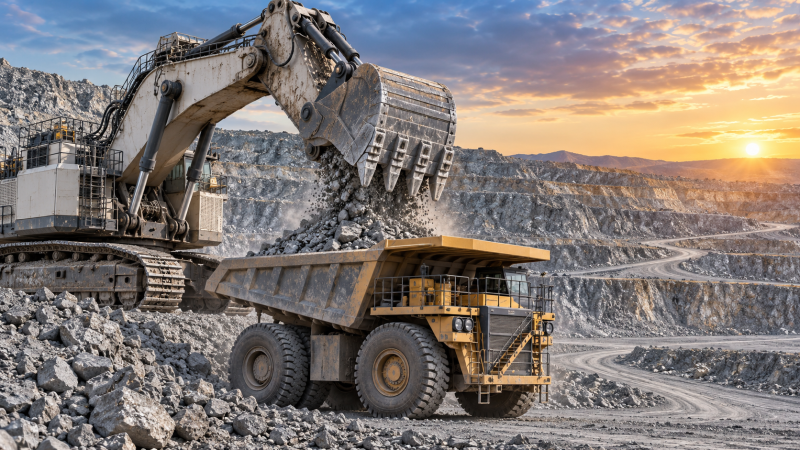
Ultra-Large Excavator Bucket Size: Capacity, Width, and Site Fit Explained
Selecting the right ultra large excavator bucket size is an engineering decision with consequences far beyond the bucket itself. It affects payload efficiency, swing and crowd performance, machine stability, truck loading match, wear-part consumption, and the consistency of production across changing ground conditions. A bucket that appears large on a specification sheet may be too heavy for its intended duty, too wide for the bench geometry, or simply mismatched to the density and fragmentation of the material.
For technical evaluators in open-pit mining, quarrying, bulk earthworks, and major infrastructure projects, nominal capacity is only the starting point. The practical question is whether a specific bucket can move the planned mass per pass without creating hydraulic strain, excessive spillage, poor truck loading distribution, or an avoidable reduction in cycle rate. The correct choice is therefore a site-fit exercise, not a search for the largest available attachment.
Capacity Is a Volume Figure, Not a Payload Guarantee
An ultra large excavator bucket size is usually discussed in cubic metres or cubic yards, but volume alone does not define what the machine will carry. Actual bucket payload depends on material density, swell factor, fill factor, moisture condition, fragmentation, and whether the bucket is handling loose stockpile material, blasted rock, overburden, clay, or mixed ground.
A useful preliminary relationship is:
Estimated payload per pass = nominal bucket capacity × fill factor × material bulk density
Each input needs scrutiny. Nominal capacity may be stated as struck capacity or heaped capacity, and those figures are not interchangeable. Fill factor is highly site-dependent: free-flowing, well-fragmented material may fill predictably, while wet fines can bridge, stick, or remain in the bucket after dumping. Bulk density should reflect the material in its excavated condition, not only laboratory density or in-situ geological data.
The result must then be checked against the excavator’s permitted working payload and the manufacturer’s attachment guidance for the relevant boom, stick, linkage, and operating radius. A bucket may physically fit the linkage while still being unsuitable for repeated production loading. This distinction is especially important with ultra-large hydraulic excavators, where a seemingly modest increase in bucket volume can translate into a substantial increase in carried mass.
Why a larger bucket can lower production
Oversizing often appears attractive because it promises more tonnes per pass. In practice, it can increase penetration resistance, slow the crowd stroke, extend digging time, and make bucket breakout less reliable in dense material. It may also require the operator to underfill the bucket to remain within acceptable load limits. When that happens, the site carries the extra attachment weight and reduced response without gaining the expected payload.
Production should be evaluated as tonnes moved over time, not bucket volume multiplied by an idealized cycle count. A slightly smaller, properly matched bucket can produce more consistently where digging forces, truck positioning, and material variability govern the cycle.
Bucket Width Determines More Than Digging Coverage
Bucket width is frequently treated as a secondary dimension, yet it has direct effects on excavation geometry, penetration, loading control, and site access. A wider bucket can improve coverage in low-resistance overburden or broad face excavation. It can also create problems at a confined bench, narrow working face, trench-like cut, or loading position with limited clearance around truck bodies and berms.
In hard or tightly compacted material, width increases the cutting edge engaged with the face. That can raise the force needed to penetrate and may make the bucket prone to skimming rather than filling. Tooth arrangement, adapter spacing, side cutters, lip design, and wear package all influence this behavior. A wide general-purpose bucket and a narrower rock bucket with the same nominal capacity can perform very differently because the geometry and ground engagement strategy are different.
Width also matters during dumping. The bucket must clear the truck sidewall, distribute material safely in the body, and avoid an excessively high or awkward dumping path. In high-volume loading operations, uneven placement can leave one side of the body overloaded while the other remains underfilled. That is not just a loading issue; it affects haul truck stability, payload measurement, and downstream operating discipline.
Match the Bucket to the Excavator–Truck System
The bucket cannot be selected in isolation from haulage. The relevant question is how many effective passes are required to load the assigned truck class, and whether that pass count supports a stable loading rhythm. Too few passes can make payload control difficult, particularly where density changes within the same bench. Too many passes can lengthen truck spotting and loading time, leaving the excavator or truck fleet poorly balanced.
There is no universal ideal pass count because site objectives differ. A mine may prioritize fast truck turnaround, while another may value tighter payload control in variable ore and waste zones. The material handling plan, truck body design, scale accuracy, dispatch rules, and operator visibility all affect the answer. What matters is that the expected bucket payload has been reconciled with the truck’s practical target payload rather than its nominal rating alone.
A productive loading system is also tolerant of normal variation. Material density shifts after rain, blasting quality varies by block, and truck body conditions change over time. The selected bucket should leave a reasonable operating margin rather than depending on perfect conditions every shift.
Ground Conditions Decide the Bucket Configuration
Material classification should guide both capacity and construction. Low-density overburden may favor a larger-volume configuration, provided the excavator remains within its working envelope. Dense rock, abrasive ore, and poorly fragmented blasted material often demand a more robust bucket with reinforced structural areas, a suitable lip, and wear components selected for penetration and service life rather than volume alone.
Abrasion introduces a less obvious issue: bucket size changes as wear progresses. Lip, shrouds, side protectors, and heel areas add mass and shape. As these components wear or are replaced with different profiles, penetration and fill behavior can shift. Technical evaluation should therefore include the intended ground-engaging tool system, its replacement intervals, and the site’s ability to maintain it. A well-specified bucket is of limited value if critical wear parts have long lead times or cannot be exchanged safely in the field.
Sticky material deserves separate attention. The challenge is often not digging but release. A nominally large bucket that retains wet clay or cohesive fines can reduce actual payload, disrupt truck load distribution, and add cleaning downtime. Geometry, interior surface condition, dump angle, and local material behavior should be reviewed through site observation or representative material testing where possible.
Stability, Hydraulics, and Structural Limits Are Coupled
Ultra-large excavators are designed around an integrated balance of attachment mass, hydraulic capability, counterweight, undercarriage, and structural loading. Changing the bucket changes that balance. The effect is not limited to static lifting capacity; repeated digging and dumping impose dynamic loads that vary with reach, swing position, grade, and operator technique.
Evaluators should request the applicable attachment envelope from the excavator manufacturer or authorized technical source. Key checks commonly include bucket operating weight, maximum intended payload, linkage compatibility, pin and bushing loads, hydraulic cylinder limits, and permitted use conditions. If a bucket is custom-built, its tare weight and center of gravity should be treated as primary inputs, not afterthoughts.
Site geometry can tighten the constraint. Working on a cross-slope, loading from an elevated bench, reaching across a berm, or operating on variable underfoot conditions may reduce the practical margin available. This is why a specification that works in a level test environment cannot automatically be treated as suitable for every mine face.
A Practical Review Sequence Before Approval
A disciplined review normally begins with material, not with a desired bucket volume. Establish the expected loose density range, fragmentation profile, moisture behavior, and abrasiveness for the operating zones. Then define the excavator configuration exactly as it will work: boom and stick arrangement, linkage, counterweight, undercarriage, and any planned quick-coupler or protection package.
Next, model the loading interface. Confirm truck body dimensions, target payload philosophy, spotting position, and the likely swing angle. A simple static clearance drawing can reveal issues that capacity calculations miss. For major fleets, field validation with production telemetry, payload records, cycle observations, and operator feedback provides a stronger basis than catalogue comparisons alone.
- Compare struck and heaped capacity on a like-for-like basis.
- Use loose bulk density appropriate to the actual digging condition.
- Check operating payload and attachment weight against the approved machine envelope.
- Review bucket width against face access, penetration demand, and truck loading clearance.
- Evaluate wear-package mass, availability, and safe maintenance requirements.
- Validate assumptions during a representative operating period when the project scale justifies it.
Avoid the “Maximum Capacity” Shortcut
The most common mistake in bucket selection is treating maximum capacity as the objective. The better objective is controlled mass movement at the lowest practical disruption to the excavator–truck system. That may mean selecting a bucket with less nominal volume but superior penetration, quicker filling, better material release, and more predictable truck payloads.
It is also worth separating procurement comparison from operational comparison. Two buckets may be priced and described similarly while differing in structural weight, internal geometry, lip system, protective coverage, and serviceability. Those differences become visible only after the bucket has spent time in abrasive material or variable weather, when unplanned repair and lost production become more expensive than an initial specification gap.
Turning Bucket Data Into a Site Decision
At TF-Strategy, the analysis of ultra-large excavators sits within a wider view of earth-engineering systems: geology, hydraulic power, haulage logic, equipment availability, and project delivery requirements. Bucket selection is a clear example of why isolated machine specifications are not enough. A component decision changes the performance of the loading unit, the truck fleet, maintenance planning, and ultimately the reliability of the production plan.
Before approving an ultra large excavator bucket size, technical teams should require a transparent calculation trail: capacity definition, material assumptions, estimated payload, attachment mass, machine compatibility, truck match, and site geometry. Where these inputs remain uncertain, the prudent response is not to assume a larger bucket will solve the problem. It is to identify the uncertainty, verify it against project conditions, and select an attachment that can perform reliably when those conditions are less than ideal.
Related News
 Oct 09, 2026Ultra-Large Excavator Bucket Size: Capacity, Width, and Site Fit ExplainedUltra large excavator bucket size explained: compare capacity, width, payload, truck matching, and site conditions to select a reliable, high-productivity bucket.
 Oct 08, 2026How to Evaluate a Heavy Machinery Information Platform for Project Equipment SourcingHeavy machinery information platform guide: compare equipment fit, source reliability, lifecycle costs, supplier capability, and compliance to make smarter sourcing decisions.
 Oct 07, 2026How to Evaluate a Hydraulic System Component Supplier for Heavy Equipment UptimeChoose a hydraulic system component supplier with proven quality, technical fit, and reliable delivery to reduce heavy equipment downtime and lifecycle costs.
 Oct 06, 2026Selecting Petrochemical Overhead Cranes for Hazardous Areas and Heavy Process LoadsPetrochemical overhead cranes for hazardous areas: learn how to match capacity, duty, controls, corrosion protection, and maintenance access for safer, reliable lifts.
Hydraulic Power Analyst
Weekly Insights
Stay ahead with our curated technology reports delivered every Monday.