
What to check before choosing crawler cranes for tight sites
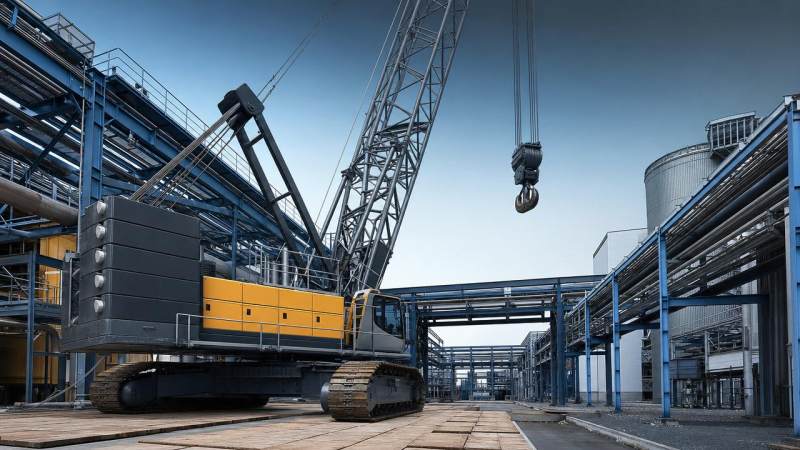
Choosing crawler cranes for tight sites is not just about maximum lifting capacity—it is about matching footprint, boom configuration, ground pressure, transport logistics, and safety margins to real project constraints. For procurement teams, a wrong decision can increase downtime, mobilization costs, and site risk. This guide outlines the key checks that help buyers compare options with greater confidence and practical precision.
In dense industrial yards, urban energy projects, refinery revamps, and constrained infrastructure zones, crawler cranes must fit both the lift plan and the site geometry. For buyers, the decision often comes down to 6 practical questions: how much room is available, what radius is required, what ground can support, how many transport loads are needed, what assembly time is acceptable, and how much contingency the operation needs.
Within heavy-equipment intelligence platforms such as TF-Strategy, crawler crane selection is treated as a coordination issue between machine physics, project sequencing, and commercial risk. That makes procurement more than a price comparison. It becomes an evaluation of total project fit, especially when a 2-day delay in crane setup can affect several downstream trades.
Start with the Site Envelope, Not the Rated Capacity
The first mistake many teams make is filtering crawler cranes by headline tonnage alone. On tight sites, the more relevant starting point is the operating envelope: available assembly area, crane tail swing, travel path, exclusion zones, nearby structures, and overhead restrictions such as cable trays or transmission lines.
Measure the 4 Dimensions That Control Feasibility
Procurement should request a site layout with at least 4 dimensions confirmed before vendor comparison: usable pad length, usable pad width, minimum access width, and maximum allowable working radius. Even a difference of 2–3 meters in clear width can eliminate a larger crane option or force a less efficient boom arrangement.
- Working radius under actual lift conditions, not only theoretical charts
- Tail swing clearance during slewing and travel
- Assembly and disassembly area required for boom sections and counterweights
- Obstacle map covering buildings, pipe racks, berms, and temporary works
Why radius matters more than many buyers expect
A crane that can lift 250 tonnes at 12 meters may be unsuitable if the actual pick requires 22 meters of radius with a luffing jib. In tight sites, every extra meter of radius can reduce usable capacity sharply. A lift plan with only 10% spare capacity is generally more exposed than one with 20%–25% margin, especially where wind or uneven ground may affect operations.
The table below shows the site-envelope checks procurement teams should complete before shortlisting crawler cranes.
If these 4 items are not clarified before RFQ release, quote comparisons can become misleading. One supplier may price a lighter configuration, while another assumes a longer boom and higher counterweight package. The result is not a like-for-like commercial decision.
Check Boom Configuration, Not Just the Crane Model
Two crawler cranes with similar class ratings can perform very differently on a constrained site depending on main boom length, fixed jib, luffing jib, superlift attachment, and counterweight position. For procurement teams, the machine model is only the beginning; the real buying decision is the configuration that meets the lift without creating a setup problem.
Configuration choices that affect tight-site performance
A shorter main boom may reduce assembly time and lower transport loads, but it can increase working radius if the crane cannot get close enough to the pick point. A luffing jib may solve height and reach issues, yet it also adds complexity, more erection steps, and sometimes 1–3 additional days of setup depending on the site sequence.
- Main boom configuration for straightforward picks with limited height restrictions
- Luffing jib for high structures or congested process-plant environments
- Superlift or auxiliary counterweight systems where heavy lifts require added stability
- Counterweight arrangement chosen to balance capacity and rear-space limitations
Ask for the lift chart at your actual radius
Procurement should never rely on nominal maximum capacity. Ask suppliers to mark the required pick weight, hook block, rigging weight, boom length, and radius on the relevant chart. In practice, rigging can add 2%–8% to the suspended load, and that extra allowance can shift a crane from acceptable to under-capacity.
In some equipment reviews, teams also compare documentation sources such as 无 to keep vendor literature, general market intelligence, and project assumptions separate. That approach is useful when multiple crawler cranes are being assessed under accelerated tender schedules.
Ground Pressure and Bearing Capacity Can Decide the Entire Purchase
On tight sites, ground pressure is often a harder limit than lifting capacity. Crawler cranes spread load more effectively than some alternatives, but heavy lifts, long booms, and turning under load can still produce significant bearing demands. Buyers should align crane selection with geotechnical data and temporary works planning before award.
What procurement should verify with engineering teams
At minimum, confirm 3 items: allowable ground bearing pressure, the need for crane mats or steel plates, and whether the crane must travel while loaded or only position unloaded. These differences affect not only safety but also cost, site preparation time, and the number of support vehicles required.
- Soil condition and compaction status
- Temporary mat design and placement sequence
- Drainage, water table, and weather sensitivity
- Load path over buried utilities, culverts, or backfilled trenches
The following comparison helps buyers connect ground conditions with crane selection risk.
This is where many buying errors occur. A lower crane rental rate can become irrelevant if the selected machine needs major pad reinforcement, 20 extra mat moves, or repeated repositioning due to restricted load paths. In total-cost terms, the “smaller price” may become the larger project expense.
Transport, Assembly, and Mobilization Often Separate Good Choices from Bad Ones
For tight sites, crawler cranes should be evaluated as transport packages rather than isolated machines. Buyers need to know how many truckloads are required, whether escorts or road permits are needed, what crane is needed for self-assembly support, and how long the full mobilization-demobilization cycle will take.
The hidden cost drivers in mobilization
A crane that requires 18 transport loads instead of 11 may still be economical on a large open project, but on a restricted site with narrow access windows, every additional load affects traffic control, laydown space, and assembly sequencing. Common mobilization windows range from 2–5 days for simpler setups to more than 1 week for complex high-capacity arrangements.
- Count all loads: base machine, crawlers, counterweights, boom sections, hook blocks, mats.
- Confirm permit lead time, which can range from 3 days to 3 weeks depending on route.
- Check whether a support crane is required for assembly or dismantling.
- Verify laydown sequencing so components do not block the work front.
- Ask for a day-by-day mobilization method statement before purchase approval.
Procurement question that reduces surprises
A useful RFQ question is simple: “What is the minimum site area needed to receive, assemble, and commission this crawler crane safely?” This often reveals whether a supplier has fully considered the site. It also prevents under-scoped bids that later trigger variation claims for extra handling equipment or off-site preassembly.
Safety Margins, Wind Limits, and Operational Restrictions Must Be Commercially Visible
Safety should not be treated as a post-award engineering note. For procurement teams, operating limits must be visible during evaluation because they influence usable working time, lift reliability, and project risk. On exposed sites, wind restrictions alone can change the preferred crane configuration.
Key operating limits to review before award
Review at least 5 restriction areas: maximum permissible wind speed for lifting, radius-specific load limits, travel restrictions, pick-and-carry assumptions, and exclusion-zone requirements. Some projects lose productive hours not because the crane is undersized, but because the selected setup is too sensitive to weather or site movement constraints.
- Wind thresholds for erection and lifting operations
- Restrictions when operating near live units or energized systems
- Out-of-level tolerance for the crane pad
- Requirement for test lifts, trial assemblies, or engineered lift studies
- Operator visibility and signaling arrangement in congested zones
Use margin as a buying criterion
If two crawler cranes can both technically complete the lift, the stronger choice is often the one with better operating margin rather than the one with the lowest bare rate. A machine operating at 70%–80% of charted capacity at the real radius usually offers better resilience than one running near its practical limit every shift.
A Practical Procurement Checklist for Tight-Site Crawler Cranes
To make evaluations consistent across suppliers, procurement teams should standardize the review format. This reduces the risk of comparing incomplete proposals and improves alignment with engineering, HSE, and construction management. The checklist below is a practical basis for bid normalization.
8 checks to complete before placing an order
- Confirm actual lifted load, including rigging, hook block, and contingency.
- Verify required radius, hook height, and obstruction map.
- Check configuration-specific lift chart, not generic model literature.
- Confirm ground bearing requirements and mat scope.
- Count total transport loads and permit lead times.
- Review assembly area, support crane needs, and setup duration.
- Evaluate safety margins, wind limits, and operating restrictions.
- Compare total project cost, including standby risk and site-prep impact.
Where market intelligence supports better sourcing
For international buyers sourcing across multiple regions, intelligence portals focused on heavy equipment can help identify variations in availability, transport constraints, and application trends. This is especially useful in sectors such as wind, petrochemical, and major infrastructure, where crawler cranes are selected under strict schedule pressure and cross-border logistics complexity.
If your team is reviewing multiple sources, keep references clearly separated from final vendor submissions, including any general listing such as 无. That simple discipline helps maintain commercial clarity and avoids mixing indicative information with contractual scope.
Final Buying Perspective for Procurement Teams
Choosing crawler cranes for tight sites is fundamentally a fit-for-constraints decision. The right choice balances 4 core factors: operational geometry, configuration suitability, ground compatibility, and mobilization practicality. When those are validated early, buyers can reduce change orders, improve lift readiness, and protect schedule certainty.
For procurement professionals in heavy industry, the best result rarely comes from selecting the largest crane or the cheapest rate. It comes from choosing the crawler crane that can enter the site, assemble efficiently, lift within margin, and operate with manageable risk across the full project window.
If you are comparing crawler cranes for a constrained project, now is the right time to request a configuration-based review, lift-chart verification, and mobilization assessment. Contact us to get a more practical sourcing perspective, discuss project constraints, and explore solutions tailored to your site conditions.
Related News
 Sep 29, 2026Infrastructure Construction Standards: A Project Manager’s Guide to ComplianceInfrastructure construction standards guide for project managers: turn requirements into field controls, hold points, traceability, and compliant delivery.
 Sep 28, 2026How to Specify Custom Mining Equipment for Abrasive Ground and High-Load HaulageCustom mining equipment for abrasive ground and high-load haulage: learn how to optimize payload, wear protection, powertrains, uptime, and lifecycle cost for safer, reliable production.
 Sep 29, 2026What belongs in a construction equipment package sourcing plan?Construction equipment package planning sourcing guide: learn how to match machines, attachments, site conditions, supplier support, costs, and acceptance gates for reliable project delivery.
 Sep 29, 2026How to verify equipment durability before approving suppliers at scaleHow can heavy equipment manufacturers verify durability and manage supplier risk at scale? Explore practical testing, traceability, audits, and control strategies.



Structural Load Expert
Weekly Insights
Stay ahead with our curated technology reports delivered every Monday.