
Common Risks When Selecting a YLCSD350 Cutter Suction Dredger Company
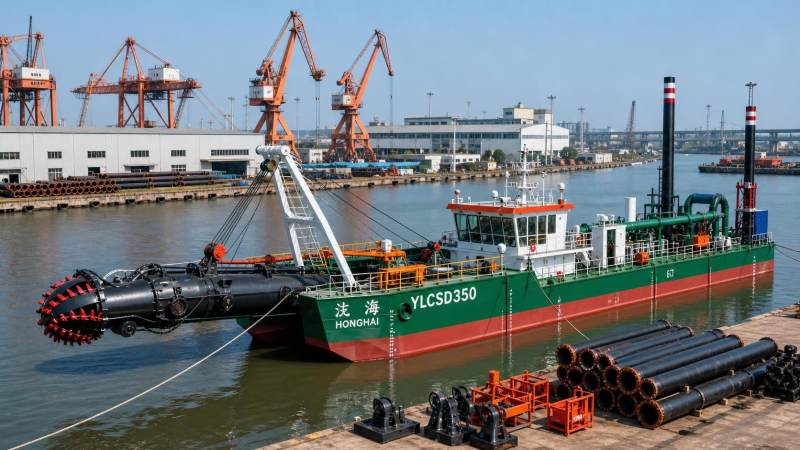
Buying a dredger company is rarely just about comparing brochure specifications. For procurement teams looking at a YLCSD350-class cutter suction dredger, the larger risk often sits behind the machine: whether the supplier can deliver a vessel that matches the intended dredging conditions, documentation requirements, transport constraints, commissioning needs, and long-term service expectations. A poor choice can lock a project into rework, downtime, cost escalation, and contractual disputes long before the dredger reaches stable production.
The YLCSD350 segment is commonly considered for river dredging, pond and reservoir desilting, channel maintenance, and similar medium-duty projects where output, pump configuration, draft, and transportability all need to be balanced. Procurement personnel usually face pressure from several directions at once: capital budget, delivery time, operating reliability, local site conditions, and the need to justify supplier selection internally. That combination makes supplier risk assessment more important than the base machine price.
Confusing model names with real operating suitability
One of the most common mistakes is assuming that the same model designation means the same practical performance across different companies. In dredging equipment, a model name may indicate a general class, but not necessarily identical pump quality, cutter head design, installed power, structural margin, steel thickness, wear parts configuration, automation level, or auxiliary equipment scope.
That matters because procurement decisions are often made around expected soil conditions and production targets. A dredger that performs adequately in soft silt may struggle in compacted sand, mixed sediments, or conditions with debris. If a supplier’s offer focuses on a model number without clearly explaining the operating envelope, the buyer may receive a machine that is technically delivered but operationally mismatched.
When evaluating a YLCSD350 cutter suction dredger, buyers should verify how the offered configuration aligns with the actual job profile: dredging depth, discharge distance, solids concentration, sediment type, water level variation, and access limitations. A company that cannot translate those site variables into equipment configuration is presenting a real procurement risk.
Accepting incomplete technical scope during quotation review
Another frequent problem appears during the quotation stage. Some offers look competitive because they exclude items that are essential for actual use. The dredger itself may be quoted, while the practical operating package remains undefined. That can include discharge pipeline components, spuds, anchors, winches, floating pipes, control systems, spare parts, crew training, assembly supervision, and commissioning support.
Procurement teams should watch for vague wording such as “standard configuration” or “as per factory practice” when there is no detailed technical list attached. A low headline price can quickly become expensive when missing items are added later, often under schedule pressure. This is especially risky in public procurement or multi-stakeholder projects where budget revisions are difficult.
A stronger bid package usually makes the scope visible line by line. It clarifies not only what is included, but also what is excluded. For buyers, that level of detail is not a formality; it is a way to control change orders and avoid disputes over delivery obligations.
Underestimating site-specific design risks
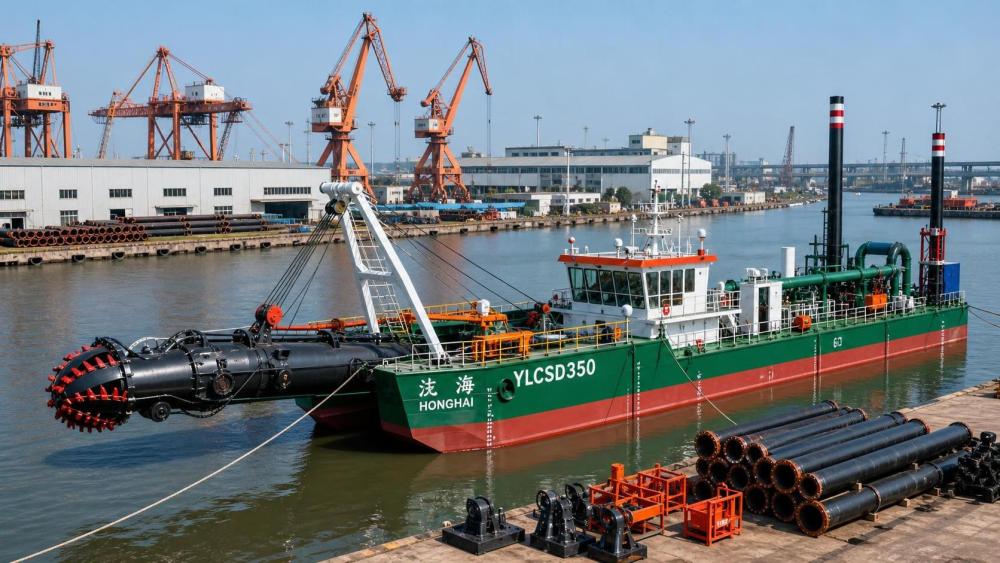
Procurement personnel sometimes focus too heavily on factory specifications and too lightly on the operating site. Yet dredgers are highly sensitive to local conditions. Water depth at launching, bridge clearance during transport, regional power standards for auxiliary systems, assembly space, and inland transportation restrictions can all affect whether the machine is practical to deploy.
A company may offer a dredger that is structurally suitable in theory but difficult to mobilize in reality. For example, sectional dimensions may exceed local transport limits, or assembly requirements may not fit the site’s lifting capacity. A cutter suction dredger intended for one geography may need meaningful adaptation for another, even when the core dredging duty appears similar.
This is where procurement teams should ask suppliers to respond to actual project constraints rather than generic product sheets. If the supplier does not request key site inputs or shows little concern for launch method, modular transport, or pipeline routing, that is often a sign that engineering support is thin or overly standardized.
Overlooking wear resistance and lifecycle cost
The purchase price is visible; wear cost is slower and easier to ignore. On cutter suction dredgers, wear components can strongly influence the operating economics of the project. Pump impellers, liners, cutter teeth, pipe bends, and other flow-contact parts are exposed to abrasion that varies sharply with sediment composition.
If a company cannot explain material selection, replacement intervals, spare parts strategy, and accessibility for maintenance, the buyer may end up with a lower-priced dredger that generates higher downtime and consumable expense. This becomes more serious in remote jobs, where delayed spare parts can stop production for days or weeks.
Procurement review should move beyond “What is the initial price?” and ask “What is the expected maintenance burden under this sediment profile?” In many applications, the cheaper supplier becomes the more expensive supplier after one operating season if wear performance was not properly evaluated at the start.
Choosing on capacity claims without checking the basis
Dredger quotations often include production figures, but those figures can be misleading if the calculation basis is not stated. Output depends on sediment type, density, digging depth, suction distance, discharge distance, pump efficiency, pipeline arrangement, and operator skill. Without context, capacity numbers are easy to misread.
A procurement team should be careful with claims that are presented as fixed performance rather than conditional performance. Two suppliers may appear to offer the same class of machine while using very different assumptions for solids concentration or discharge length. The result is an apparent price-performance comparison that is not actually comparable.
One practical way to reduce this risk is to request that each supplier state the assumed operating conditions behind any production estimate. That forces technical transparency and makes it easier to compare bids on a common basis.
Weak documentation and manufacturing traceability
Even when the dredger itself is acceptable, poor documentation can create delays in inspection, customs clearance, handover, and maintenance planning. Procurement departments often discover too late that the supplier’s document package is incomplete or inconsistent.
Common gaps include:
- insufficient drawings for assembly and maintenance,
- unclear bill of materials,
- missing test records,
- limited traceability for major bought-out components,
- poorly defined acceptance procedures,
- uncertain spare parts references.
This problem is not minor paperwork. If pump, engine, hydraulic, or electrical components are not clearly identified, replacement planning becomes harder and warranty discussions become more complicated. Buyers should treat document quality as part of equipment quality.
Ignoring supplier execution capability after contract award
Some companies are good at quoting and weak at execution. Procurement teams often evaluate the commercial and technical offer in detail, but spend less effort checking how the supplier handles production scheduling, procurement of key components, quality control, packaging, and export coordination.
A cutter suction dredger is not a simple stock item. Delivery reliability may depend on subcontracted systems, fabrication discipline, factory load, and access to critical components. If the company cannot show a structured production process or cannot explain how inspections are managed before shipment, schedule risk rises.
For buyers, the key question is not whether a company can build a dredger in principle, but whether it can build this configuration within the project timeline and quality framework. Delays in the dredging sector often have knock-on effects on civil works, environmental windows, and mobilization planning, which means late delivery can become more costly than a moderate difference in equipment price.
Insufficient clarity on commissioning and after-sales boundaries
A procurement contract may say that the dredger will be supplied, but it may not clearly define what happens at installation, testing, and startup. This creates a common risk zone. The buyer assumes the supplier will support commissioning until production is stable; the supplier assumes its responsibility ends at basic assembly guidance or a limited test run.
That gap matters because dredgers frequently require site adjustments. Winch tuning, pump matching, cutter behavior, electrical settings, and pipeline arrangement may all need modification once real operating conditions are known. If support boundaries are not explicit, the project can enter a blame cycle at exactly the moment when practical technical help is needed most.
Procurement teams should define deliverables around commissioning with care: who sends personnel, for how long, under what conditions, with what acceptance criteria, and what level of training is included for operators and maintenance staff.
Inadequate review of spare parts and service logistics
Many buyers ask whether spare parts are available. Fewer ask the more useful question: how quickly can they be identified, packed, shipped, and fitted under project conditions? For dredging equipment, serviceability is closely tied to machine uptime, especially in locations with limited local inventory.
A stronger supplier evaluation looks at spare parts support in practical terms:
- recommended startup spare package,
- wear parts list by operating stage,
- component interchangeability,
- clarity of part numbers,
- response process for urgent failures,
- availability of remote technical troubleshooting.
Without this, the buyer may receive a functioning dredger but remain exposed to long recovery times after ordinary wear or minor breakdowns.
Missing the contract language that protects procurement
Supplier selection risk is not only technical. It also sits in contract wording. Procurement teams sometimes rely on general purchase terms without adapting them to dredging equipment realities. That can leave important topics unresolved, such as what constitutes successful factory testing, what happens if site conditions require adjustments, how non-conformities are documented, and when risk transfers during transport.
Clear contract language should connect technical scope, inspection points, document delivery, packing method, training content, spare parts list, and acceptance milestones. If those elements are fragmented across emails and attachments without hierarchy, disputes become more likely.
Where projects involve internal approval chains, lenders, public entities, or EPC structures, contract clarity becomes even more valuable. The cost of ambiguity is usually paid later by the buyer.
A practical checklist before shortlisting a YLCSD350 supplier
Before moving a company into final commercial comparison, procurement teams usually benefit from checking whether the supplier can answer the following in concrete terms:
- What site conditions were used to configure the dredger?
- Which items are included in the quoted operating scope, and which are excluded?
- What assumptions support the stated production capacity?
- How are wear parts specified for the expected sediment type?
- What factory inspections and test records will be provided?
- How will the dredger be transported, assembled, and commissioned at site?
- What spare parts and technical support process will apply during early operation?
- What delivery risks depend on third-party components or subcontracted work?
A supplier that responds precisely, with technical consistency across documents, is usually easier to manage after award. A supplier that stays broad, evasive, or inconsistent during pre-award review often creates larger problems during manufacturing and startup.
The real procurement decision is about risk distribution
Selecting a YLCSD350 dredger company is less about finding the lowest offer and more about understanding where operational and contractual risk will sit once the equipment is ordered. The machine, the documentation, the support scope, and the supplier’s execution discipline all affect that balance.
For procurement personnel, the best protection is a disciplined comparison based on actual dredging conditions, complete technical scope, verifiable deliverables, and lifecycle support logic. If those points are addressed early, the buyer is in a much stronger position to distinguish between a quotation that merely looks competitive and one that is genuinely workable in the field.
Related News
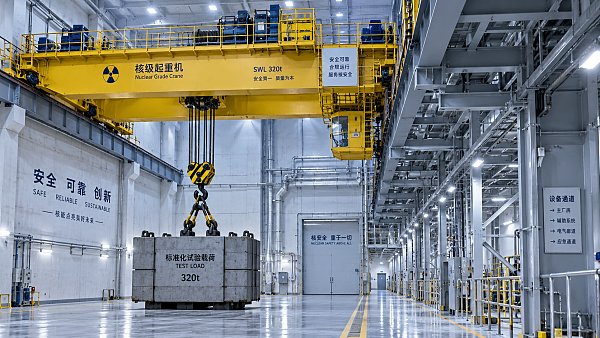
 Oct 04, 2026Nuclear Lifting Equipment Cost: Budgeting for Compliance, Testing, and Lifecycle RiskNuclear lifting equipment cost explained: budget for compliance, proof-load testing, installation, documentation, and lifecycle risk to make confident procurement decisions.
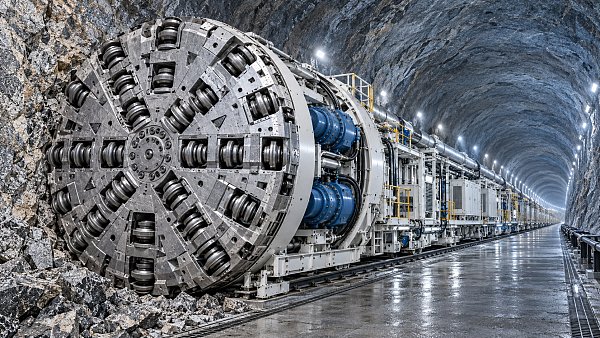
 Oct 03, 2026How to Assess TBM Manufacturers for Hard-Rock Tunneling Projects?Choose the right tunnel boring machine manufacturer for hard-rock projects. Explore key criteria for design, lifecycle cost, factory quality, and service support.
 Oct 02, 2026How to Evaluate Heavy Equipment Technology Suppliers for Fleet Uptime and SupportHeavy equipment technology suppliers can make or break fleet uptime. Learn how to assess diagnostics, data access, parts, service coverage, and support terms before you buy.
 Oct 01, 2026How to Use Technical References to Benchmark Industrial Equipment PricesIndustrial equipment technical reference pricing: learn how to normalize specifications, scope, service life, and operating costs to benchmark quotes accurately and choose the best-value equipment.
Ms. Elena Rodriguez
Weekly Insights
Stay ahead with our curated technology reports delivered every Monday.