
How to Evaluate Smart Highway Camera Systems for Traffic Monitoring Projects
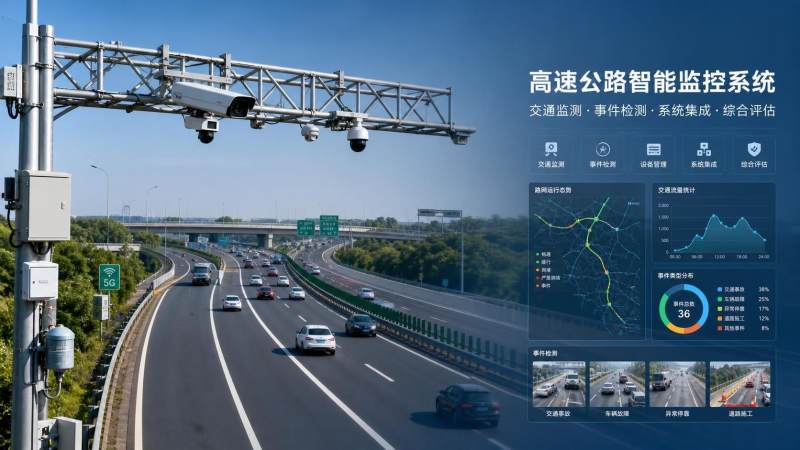
Smart highway camera evaluation starts with the traffic task, not the camera brochure
Selecting smart highway camera systems for traffic monitoring projects is rarely a simple image-quality comparison. On real roads, the camera is only one part of a larger operational chain that includes detection logic, communications, roadside power, platform integration, maintenance access, and the decisions operators need to make from the data. A camera that looks excellent in a lab demo may still underperform on a rainy expressway interchange, a tunnel approach with glare, or a freight corridor with dense night traffic.
For technical evaluation teams, the practical question is this: can the system produce reliable, usable traffic intelligence under the actual conditions of the project, and can it keep doing that over years rather than weeks? In smart road deployments, especially those connected to broader infrastructure digitization, that question matters more than the headline spec sheet.
This is also where a heavy-industry perspective helps. Platforms such as TF-Strategy, which track large road machinery, smart highway development, and the wider logic of infrastructure modernization, tend to look beyond isolated devices. The useful evaluation frame is not “which camera is best,” but “which system fits the roadway, data architecture, and maintenance model of this project with the least hidden risk.”
Define what the camera must detect before discussing resolution
A surprising number of evaluations begin with resolution, zoom range, or sensor size. Those matter, but they come too early if the use case is still vague. Highway monitoring projects can have very different objectives: incident detection, queue length estimation, lane occupancy, wrong-way driving alerts, congestion analytics, average speed analysis, weather visibility support, or evidence-grade visual verification for control rooms.
Each objective changes the selection logic. If the project is mainly about incident verification, stable wide-area scene coverage and low-light performance may outweigh very fine object classification. If the project depends on automated events, then detection accuracy, false alarm control, and edge processing behavior become central. If the camera feeds a traffic management center that must act within seconds, latency and alert reliability may matter more than storing extremely high-bitrate footage.
So the first evaluation document should list target events, detection distances, lane geometry, expected traffic mix, and operator response requirements. Without that, teams often buy a technically impressive system that is misaligned with field operations.
Detection accuracy is not one number
When suppliers claim strong AI detection, the next step is to unpack what that means. Accuracy for stopped vehicles is not the same as accuracy for pedestrians on a shoulder, fallen cargo, slow-moving maintenance vehicles, or motorcycles splitting through congestion. Highway environments are messy. Shadows, spray, headlight bloom, heat shimmer, and partial occlusion all affect video analytics.
A useful evaluation asks for scenario-based performance evidence rather than a single percentage. For example:
- Day versus night detection behavior
- Rain, fog, and backlight tolerance
- Performance in dense freight traffic versus lighter passenger traffic
- Accuracy at merge zones, ramps, and curves
- False positives caused by shadows, lane markings, or roadside objects
If the vendor cannot separate these conditions, that is a warning sign. In operational traffic monitoring, a model with slightly lower nominal detection but fewer nuisance alarms may be more valuable than one that looks stronger in a presentation. Operators quickly lose trust in systems that alert too often for the wrong reasons.
Edge analytics can reduce bandwidth, but only if the processing model is clear
Many smart highway camera systems now advertise onboard AI, edge video analytics, and event filtering. That can be a major advantage, especially on long road sections where fiber resources are limited or where projects want to avoid sending full-resolution streams continuously back to the center.
Still, “edge AI” is not automatically better. Technical teams need to check where inference actually happens, what metadata is transmitted, how firmware updates are managed, and whether new detection models can be deployed without replacing hardware. A rigid edge device may become a maintenance burden if project requirements change after commissioning.
This matters even more in infrastructure programs evolving toward connected road operations. As road machinery, control systems, and transport platforms become more digital, camera networks are expected to feed structured data into broader decision systems, not just produce video. In that sense, the camera should be treated less like a standalone sensor and more like an intelligent node in the transport stack.
Environmental durability is where many deployments quietly fail
Highway cameras live outdoors year-round, often in hostile conditions. Dust, vibration from heavy vehicles, wind loading on poles, salt corrosion in coastal corridors, high summer temperatures, icing, and water ingress all affect long-term performance. For roads near industrial logistics routes or major earthworks, contamination can be worse than planners expect.
This is why enclosure rating alone is not enough. Evaluators should ask about thermal management, heater or defogging strategy where relevant, lens contamination risk, mounting stability, and service access. In practice, a camera system that is difficult to clean, re-aim, or replace may carry a low purchase price but a much higher lifecycle burden.
For teams familiar with heavy equipment environments, this is a familiar lesson. The same logic used to assess road machinery or mining assets applies here: durability is not a line item, it is part of system productivity. If the camera spends too much time degraded by dirt, vibration drift, or thermal throttling, the project loses monitoring continuity exactly when traffic visibility is most needed.
Network resilience and failure behavior deserve more attention
A camera system should not be evaluated only under ideal connectivity. Highway projects often stretch across mixed communications conditions: urban fiber, roadside switches, wireless backhaul, and occasionally temporary links during phased construction. What matters is not just bandwidth demand, but behavior during packet loss, high latency, or partial outages.
Ask very directly: what happens when the link drops for 30 seconds, 5 minutes, or longer? Does the device buffer locally? Does it preserve event metadata? Can the system synchronize records once the connection is restored? Is there a priority mechanism so alarms are transmitted before bulk video? These details influence operational reliability far more than generic “supports IP network” statements.
Cybersecurity also belongs here. Even if local requirements differ, technical teams should review authentication, encryption support, access control, logging, patch policy, and remote maintenance practices. Smart highways increasingly form part of critical infrastructure, and roadside cameras are exposed endpoints.
Integration often decides whether a system is useful
A smart highway camera system may produce excellent data but still create friction if it does not integrate cleanly with the traffic management platform, VMS environment, incident management workflow, or existing roadside sensors. Evaluation should cover APIs, metadata format, event export methods, compatibility with command center software, and the practical ease of combining video with loop detectors, radar, weather stations, or variable message signs.
This point is often underestimated during pilot demonstrations. In a demo, a vendor can show detection on its own interface. In a live project, operators want alarms to appear in one workflow with useful context, timestamps, location references, and quick visual confirmation. If integration is weak, staff end up duplicating work manually.
The broader infrastructure trend is clear: smart roads are being evaluated more like systems engineering projects than isolated equipment purchases. That aligns with the kind of cross-domain intelligence TF-Strategy emphasizes in heavy industry—linking equipment parameters to construction methods and strategic operating needs rather than treating components in isolation.
Don’t ignore installation geometry and maintainability
Some camera systems look interchangeable on paper but behave very differently once mounted. Pole height, setback distance, viewing angle, lane count, median barriers, gantry presence, and nearby lighting all affect usable performance. A camera that performs well over three lanes may struggle over eight if the installation geometry forces severe perspective distortion.
Field-of-view planning should be part of technical evaluation, not a late-stage installer problem. It is worth reviewing sample layouts for straight sections, ramps, toll approaches, tunnel portals, and interchanges. The question is not only “can the camera see the road,” but “can it maintain the detection quality needed for the intended analytics in that position?”
Maintainability is equally practical. If every adjustment requires lane closure, lift equipment, or a specialist from the manufacturer, service costs climb fast. On busy corridors, maintainability is also a safety issue.
A simple decision framework for technical evaluation
Pilot testing should be narrow, realistic, and a little uncomfortable
If a field trial is possible, avoid making it too polite. Test under difficult light, mixed weather if timing allows, and real traffic conditions. Include at least one geometry that challenges the system, such as a curve, merge area, or high-glare section. Review not just what the system detects, but what it misses, how operators receive alerts, and how much manual correction is needed.
It is also worth testing failure behavior on purpose: temporary network interruption, reduced bitrate, or partial occlusion. These are ordinary field realities. A smooth demo under perfect conditions tells you much less than a slightly messy trial with disciplined observation.
The best choice is usually the one with the fewest hidden compromises
In traffic monitoring projects, the most suitable smart highway camera systems are not always the ones with the most aggressive AI claims or the highest image specification. They are the systems that hold detection quality across real road conditions, integrate without forcing awkward workarounds, tolerate environmental stress, and remain maintainable as the network expands.
That is a familiar pattern across large infrastructure and heavy equipment projects: the value sits in operational fit and lifecycle stability, not in the most eye-catching brochure line. If the evaluation team keeps that discipline from the start, procurement discussions become clearer, deployment risks drop, and the camera network has a better chance of supporting genuinely data-driven roadway operations rather than becoming another difficult roadside asset to manage.
Related News
 Oct 02, 2026How to Evaluate Heavy Equipment Technology Suppliers for Fleet Uptime and SupportHeavy equipment technology suppliers can make or break fleet uptime. Learn how to assess diagnostics, data access, parts, service coverage, and support terms before you buy.
 Oct 01, 2026How to Use Technical References to Benchmark Industrial Equipment PricesIndustrial equipment technical reference pricing: learn how to normalize specifications, scope, service life, and operating costs to benchmark quotes accurately and choose the best-value equipment.
 Sep 30, 2026What Does an Ultra-Large Excavator Really Cost Over Its Service Life?Ultra-large excavators cost far more than purchase price. Explore lifecycle expenses, uptime risks, energy use, maintenance, and cost-per-tonne insights.
 Sep 29, 2026Infrastructure Construction Standards: A Project Manager’s Guide to ComplianceInfrastructure construction standards guide for project managers: turn requirements into field controls, hold points, traceability, and compliant delivery.


Ms. Elena Rodriguez
Weekly Insights
Stay ahead with our curated technology reports delivered every Monday.