
How Geotechnical Risk Management Reduces Delays and Cost Overruns in Tunneling Projects
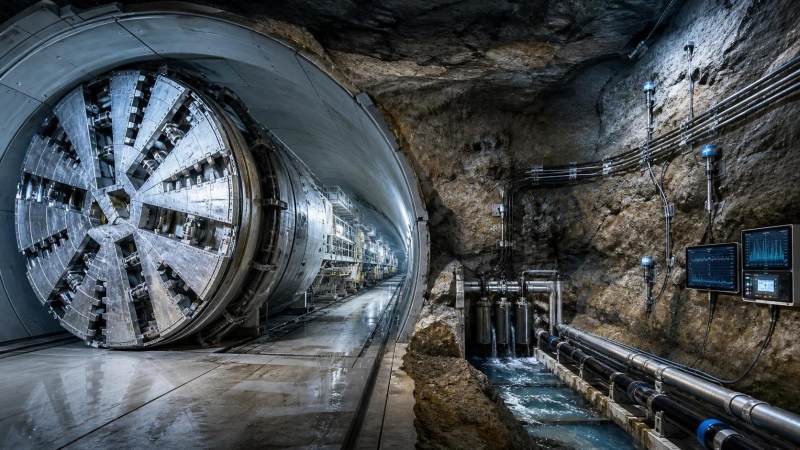
In tunneling projects, unseen ground conditions can turn a well-planned schedule into a sequence of claims, redesigns, and production losses. Effective geotechnical risk management gives project leaders a practical way to reduce those disruptions by identifying uncertainty early, matching excavation strategy to actual ground behavior, and creating faster decision paths when conditions change. For project managers and infrastructure owners, this is one of the most direct levers for controlling delay exposure and cost overruns.
What Search Intent Is Really Behind “Geotechnical Risk Management” in Tunneling?
Most readers searching this topic are not looking for a textbook definition. They want to understand how geotechnical risk management prevents real project problems such as slow advance rates, unstable faces, water ingress, damaged equipment, contract disputes, and budget escalation.
For project managers, the core intent is decision support. They want to know where risk typically originates, how early investigation translates into fewer surprises, what actions are worth funding, and how risk controls improve schedule certainty and commercial outcomes.
That means the most useful article is not one that repeats general geology concepts. It should focus on delay mechanisms, cost drivers, practical management controls, and the points in a tunneling project where better geotechnical decisions materially improve delivery performance.
Why Geotechnical Risk Drives Delays More Than Many Project Teams Expect
Tunneling is uniquely sensitive to what cannot be seen before excavation begins. Even with strong baseline studies, rock mass variability, mixed-face conditions, fault zones, groundwater pressure, abrasive formations, swelling ground, or gas can change excavation performance within a short distance.
These conditions rarely create only one problem. A difficult zone may reduce penetration rates, increase cutter wear, trigger additional ground support, force grouting, slow mucking cycles, require machine intervention, and extend inspection and safety procedures at the same time.
That compound effect is why schedule slips in tunneling often accelerate quickly. A few days lost to investigation or stabilization can lead to resequencing, labor inefficiency, stand-by costs, subcontractor disruption, and pressure on critical path activities beyond the tunnel face itself.
From a cost perspective, the overruns are usually broader than direct geotechnical mitigation spending. Projects absorb lower machine utilization, more maintenance events, extended preliminaries, delayed commissioning, and contractual friction between owner, designer, and contractor when baseline assumptions no longer hold.
How Geotechnical Risk Management Reduces Cost Overruns in Practice
Good geotechnical risk management does not eliminate uncertainty. Its value comes from making uncertainty visible early enough that the project can choose better responses. That changes both the probability of disruption and the cost of dealing with it.
First, it improves front-end decisions. Better site investigation and ground modeling help teams choose the right tunnel boring machine type, cutterhead design, support class, dewatering approach, and spoil handling strategy before major commitments are locked in.
Second, it improves contingency planning. When the team has already identified likely adverse zones, trigger levels, and fallback methods, it can respond faster. Faster decisions reduce idle time, avoid reactive redesign, and limit the spread of delay into adjacent work packages.
Third, it sharpens commercial alignment. A project with a credible geotechnical baseline, clear risk allocation, and documented response protocols is less likely to enter costly disputes over changed conditions. That preserves management attention for delivery rather than claims management.
In other words, geotechnical risk management protects cost not only through technical prevention, but through better procurement, cleaner governance, and fewer expensive surprises during execution.
Which Risks Matter Most to Project Managers and Engineering Leads
Not every geotechnical issue deserves the same level of attention. Project leaders should focus on risks that directly affect schedule reliability, safety exposure, and production economics across the full excavation cycle.
Ground variability is usually the first concern. A tunnel that crosses mixed geology can experience unstable advance rates, inconsistent wear patterns, and repeated parameter changes. This creates uncertainty in daily output and weakens confidence in milestone forecasting.
Groundwater is another major driver. Unexpected inflows or high pore pressures can disrupt face stability, increase treatment works, complicate segmental lining installation, and generate environmental or community concerns if drawdown affects surrounding assets.
Faulted or fractured zones require special attention because they often concentrate several risks at once. These sections can increase overbreak, reduce stand-up time, amplify water pathways, and force additional stabilization measures that interrupt normal tunneling rhythm.
For mechanized tunneling, abrasive or highly variable ground can also create hidden cost pressure through cutter consumption, intervention frequency, and reduced TBM availability. These losses may not appear dramatic on a single day, but they accumulate significantly across long drives.
What an Effective Geotechnical Risk Management Framework Looks Like
For project managers, the best framework is one that links subsurface uncertainty to delivery decisions. It should not sit as an isolated technical report. It needs to influence planning, procurement, machine strategy, construction controls, and escalation pathways.
A strong process starts with targeted ground investigation. The goal is not maximum data volume, but decision-relevant information. Boreholes, geophysics, hydrogeological testing, laboratory analysis, and mapping should be designed around the excavation methods and project interfaces that matter most.
That information then needs to be converted into a practical geotechnical baseline and risk register. Teams should define expected ground conditions, known unknowns, trigger locations, likely consequences, and responsibility for monitoring and response before excavation begins.
The next step is method alignment. Ground conditions should directly inform TBM selection, cutterhead configuration, face support philosophy, segment design assumptions, grouting plans, intervention strategy, and contingency equipment readiness. This is where technical knowledge becomes delivery control.
Finally, the framework must stay active during construction. Instrumentation, face mapping, penetration data, torque trends, wear patterns, water observations, and settlement monitoring should feed structured reviews so the risk model evolves with actual field evidence.
Where Projects Commonly Fail Even When They Have Geotechnical Reports
Many tunneling projects do commission geotechnical studies, yet still suffer major delays. The problem is often not the absence of information, but the failure to operationalize it across the project lifecycle.
One common weakness is treating investigation as a compliance step rather than a decision tool. When reports are produced late, disconnected from procurement choices, or not translated into construction scenarios, they add documentation without reducing uncertainty where it matters.
Another weakness is poor integration between geology, design, and operations. If geotechnical findings do not shape excavation parameters, maintenance planning, support logistics, and contingency budgets, then risks remain technically described but commercially unmanaged.
Projects also fail when risk ownership is unclear. If nobody has explicit authority to act on trigger events, teams lose time debating whether a changed condition is routine variance, a design issue, or a contractual event. Delay then comes from governance, not only geology.
A final failure point is static risk assessment. Tunneling conditions evolve, and early assumptions should be updated as face conditions, monitoring data, and machine performance reveal the actual ground response. Without this feedback loop, the project continues making decisions from outdated models.
How to Judge Whether Early Geotechnical Spending Is Worth It
Project leaders often face pressure to limit upfront investigation or defer mitigation spending. The right question is not whether early geotechnical work costs money. It is whether that spending is cheaper than the downstream consequences of uncertainty during excavation.
In most major tunneling projects, the answer is yes when the added work improves a high-value decision. An extra investigation campaign that confirms groundwater behavior, mixed-face frequency, or fault geometry can materially influence machine selection, intervention planning, and contingency sizing.
Managers should evaluate geotechnical investment against avoided delay days, reduced stand-by exposure, lower redesign probability, improved machine utilization, and fewer emergency treatments. These are measurable commercial benefits, not just technical comfort.
This is especially true on urban tunnels, long mountain drives, mixed-ground alignments, and projects with strict interface deadlines. In these environments, a single unresolved geotechnical issue can ripple into contractual penalties, public disruption, or financing pressure well beyond direct construction costs.
What Project Managers Should Ask Before Construction Starts
Before excavation begins, project managers should press for a concise set of answers. These questions help reveal whether the team has real control of geotechnical risk or only partial visibility.
What ground conditions are expected, and where is confidence weak? Which conditions would most seriously affect TBM performance, support requirements, or water control? What monitoring will confirm or challenge those assumptions during advance?
What are the trigger points for changing excavation parameters, support class, or intervention strategy? Who can authorize those changes, and how quickly can the project mobilize materials, specialists, and equipment if adverse conditions are encountered?
How is risk allocated commercially, and does the contract align with the geotechnical baseline? If changed conditions emerge, is there a clear pathway for evaluation and response that does not freeze progress while parties debate liability?
These questions are valuable because they connect geology to management readiness. They show whether the project can absorb uncertainty without losing time, productivity, or decision discipline.
Why This Matters More in Today’s Tunneling Market
Modern tunneling projects are under stronger delivery pressure than ever. Urban constraints, tight utility corridors, environmental controls, financing milestones, and public scrutiny all reduce tolerance for excavation surprises and prolonged recovery periods.
At the same time, TBMs and associated systems represent large capital commitments. When a machine underperforms because geotechnical conditions were misunderstood or poorly managed, the financial impact spreads across labor, logistics, maintenance, power, and project overhead.
That is why geotechnical risk management has become a strategic management issue, not just a subsurface engineering topic. It directly affects schedule confidence, capital efficiency, contract stability, and stakeholder trust on large infrastructure programs.
For intelligence-led heavy industry platforms such as TF-Strategy, this is also where equipment knowledge and project strategy meet. Understanding the interaction between ground conditions, machine capability, and execution planning is essential to reducing total project risk.
Conclusion
In tunneling, delays and cost overruns rarely begin as accounting problems. They begin when uncertain ground meets decisions that were not prepared for its consequences. That is the core reason geotechnical risk management has such high practical value.
For project managers and engineering leaders, the goal is not to predict every subsurface condition perfectly. It is to identify the uncertainties that matter most, connect them to excavation and commercial decisions, and build response pathways before the tunnel face reaches trouble.
Projects that do this well are typically better at protecting advance rates, controlling intervention costs, reducing dispute exposure, and preserving schedule credibility. In a sector where hidden conditions can quickly become visible losses, that is a decisive advantage.
Related News
 Oct 03, 2026How to Assess TBM Manufacturers for Hard-Rock Tunneling Projects?Choose the right tunnel boring machine manufacturer for hard-rock projects. Explore key criteria for design, lifecycle cost, factory quality, and service support.
 Oct 02, 2026How to Evaluate Heavy Equipment Technology Suppliers for Fleet Uptime and SupportHeavy equipment technology suppliers can make or break fleet uptime. Learn how to assess diagnostics, data access, parts, service coverage, and support terms before you buy.
 Oct 01, 2026How to Use Technical References to Benchmark Industrial Equipment PricesIndustrial equipment technical reference pricing: learn how to normalize specifications, scope, service life, and operating costs to benchmark quotes accurately and choose the best-value equipment.
 Sep 30, 2026What Does an Ultra-Large Excavator Really Cost Over Its Service Life?Ultra-large excavators cost far more than purchase price. Explore lifecycle expenses, uptime risks, energy use, maintenance, and cost-per-tonne insights.
Ms. Elena Rodriguez
Weekly Insights
Stay ahead with our curated technology reports delivered every Monday.