
How to Use Technical References to Benchmark Industrial Equipment Prices

A quoted price becomes meaningful only after the machine behind it has been normalized. Two units described as the same class of excavator, crane, paver, truck, or tunnel boring machine can carry very different cost structures because their duty cycle, structural configuration, installed power, wear package, controls, and delivery scope are different. Technical references provide the evidence needed to separate a lower initial quote from a genuinely lower equipment cost.
Begin with the intended job rather than a model name. A reference comparison is useful when every quoted machine is tested against the same operating requirement: material to be handled, production target, terrain or geology, lift or haul profile, available power supply, working hours, access limits, and expected service duration. Without that baseline, a specification sheet becomes a collection of isolated numbers that can support almost any conclusion.
Build a Comparable Technical Baseline
Set up a comparison record that distinguishes required performance from offered configuration. The required performance defines the project condition. The offered configuration records exactly what is included in each price. This prevents a common error: comparing a fully equipped machine intended for abrasive rock, cold weather, and continuous shifts with a basic configuration designed for lighter intermittent work.
Reference documents should be traceable to a defined machine version, not a generic brochure. Record the issue date, model designation, configuration code where available, engine or motor rating basis, attachment or tool specification, and stated operating limits. A revised counterweight, optional undercarriage, different boom length, alternative cutterhead, or high-altitude engine calibration can materially change both price and suitability.
Capacity needs to be interpreted in context. A mining dump truck's nominal payload is not a direct measure of hauled tonnes per shift. Haul-road rolling resistance, gradients, loading match, body liner mass, tire selection, retarder performance, and turnaround time determine whether that nominal rating can be used safely and repeatedly. A lower-priced truck with an unsuitable body or brake-retarding system can lose its apparent advantage through reduced payload, higher tire wear, or constrained downhill operation.
Read the Parameters as a System
Technical references are often designed to state peak capabilities. Pricing analysis requires the operating envelope. An engine power figure, for example, should be read alongside cooling capacity, transmission ratios, hydraulic pump output, emissions equipment, altitude derating information, and the loads imposed by the attachment. More installed power does not automatically create more productive work if hydraulic flow, traction, bucket fill, or material fragmentation is the limiting condition.
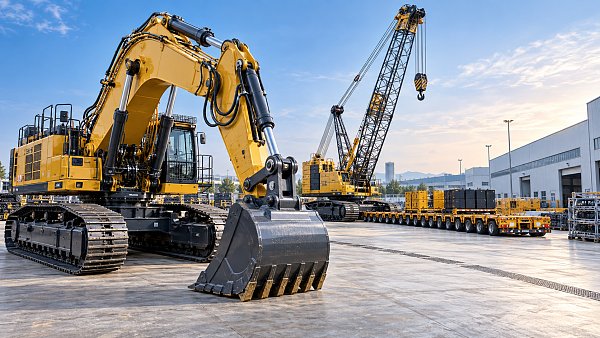
For ultra-large excavators, compare bucket capacity only after identifying the material density used for the stated figure. A bucket sized for low-density overburden is not directly comparable with a rock-duty bucket carrying dense, abrasive material. Bucket geometry, tooth system, wear shrouds, boom and stick combination, breakout force, cycle time, and truck matching should sit in the same reference record. A quotation that includes a heavy rock package will often be higher because it contains structural reinforcement and consumables suited to the stated material, not simply because it carries a larger bucket.
Crawler crane price benchmarking requires the same discipline. Rated load charts are conditional documents. They depend on boom length, jib arrangement, counterweight, crawler extension, lift radius, reeving, ground bearing pressure, wind limits, and working configuration. Comparing a price using the maximum headline tonnage is misleading when one offer includes the luffing jib, superlift system, transport frames, counterweight trays, and assembly equipment needed to achieve the required lift. The relevant reference is the capacity at the planned radius and elevation, with the stated configuration installed.
A TBM presents an even stronger example because nominal diameter says little about the total technical package. Geological references should be connected to cutterhead type, cutter size and spacing, installed torque, thrust capacity, articulation, primary support arrangement, conveyor or slurry circuit, ground-conditioning provisions, probe drilling capability, and backup system length. A lower machine price may exclude systems needed for water-bearing ground, mixed-face conditions, difficult muck handling, or settlement control. Those exclusions should be evaluated as scope gaps, not treated as optional refinements.
Separate Rated Values from Site Values
Reference sheets frequently show rated output under defined conditions. Site values are constrained by the actual work environment. For road machinery, paving width and theoretical output must be examined with material delivery continuity, screed configuration, compaction requirement, surface tolerance, grade-control arrangement, and jobsite maneuvering room. For a milling machine, cutting width alone says little about production unless milling depth, material hardness, water system capacity, conveyor reach, and truck exchange time are aligned.
Use a simple annotation beside every critical value: rated under what condition? This question exposes hidden differences quickly. A lift figure may assume ideal level ground. A travel speed may be unloaded. A consumption figure may represent a test cycle rather than sustained production. A service interval may apply only when contamination and temperature remain within stated limits. The annotation does not invalidate the figure; it identifies whether it supports the project requirement.
Turn the Quote into a Scope Map
Price benchmarking becomes unreliable when commercial descriptions compress complex supply into a few lines. Convert each quote into a scope map with three columns: included, excluded, and unclear. The unclear column deserves active treatment because it contains many of the items that later produce change orders or unplanned site work.
- Machine and working equipment: identify the exact boom, arm, bucket, body, mast, screed, cutterhead, hook block, lifting gear, or auxiliary attachment supplied. “Standard” has no stable meaning across configurations.
- Mobilization components: include shipping dimensions, transport weight by module, packing method, assembly aids, erection tools, and any site infrastructure required before installation can begin.
- Electrical and control interfaces: confirm voltage, frequency, cable arrangement, remote-control hardware, grade-control interfaces, fleet communication equipment, and data ownership requirements where relevant.
- Initial maintenance package: distinguish routine filters and lubricants from critical spares, special tools, ground-engaging tools, tire assemblies, cutter stock, and condition-monitoring sensors.
- Commissioning boundary: establish which party performs assembly supervision, functional testing, calibration, load testing, operator familiarization, and handover documentation.
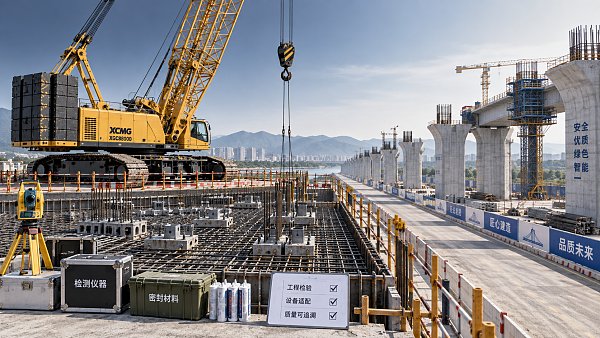
Installation scope is especially important for large equipment. A crawler crane can require extensive assembly space, lifting support, ground preparation, and counterweight handling. A TBM may require a launch arrangement, power distribution, segment logistics, ventilation, water treatment, and conveyor alignment before meaningful progress begins. These requirements are not always part of the equipment selling price, but they affect the cost of putting the equipment into service. Keep them visible beside the quote rather than burying them in a separate project estimate.
Benchmark Service Life Without Pretending It Is Fixed
Service life should be assessed through load, environment, maintenance access, and rebuildability rather than a single expected-life number. A heavy-duty structure operating near its rated load in abrasive dust, high heat, steep grades, or corrosive water will face a different maintenance profile from the same structure used on a moderate schedule. Technical documentation can indicate the design features that matter: filtration stages, cooling layout, automatic lubrication points, access to pumps and cylinders, replaceable liners, bolt-on wear plates, sealed electrical connectors, and diagnostic coverage.
Look for parts whose replacement requires a major outage. On a TBM, cutter changes and cutterhead interventions must be considered with geology and access method. On an excavator, undercarriage wear should be related to travel distance, ground abrasiveness, track width, and loading practice. On a mining truck, tire selection cannot be separated from haul-road condition, payload control, heat buildup, and cycle speed. A low-cost spare part is not necessarily low-cost if replacement stops the production chain or requires a specialized crew.
Warranty language should be mapped to the duty references used in the proposal. An operating-hours limit, exclusions for wear components, required maintenance intervals, remote diagnostic requirements, and response conditions all influence the usable value of coverage. Avoid assigning a full monetary value to a warranty until the triggering conditions and exclusions have been compared against the intended operating profile.
Use a Normalized Price, Then Test the Difference
Once technical scope is aligned, calculate a normalized comparison price. Start with the quoted equipment amount, then add all required configuration items that are absent from a competing offer: attachments, wear package, controls, transport modules, special tools, commissioning support, and initial spares. Apply the same delivery basis and currency basis across all offers. Taxes, import charges, civil works, fuel or electricity infrastructure, and site labor should be handled consistently: either excluded from every comparison or separately shown in each one.
The normalized figure is only the starting point. Test it against the expected operating cost drivers that technical references reveal. Fuel or energy use should be linked to the anticipated load cycle rather than catalog consumption alone. Maintenance should consider both scheduled parts and access time. Availability assumptions should reflect the number of machines in the production system; a single critical loader, crane, or paver has a different downtime consequence from a unit supported by redundant capacity.
Do not force a precise lifecycle calculation where the inputs are weak. A well-documented range with stated assumptions is more defensible than an exact-looking number built from guessed utilization, fuel price, or component life. The purpose of the model is to show which technical differences could change the commercial ranking and which differences are immaterial to the job.
Resolve Contradictions Before Negotiating Price
Contradictory references are common. A brochure may show one power value, a quotation another, and an attachment schedule a third configuration. Treat this as a technical clarification issue before using the price as leverage. Ask for a controlled equipment schedule that identifies the offered configuration, included options, performance basis, exclusions, and document revision. A response that merely repeats the headline model name does not resolve the discrepancy.
Price discussions become more productive when each requested adjustment is tied to a defined reference gap. Instead of seeking a general reduction, identify the commercial effect of a missing cutter package, an underspecified cooling system, a different load-chart configuration, omitted automation hardware, or an unconfirmed spare-parts list. The discussion then concerns equivalent scope and verifiable performance rather than competing claims about which quote is “higher.”
Keep the final benchmark file with the awarded equipment record. During commissioning, it provides a basis for verifying installed configuration, documentation, and supplied accessories. During operation, it also explains why particular options, spares, or structural features were selected. That traceability is the practical value of technical reference pricing: the price can be defended because the equipment, conditions, and cost boundaries behind it are visible.
Related News
 Oct 01, 2026How to Use Technical References to Benchmark Industrial Equipment PricesIndustrial equipment technical reference pricing: learn how to normalize specifications, scope, service life, and operating costs to benchmark quotes accurately and choose the best-value equipment.
 Sep 30, 2026What Does an Ultra-Large Excavator Really Cost Over Its Service Life?Ultra-large excavators cost far more than purchase price. Explore lifecycle expenses, uptime risks, energy use, maintenance, and cost-per-tonne insights.
 Sep 29, 2026Infrastructure Construction Standards: A Project Manager’s Guide to ComplianceInfrastructure construction standards guide for project managers: turn requirements into field controls, hold points, traceability, and compliant delivery.
 Sep 28, 2026How to Specify Custom Mining Equipment for Abrasive Ground and High-Load HaulageCustom mining equipment for abrasive ground and high-load haulage: learn how to optimize payload, wear protection, powertrains, uptime, and lifecycle cost for safer, reliable production.


Ms. Elena Rodriguez
Weekly Insights
Stay ahead with our curated technology reports delivered every Monday.