
Construction Equipment Planning Compliance: What Project Managers Must Check Before Mobilization
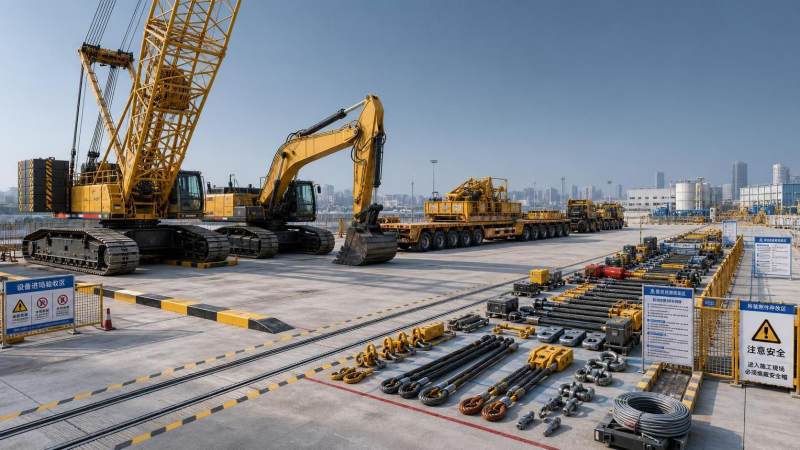
Construction Equipment Planning Compliance: What Project Managers Must Check Before Mobilization
Construction equipment planning compliance starts well before the first machine enters the gate. If you are managing mobilization, the real risk is rarely just late delivery. It is the chain reaction caused by missing permits, weak ground verification, incomplete lift planning, wrong transport assumptions, or operators who are technically available but not site-approved. Those gaps can stop work on day one, trigger corrective costs, and put safety performance under pressure before the project has even settled into rhythm.
For most project managers, the practical question is simple: what must be checked before mobilization so equipment is compliant, usable, and aligned with the job as it will actually be executed? The answer is not one document or one inspection. It is a pre-mobilization control process that connects equipment capability, site conditions, legal requirements, and operational readiness.
In plain terms, construction equipment planning compliance means confirming that the machine can legally arrive, safely operate, and productively perform the work under the specific conditions of your project. If any one of those three fails, mobilization is not truly ready.
Why This Fails Even on Experienced Projects
A common mistake is treating compliance as a paperwork exercise owned by HSE or plant teams alone. In reality, mobilization failures usually happen in the spaces between functions. Procurement confirms the machine. Logistics confirms the haul route. The OEM or rental supplier confirms capacity. Site management confirms the workfront. Yet nobody fully checks whether those answers still hold together once the machine reaches the actual ground, weather, sequence, and permit conditions of the job.
This is especially true on heavy civil, tunneling support works, large road packages, open-pit developments, and major lifting scopes, where equipment performance is highly sensitive to terrain, access geometry, assembly area, and utilization assumptions. A crane that is compliant on paper may still be unusable because the laydown area is undersized. An excavator fleet plan may look efficient until haul roads, dust controls, or fuel support are reviewed. A TBM support package can be delayed not because of the TBM itself, but because segment handling, slurry support, or auxiliary lifting equipment was not cleared in the same mobilization logic.
Start With the Equipment-to-Task Match
Before permits and checklists, confirm the machine is right for the work package as it will be executed, not as it was described in an early tender schedule.
Project teams often rely on nominal equipment specifications: lifting capacity, breakout force, payload, paving width, installed power. Those numbers matter, but they are not planning compliance by themselves. You need to test the machine against operating radius, cycle demands, material density, slope, altitude, temperature, duty cycle, emissions restrictions, and available support infrastructure.
For example, a crawler crane selected for a major component lift may meet the required capacity, but only with a boom configuration that creates transport complexity, extra assembly duration, or ground bearing pressure beyond what the site can support. In mining or quarry-related works, a dump truck fleet can appear adequate until you factor in grade resistance, rolling resistance, tire management, and the impact of seasonal road deterioration. The same principle applies to large road machinery: paving quality depends not only on machine width and output, but also on material supply continuity, compaction sequence, and calibration discipline.
If the machine-task match is weak, every later compliance step becomes cosmetic.
Construction Equipment Planning Compliance Must Include Site Reality
This is where experienced managers usually slow down and ask better questions.
Has the project verified ground bearing capacity for all travel paths, crane pads, assembly zones, and temporary working platforms? Has drainage been considered, or is the plan based on dry-weather assumptions? Are there buried services, void risks, trench edges, recently backfilled areas, tunnel crown influence zones, or unstable shoulders near access roads?
Ground conditions are one of the most frequently underestimated pre-mobilization issues because they sit at the intersection of geotechnical, civil, and equipment planning. A compliant machine can become non-compliant the moment it operates on an unverified surface. On lifting jobs, this is obvious. On excavation and haulage jobs, teams sometimes miss it because the failure mode is less dramatic at first: rutting, reduced productivity, unstable positioning, or repeated access closures.
Also check physical envelopes. Can the machine clear overhead lines, temporary structures, gantries, tunnel portals, scaffolds, pipe racks, or traffic management barriers? Can it turn, assemble, and demobilize without secondary works that were never costed or approved?
The Permit Set Is Usually Broader Than People Expect
When teams say “the equipment is cleared,” they often mean the machine itself has current certification or inspection records. That is only part of the picture.
Depending on jurisdiction and project type, you may need to verify transport permits for oversize or overweight loads, road authority approvals, escort requirements, lifting permits, temporary works approvals, environmental permissions, operator licensing, pressure system certifications, electrical compliance records, and site-specific induction or access credentials. Some projects also require third-party inspection before first use, especially for cranes, lifting accessories, pressure vessels, man-riding equipment, or high-risk plant.
The useful mindset here is this: separate machine compliance from mobilization compliance. A machine may be legally owned, maintained, and certified, but still not approved to travel, assemble, or operate on your site under current conditions.
Where local rules are complex or fragmented, project leaders should verify requirements directly with the competent authority, client standards, and principal contractor procedures rather than relying only on supplier assumptions. Cross-border or remote projects need even tighter control, because customs timing, import documentation, and regional technical standards can alter mobilization windows significantly.
Transport and Assembly Planning Deserve More Attention Than They Usually Get
Many delays blamed on “equipment availability” are really transport and assembly planning failures.
Heavy equipment compliance before mobilization should include route surveys, bridge and axle-load checks, delivery sequencing, escort planning, port or terminal handling constraints, weather windows, and assembly method statements. For large cranes, TBM components, and specialized mining equipment, the machine is only part of the logistical system. Counterweights, booms, cutterhead components, trailing gear, fueling systems, spare packages, and commissioning tools all need controlled arrival logic.
One recurring problem is sequencing the primary machine ahead of the support package. The result is predictable: the flagship asset arrives, but cannot be assembled, fueled, tested, or productively deployed because support equipment, rigging gear, power supply, or commissioning personnel are still in transit.
That is why serious mobilization reviews track the whole equipment ecosystem, not just the headline asset.
Operator Readiness Is Not the Same as Having an Operator
Projects under schedule pressure often reduce this question to a headcount issue. That is risky.
You need to confirm that operators, maintainers, riggers, signalers, and supervisors are qualified for the exact machine class and the exact site rules. On complex equipment, model familiarity matters. So does language capability for safety-critical communication, especially on multinational jobs. Shift coverage, fatigue exposure, emergency response familiarity, and OEM commissioning support also belong in the readiness check.
One of the more expensive mobilization mistakes is putting a technically certified team onto equipment that has site-specific control systems, attachments, or lifting configurations they have not recently used. The paperwork may be fine; the operating risk is not.
Documentation That Should Exist Before First Use
You do not need a mountain of paper. You do need the right documents, reviewed by the right people, before the machine is released to work.
- Current inspection and maintenance records
- OEM operating limits and configuration data
- Site-approved risk assessment and method statement
- Lifting plan, where lifting is part of the scope
- Ground assessment or temporary working platform verification, where relevant
- Transport and assembly plan
- Operator and support crew competency records
- Emergency and recovery arrangements
- Daily pre-start and defect reporting process
- Environmental controls for fuel, noise, dust, spill response, and waste
What matters is not just collecting these documents, but checking that they agree with each other. Plenty of compliance packs look complete until someone notices the lift study assumes a different radius than the method statement, or the transport plan assumes an access gate that the civil works team has already changed.
Do Not Overlook Temporary Works and Interfaces
Pre-mobilization problems often sit in temporary works: crane mats, access ramps, working platforms, dewatering arrangements, protection slabs, gantry supports, or haul road strengthening. These are not side issues. They are part of equipment planning compliance because they create the conditions that allow the machine to operate within its limits.
Interfaces matter just as much. If one contractor controls the haul road, another controls drainage, and another owns the lifting exclusion zone, your equipment plan is only as good as the interface management behind it. This is where many technically competent plans stall in practice.
On major infrastructure jobs, intelligence platforms such as TF-Strategy can be useful as a reference point for equipment class trends, heavy machinery deployment patterns, and strategic planning context, especially in TBM, open-pit, and ultra-large lifting environments. It is most useful at the early planning and benchmarking stage, not as a substitute for local compliance verification.
The Fastest Pre-Mobilization Check Is a Structured Readiness Review
If you need a direct answer, here it is: before mobilization, confirm legal approvals, route and assembly feasibility, site ground conditions, task-machine fit, operator competence, support systems, and first-use documentation in one coordinated review. If those checks are fragmented, compliance risk stays hidden until the machine reaches site.
A short readiness meeting usually works better than another long email chain. Bring construction, plant, HSE, logistics, temporary works, and the supplier into the same review. Walk through the planned first 72 hours of equipment use. That simple time-based approach exposes weak assumptions quickly. It forces the team to answer practical questions: where will the machine offload, who signs the inspection, where does it refuel, what happens if weather closes the route, who owns the lift release, what is the defect escalation path?
If those answers are vague, mobilization is not ready.
Common Misunderstandings That Cause Expensive Delays
One misunderstanding is believing that compliance equals zero flexibility. In reality, good construction equipment planning compliance gives the project more flexibility because the boundaries are known early. You can re-sequence, add controls, or change configuration before cost and schedule damage compound.
Another is assuming supplier responsibility covers project responsibility. Suppliers can certify the machine and advise on operation, but the project still owns site suitability, work sequencing, interfaces, and permit alignment unless the contract clearly transfers those duties.
There is also a tendency to under-check support equipment. A main crane gets intense scrutiny; forklifts, telehandlers, access platforms, generators, light towers, pumps, and service vehicles do not. Yet site startup often depends on these smaller assets being compliant and available at the right moment.
What Good Looks Like Before You Say “Mobilize”
The cleanest projects are not the ones with the biggest document sets. They are the ones where equipment, site, method, and approvals have been tested together under actual operating conditions.
Before release, a project manager should be able to answer a few questions without hesitation: Is the machine appropriate for the real duty? Can it legally reach and enter site? Can the ground and access support it? Are operators and support crews approved and prepared? Are temporary works and interfaces in place? Are first-use documents aligned with the actual configuration and work sequence?
That is the practical standard. It is what construction equipment planning compliance looks like when it is doing its job.
And it is worth doing properly, because once equipment is rolling toward the project, bad assumptions become expensive very quickly.
FAQ
Is construction equipment planning compliance mainly a safety issue?
No. Safety is a major part of it, but compliance also protects schedule reliability, cost control, regulatory standing, and equipment productivity.
Who should own pre-mobilization compliance checks?
The project manager should own the decision to mobilize, but the checks themselves need input from plant, HSE, logistics, temporary works, and the equipment supplier or OEM.
Do rental machines reduce compliance risk?
Sometimes, but not automatically. Rental providers can improve documentation and maintenance visibility, yet site suitability, permit alignment, and operator readiness still need project-level verification.
What is the most overlooked item before first use?
Ground and access verification is high on the list, especially where recent civil changes, weather exposure, or temporary works affect bearing capacity and movement routes.
Internal Link Anchor Text Suggestions
- TBM support equipment planning: suggested link to a page about tunnel construction machinery and support systems
- Crawler crane lift planning basics: suggested link to a page about heavy lifting methods and crane selection
- Open-pit haul fleet operating factors: suggested link to a page about mining truck productivity and haul road conditions
- Temporary working platform requirements: suggested link to a page about ground preparation and heavy equipment access
- Heavy equipment total cost of ownership: suggested link to a page about lifecycle cost analysis and fleet decisions
External Authority Source Directions
- Government occupational safety and plant regulation pages covering mobile equipment, lifting operations, and operator certification
- Industry association guidance on cranes, temporary works, heavy transport, and construction plant safety
- OEM technical manuals and official configuration documents for specific machine classes
Related News
 Sep 21, 2026Industrial Supplier Evaluation: A Risk-Based Scorecard for Quality, Capacity, and DeliveryIndustrial supplier evaluation made practical: use a risk-based scorecard to assess quality, capacity, and delivery reliability, reduce project risk, and select suppliers with confidence.
 Sep 20, 2026Comparing Heavy Equipment Warranty Suppliers: Coverage, Claims, and Downtime RiskSupplier comparison for heavy equipment warranty: evaluate coverage, claims speed, service networks, and downtime risk to protect uptime and project costs.
 Sep 19, 2026Mining Truck Technology Trends: What Fleet Managers Should Prioritize for 2026Mining truck technology trends for 2026: prioritize electrification, autonomy, predictive maintenance, and road intelligence to improve fleet uptime, safety, and cost control.
 Sep 17, 2026How TBM Guidance Technology Maintains Alignment Through Curves and Variable GroundTunnel boring machine guidance technology helps teams maintain precise alignment through curves and variable ground, reducing risk, improving lining accuracy, and protecting schedules.

Ms. Elena Rodriguez
Weekly Insights
Stay ahead with our curated technology reports delivered every Monday.