
Construction Machinery Standards Checklist for Buyers: Safety, Emissions, and Compliance
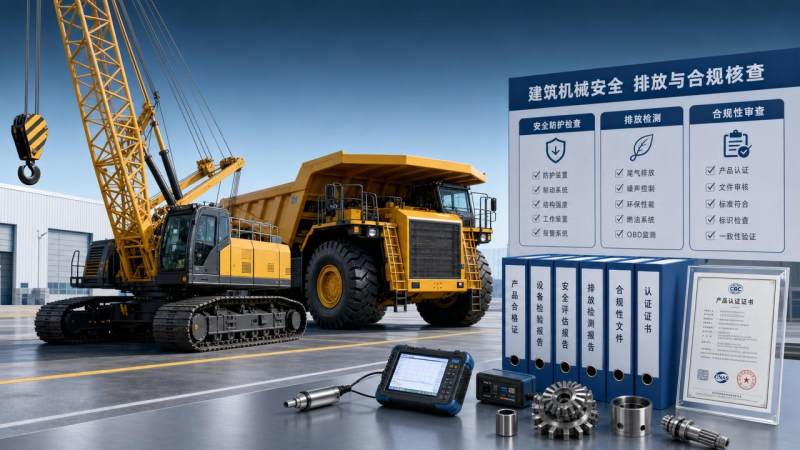
Why do construction machinery standards matter before any deal is signed?
Construction machinery standards are not paperwork extras. They shape safety, legal access, operating cost, and resale value from day one.
In practical terms, a machine can look productive on paper yet fail site entry, customs review, or insurance checks.
That is why serious evaluation starts before price negotiation. The better question is whether the equipment can stay compliant through its working life.
This is especially relevant in heavy sectors tracked by TF-Strategy, where TBM systems, crawler cranes, mining trucks, and large road machinery face strict technical scrutiny.
For global infrastructure projects, standards connect physical parameters with project method, terrain, emissions rules, and lifting or excavation risk.
So when people search for construction machinery standards, they are usually asking a deeper question: what must be verified to avoid expensive surprises?
Which standards should be checked first: safety, emissions, or certification?
The short answer is all three, but not in the same way. Safety standards usually come first because they affect immediate site acceptance.
Emissions standards follow closely, especially where urban works, mining permits, or cross-border imports are involved.
Certification then becomes the proof layer. Without valid documents, even a technically sound machine may still be non-compliant.
What belongs in the first-pass checklist?
- Operator protection systems, guards, alarms, braking, visibility, and emergency stop functions.
- Engine emissions tier or stage, aftertreatment compatibility, and fuel quality requirements.
- CE marking, ISO alignment, local conformity certificates, and third-party inspection records.
- Load charts, rated capacity data, stability calculations, and maintenance history.
- Serial number traceability for key components, especially booms, hydraulic systems, and powertrain units.
More often than not, trouble starts when one of these items is treated as a later detail.
For example, a crawler crane may satisfy lifting performance targets but still require added safety devices to match a specific national code.
Likewise, a mining dump truck with strong haulage efficiency may need a different engine configuration to meet the destination market’s emissions threshold.
How can you tell whether a machine is truly compliant, not just advertised that way?
This is where many costly mistakes happen. A brochure claim is not the same as documented compliance.
The safer approach is to match every claim with evidence, then compare that evidence with the actual project environment.
A useful habit is to ask whether the compliance file would still satisfy an auditor six months after commissioning.
That question often reveals missing calibration records, outdated manuals, or unverified component substitutions.
In complex segments such as TBM systems or ultra-large excavators, the issue is rarely one single certificate.
It is usually the consistency between system design, installed components, operator controls, and intended duty cycle.
Do standards change by equipment type and project location?
Yes, and this is where generic checklists often fail. Construction machinery standards are not applied uniformly across every machine class.
A road paver, a tunnel boring machine, and a mining truck face very different operational risks and reporting requirements.
Location changes the picture again. Local law may add noise controls, transport limits, operator certification rules, or digital monitoring obligations.
Where do the differences show up most clearly?
- TBM projects often emphasize electrical safety, cutterhead systems, underground ventilation compatibility, and emergency rescue planning.
- Crawler cranes need close review of load moment indicators, wind limits, foundation conditions, and erection procedures.
- Open-pit mining fleets draw more attention to braking redundancy, fire suppression, tire monitoring, and altitude-related engine performance.
- Large road machinery may face tighter emissions and noise rules near urban infrastructure corridors.
In real projects, the best reading of construction machinery standards combines global norms with the site’s working method.
That is also why intelligence platforms focused on heavy sectors matter. They help connect standards with project reality instead of treating compliance as theory.
TF-Strategy follows this logic by linking machine parameters, engineering conditions, and strategic demand signals across infrastructure markets.
What are the most common mistakes when comparing construction machinery standards?
One common mistake is assuming newer equipment is automatically compliant everywhere. It may be newer, yet built for a different jurisdiction.
Another is checking engine emissions but ignoring attached systems, software locks, or safety retrofits required by local rules.
There is also a cost trap. A lower purchase price can disappear quickly if extra certification, downtime, or imported parts become necessary.
Watch for these warning signs
- Documents are available, but serial numbers do not match installed components.
- Compliance is stated broadly, without naming the exact standard or market scope.
- Inspection reports are old, incomplete, or issued before major refurbishment.
- Noise, transport width, axle load, or fuel sulfur requirements are left unaddressed.
- The supplier cannot clarify software, telematics, or remote diagnostics restrictions.
A more reliable comparison method is to score each machine against operational fit, compliance strength, and lifecycle support.
That usually produces a better result than comparing only rated output, bucket size, lifting capacity, or purchase cost.
How should the final checklist be used before approval?
The final checklist should work like a decision gate, not a filing exercise. If key items are missing, the review should pause.
A practical closing review usually covers five points: legal fit, technical fit, site fit, service fit, and documentation fit.
If one area stays uncertain, the machine may still carry hidden cost or schedule risk.
This matters even more in capital-intensive fields like tunnel construction, ultra-large lifting, and open-pit mining, where downtime is extremely expensive.
Construction machinery standards should therefore be reviewed alongside parts strategy, operator training, digital diagnostics, and long-term emissions compliance.
A sound next step is to build a project-specific matrix. List the required standards, the evidence received, the gaps found, and who closes them.
That approach keeps decisions grounded in verifiable facts. It also helps compare machines across regions and duty profiles without guesswork.
When the checklist reflects actual site conditions, construction machinery standards become a tool for better project readiness, not just compliance defense.
The smartest decisions usually come from combining standards review with trusted market intelligence, careful document control, and realistic lifecycle planning.
Related News
 Oct 23, 2026Selecting Lifting Equipment for Nuclear Component Transport: Key Safety CriteriaSelecting lifting machinery for nuclear component transport? Discover essential safety criteria, load control checks, and supplier requirements to guide confident procurement.
 Oct 22, 2026Tunnel Boring Machines in Southeast Asia: EPB vs. Slurry for Soft GroundCompare tunnel boring machines Southeast Asia projects rely on: EPB vs. slurry for soft ground. Discover how groundwater, settlement risks, and spoil handling shape the right choice.
 Oct 21, 2026Choosing Tunneling Equipment for the Middle East: Rock, Soil, and GroundwaterCompare underground tunneling equipment Middle East projects need. Explore rock, soil, groundwater, and TBM options to reduce risk and make confident procurement decisions.
 Oct 20, 2026Which Heavy Machinery Maintenance Standards Apply to Your Construction Fleet?Discover which heavy machinery maintenance standards apply to your fleet. Clarify legal duties, OEM requirements, and inspection rules to reduce risk and keep equipment ready for work.
Related News

Ms. Elena Rodriguez
Weekly Insights
Stay ahead with our curated technology reports delivered every Monday.