
Open-Pit Mining Techniques Explained: When to Use Benching, Drilling, and Haul Roads
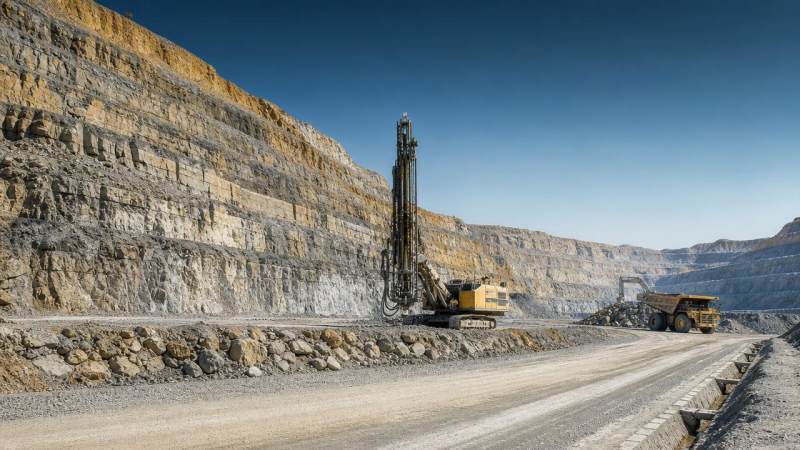
Open-pit mining techniques decide how a mine moves from exposed rock to stable production. They shape safety, stripping cost, cycle time, and equipment wear long before ore reaches the crusher.
For research and technical comparison, three choices usually set the tone early: benching, drilling, and haul roads. Each one looks simple on paper, but field performance depends on geology, slope geometry, water, truck size, and production targets.
At TF-Strategy, this is where heavy-industry intelligence becomes useful. Open-pit mining techniques are not isolated tasks. They connect excavator reach, blast fragmentation, dump-truck efficiency, and long-term infrastructure logic across the whole pit.
If the goal is to understand when each method makes sense, it helps to start with one practical idea: the best method is the one that fits the rock mass, the fleet, and the mine plan at the same time.
Where benching fits best in open-pit mining techniques
Benching is often the first visible structure people associate with surface mining. It creates working levels, controls wall angles, separates equipment traffic, and helps manage water and loose material.
In practical terms, benching works best when slope stability matters as much as output. It becomes especially valuable in deeper pits, harder rock, or sites with variable lithology and changing geotechnical conditions.
- Use benching when wall control is critical, rock strength varies, or deeper pit phases need cleaner working levels for drilling, loading, scaling, and safer truck movement.
- Choose wider benches where larger hydraulic shovels or ultra-large excavators need swing clearance, spill control, and room for service access without disturbing production traffic.
- Reduce bench height if fragmentation is inconsistent or selective mining matters, because smaller vertical intervals usually improve ore control and reduce dilution risk.
- Keep catch benches functional, not symbolic. If loose rock cannot be retained, the bench may satisfy design drawings but fail real safety performance.
A common field mistake
A bench can look productive while quietly creating risk. Narrow working widths, poor crest maintenance, and water pooling near the toe often reduce effective space much faster than planned.
That matters because open-pit mining techniques perform as a system. If bench geometry is too tight, drilling patterns drift, loading becomes uneven, and haul-road edge damage appears sooner.
When drilling becomes the key decision
Drilling is not just a blasting step. In many operations, it is the control point that decides downstream digging rate, crusher throughput, powder factor, and even tire damage from oversized rock.
Among open-pit mining techniques, drilling deserves extra attention when rock is competent, fragmentation targets are strict, or the mine needs predictable advance per shift.
- Prioritize drilling precision in hard, massive rock, where burden and spacing errors quickly turn into oversize fragments, uneven toes, and longer shovel cycle times.
- Use tighter drilling control when downstream crushing capacity is limited, because better fragmentation often saves more value than simply adding explosive energy.
- Adjust hole depth and pattern if benches show backbreak or floor irregularity, since poor blast control can damage final walls and slow the next cut.
- Review drilling alongside groundwater conditions. Wet holes may require different charging methods, and ignoring that can create inconsistent energy distribution.
What researchers should compare
When comparing open-pit mining techniques across projects, drilling data often reveals more than total blast volume. Look at fragmentation consistency, toe burden control, wall damage, and rehandling rates.
This is also where TF-Strategy’s heavy-equipment perspective matters. Drill selection is tied to compressor demand, bench height, digital guidance systems, and the loading fleet that follows.
Why haul roads often decide overall efficiency
Haul roads rarely get the same attention as blasting, but they should. In open-pit mining techniques, road design directly affects fuel burn, tire life, cycle time, braking heat, and payload consistency.
A strong haul road strategy matters most when the pit deepens, truck class increases, or weather creates repeated drainage and rolling-resistance problems. Small road defects create large cost penalties over time.
- Focus on haul roads early when truck haul distance grows, because road gradient and rolling resistance quickly become larger cost drivers than loading delay alone.
- Widen curves and check super-elevation if using large mining dump trucks, since safe turning performance depends on speed control and consistent road surface support.
- Treat drainage as a production issue, not just maintenance. Water softens road structure, increases rutting, and raises tire and suspension damage risk.
- Measure road quality by cycle stability, not appearance. A smooth-looking road can still create high rolling resistance if material grading is poor.
A simple comparison table
How site conditions change the right choice
Not every mine should emphasize the same open-pit mining techniques. A shallow quarry in competent rock may gain most from efficient drilling control, while a deep metal mine may depend more on stable benches and disciplined road design.
In wet climates, road drainage and bench water management often rise to the top. In high-altitude or remote operations, haul efficiency becomes even more important because maintenance support, fuel logistics, and tire replacement are harder.
If geology is variable
Variable geology usually rewards flexibility. Bench heights may need adjustment, drilling patterns may need tighter review, and road maintenance intervals may shorten if material quality changes across phases.
This is where intelligence-led planning helps. TF-Strategy often frames equipment and method choices through a broader infrastructure lens, linking rock conditions with machine limits and long-term cost behavior.
If production must ramp quickly
Fast ramp-up does not always mean aggressive blasting alone. It may be smarter to secure workable benches, consistent drilling accuracy, and durable haul roads first, then raise output with fewer interruptions.
That approach often protects total cost of ownership. A mine can move a lot of rock briefly with weak infrastructure, but it rarely sustains efficiency for long.
Signals that one method needs more attention
A useful way to evaluate open-pit mining techniques is to watch for operational symptoms rather than only design intentions. The mine usually shows where the constraint is.
- Frequent scaling, crest deterioration, or lost working room usually point back to benching quality and slope-management discipline rather than loading performance alone.
- Repeated oversize rock, dig-floor cleanup, or crusher surges often indicate drilling and blast-control issues, even if penetration rates appear acceptable.
- High fuel burn, brake heat, and unstable truck arrival times usually trace back to haul-road condition, gradient mismatch, or poor drainage management.
- If several symptoms appear together, the problem is often system interaction, not a single machine. That is a classic pattern in open-pit mining techniques.
A practical way to compare methods before choosing
A clean comparison starts with five checks: rock mass behavior, target production, fleet size, water conditions, and haul distance. Without those, method selection stays too abstract.
Then compare the techniques in sequence. Ask whether benching can safely support the cut, whether drilling can deliver the required fragmentation, and whether haul roads can carry the chosen truck strategy without hidden cost escalation.
- Start with slope and access limits first, because unsafe or cramped benches undermine every other decision in open-pit mining techniques.
- Test drilling assumptions against downstream handling, especially shovel fill factor, fragmentation spread, and crusher acceptance range.
- Review haul roads using loaded truck performance, not just design drawings, since real payload behavior reveals hidden efficiency losses quickly.
- Recheck all three decisions after pit deepening, fleet changes, or seasonal water shifts. What worked in phase one may not fit phase three.
In the end, open-pit mining techniques work best when benching, drilling, and haul roads are treated as one operating chain. That is the practical reading of modern surface mining: geometry supports blasting, blasting supports loading, and roads protect haulage efficiency.
For further evaluation, the next useful step is simple. Map each technique against site geology, equipment class, and production phase, then compare where risk, cost, and control matter most. That is usually where the right decision becomes clear.
Related News
 Oct 23, 2026Selecting Lifting Equipment for Nuclear Component Transport: Key Safety CriteriaSelecting lifting machinery for nuclear component transport? Discover essential safety criteria, load control checks, and supplier requirements to guide confident procurement.
 Oct 22, 2026Tunnel Boring Machines in Southeast Asia: EPB vs. Slurry for Soft GroundCompare tunnel boring machines Southeast Asia projects rely on: EPB vs. slurry for soft ground. Discover how groundwater, settlement risks, and spoil handling shape the right choice.
 Oct 21, 2026Choosing Tunneling Equipment for the Middle East: Rock, Soil, and GroundwaterCompare underground tunneling equipment Middle East projects need. Explore rock, soil, groundwater, and TBM options to reduce risk and make confident procurement decisions.
 Oct 20, 2026Which Heavy Machinery Maintenance Standards Apply to Your Construction Fleet?Discover which heavy machinery maintenance standards apply to your fleet. Clarify legal duties, OEM requirements, and inspection rules to reduce risk and keep equipment ready for work.
Related News

Ms. Elena Rodriguez
Weekly Insights
Stay ahead with our curated technology reports delivered every Monday.