
How to Evaluate Large Lifting Systems for Heavy Infrastructure Projects
How to Evaluate Large Lifting Systems for Heavy Infrastructure Projects
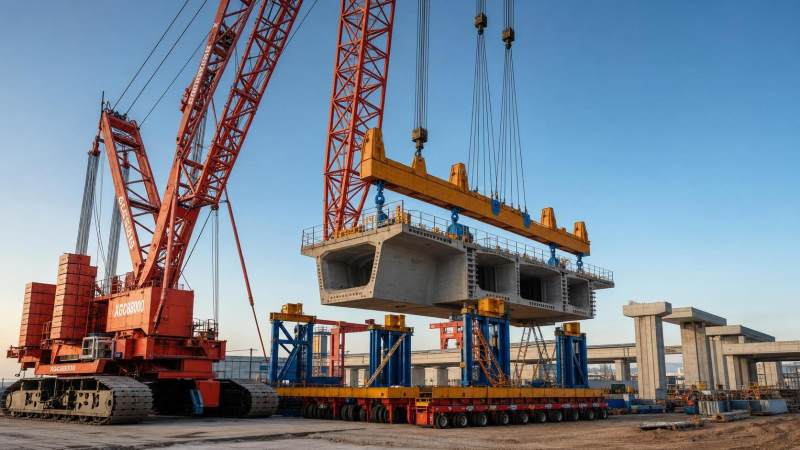
Choosing the right large lifting systems can decide whether a heavy infrastructure project moves cleanly from plan to execution or gets trapped in delay, rework, and risk exposure. For project managers and engineering leads, the real evaluation job starts well before anyone compares crane capacities. You need to know what is being lifted, where it will be lifted, how often, under what ground and weather conditions, and what level of planning discipline the contractor and equipment supplier can actually support.
On paper, several lifting solutions can look acceptable for the same bridge segment, wind component, TBM part, reactor module, or precast unit. In practice, only one or two will fit the project without creating downstream trouble. That is why experienced teams evaluate large lifting systems as part equipment decision, part site logistics decision, and part risk-control exercise.
If you are making a selection for a heavy infrastructure job, this is the checklist worth working through before you sign off.
Start with the real lift, not the rated chart
The first mistake is treating the manufacturer load chart as the decision itself. It is only the starting point. What matters is the actual lifted weight including rigging, lifting beams, hooks, auxiliary devices, and any contingency allowed by the lift plan. On large components, the difference between shipping weight and lifting weight is often enough to narrow your choices immediately.
Ask for the full lifted configuration, not a headline number. That means center of gravity, lifting points, dimensions, rotation requirements, pick radius, final set-down accuracy, and whether tailing or tandem lifting will be required. If the object is an assembled module, verify whether temporary steel, transport saddles, or protection frames remain attached during the lift. Those details are where optimistic assumptions usually hide.
A useful rule in early screening: if the lift description still fits in one short email, you probably do not have enough information to evaluate the system properly.
Check whether the site can support the machine you want
A large lifting system can be technically capable and still be wrong for the job because the site cannot support assembly, travel, or operation. This is especially common on constrained urban sites, soft-ground energy projects, mountain works, marine-adjacent foundations, and active industrial plants.
- Ground bearing capacity and the need for mats, piling, or temporary platforms
- Access route geometry for transport units and erection cranes
- Assembly footprint, boom laydown area, and exclusion zones
- Overhead restrictions such as power lines, process piping, gantries, or nearby structures
- Travel requirements if the crane must move with load or reposition repeatedly
- Seasonal constraints such as rain, freeze-thaw cycles, or high-wind corridors
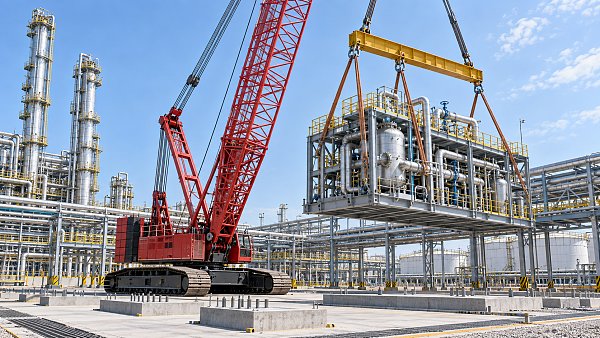
This is where crawler cranes, ring cranes, gantry systems, strand jacks, and modular lifting frames start separating from one another. A crawler crane may look efficient until you price the ground treatment. A strand jack system may take longer to engineer, but in a congested site with limited swing room it can be the cleaner answer.
Match the lifting system to the project rhythm
Not every project needs the same kind of lifting strategy. Some jobs involve a few critical heavy picks. Others depend on repeated lifts over months. That changes the economics and the operational logic.
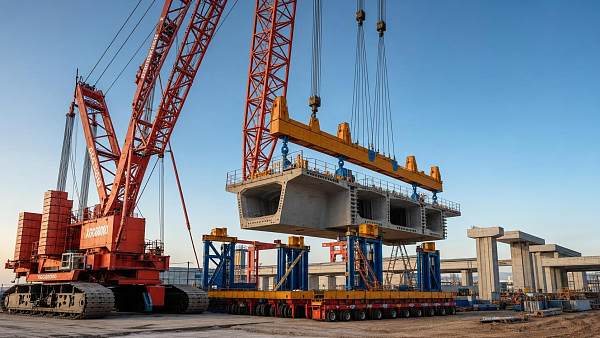
For a nuclear, petrochemical, or bridge project with a small number of very high-value heavy lifts, reliability, engineering support, and lift precision usually matter more than setup speed. On wind or precast infrastructure programs with repeated component handling, mobilization time, relocation effort, and crew efficiency weigh much more heavily. If TBM assembly or disassembly is involved, you may also need to consider whether the lifting system must work around shaft geometry, segmented delivery, and confined staging space.
A good selection question is simple: does this system fit one impressive lift, or the actual production cycle of the project?
Do not accept vague lift planning support
Large lifting systems are only as good as the planning package behind them. When vendors or subcontractors say they can “support lift planning,” press for specifics. You want to see whether they can deliver engineered lift studies, ground pressure calculations, rigging design interfaces, transport-to-lift sequencing, and contingency planning that your safety and project controls teams can actually use.
For critical lifts, ask who signs off the calculations, what standards or internal procedures they follow, and how revisions are controlled. Requirements differ by jurisdiction and project contract, so the governing code set must be checked against the actual project documentation rather than assumed. If the supplier cannot clearly explain its engineering workflow, treat that as a warning sign.
The biggest schedule losses often do not come from lifting failure. They come from late engineering clarification, reissued lift plans, or discovering too late that the planned crane position conflicts with civil works already in progress.
Look hard at assembly and mobilization burden
Teams sometimes focus so much on operating capacity that they underweight the cost and time of getting the large lifting system ready. On mega-projects, assembly itself can become a mini-project with its own craneage, trucking windows, permits, escort requirements, and weather exposure.
Check these points early:
- How many transport loads are required for the selected configuration?
- Are route permits, axle load restrictions, or escort rules likely to delay arrival?
- What assist cranes or support equipment are needed for assembly and dismantling?
- Can the system be configured in phases, or must full assembly happen before any productive lifting starts?
- What happens if the job sequence changes after mobilization?
This matters a lot in remote mining, cross-border logistics, and port-limited project locations. A system with a better capacity margin can still be the weaker commercial choice if it adds too much assembly overhead or too little flexibility once on site.
Evaluate capacity margin the way the field will feel it
A thin capacity margin tends to look acceptable in tender reviews and uncomfortable in live operations. Project teams need breathing room for real-world variation: minor weight growth, slight radius changes, wind management, rigging adjustments, and site tolerances. The right margin depends on the governing procedures and the criticality of the lift, so it should be checked against the project lift standard and the manufacturer documentation, not guessed.
If a proposed large lifting system only works under ideal assumptions, it is not a strong option. You are not buying a spreadsheet result. You are buying operational confidence.
The supplier’s service depth matters more than the brochure
In heavy infrastructure, equipment support is part of the lifting system. Availability of spare parts, qualified technicians, remote diagnostics, local field service, and response time commitments can outweigh small differences in rental or purchase price. This is especially true for long-duration jobs or regions where OEM support density is uneven.
Ask practical questions. Is there a regional parts stock? Are specialist rigging or hydraulic technicians available locally? How quickly can the supplier replace a failed component in the selected configuration? If digital monitoring is offered, who is actually watching the alerts and how are they escalated? Those answers tell you more than a polished capability deck.
For international projects, also check whether customs, sanctions controls, or import restrictions could affect spare parts flow. That risk is project-specific and should be verified with current trade and legal guidance 【待核实】.
Safety records are useful, but only if you read them carefully
Everyone says safety comes first. That phrase tells you almost nothing. What helps is evidence of how the contractor or supplier manages critical lifts, operator competence, maintenance discipline, and stop-work authority.
Instead of asking for a generic “safety record,” request documentation relevant to the project scope: inspection practices, operator certification requirements under the applicable jurisdiction, lifting incident reporting process, and examples of lift readiness review workflows. Certification and licensing requirements vary by country and sometimes by state or province, so those must be confirmed locally. Do not assume that a credential accepted in one market transfers cleanly to another.
Also be cautious with old references. A supplier may have strong history on conventional plant lifts but limited recent experience with offshore-adjacent wind components, TBM shield sections, or extra-long precast spans. Similarity of lift profile matters more than logo familiarity.
Compare total cost, not just crane rate
A lower day rate can hide a more expensive lifting solution. When comparing large lifting systems, build the commercial picture around total installed lift cost and schedule exposure.
This is usually where the decision gets clearer. A system that is slightly more expensive on paper may reduce interface risk enough to be the better project option.
Watch for interface risk between packages
Heavy lifts rarely fail because one team made one mistake in isolation. Problems appear at the boundaries: transport hands over to lifting, civil hands over to mechanical, supplier assumptions do not match site reality, or rigging design arrives after the structural steel sequence is fixed.
During evaluation, make someone own the interfaces. Confirm who controls lift point verification, who signs off temporary works, who checks actual delivered weights, and who has authority to stop the operation if conditions drift from plan. If those answers are fuzzy during procurement, they usually stay fuzzy during execution.
A short decision filter that works
Before final selection, put each option through a blunt review:
- Can it lift the real load at the real radius with an acceptable margin?
- Can the site physically support assembly and operation?
- Does it fit the project sequence, not just the signature lift?
- Is the planning and engineering package mature enough for approvals?
- Will service support hold up over the actual project duration?
- Does the full cost picture still make sense after logistics and site prep are included?
If one option keeps needing ideal assumptions, extra caveats, or “we will solve that later” language, it is probably the wrong lifting system for the job. In heavy infrastructure, the best large lifting systems are rarely the most dramatic choice. They are the ones that keep the lift predictable, the interfaces controlled, and the project moving when real site conditions start pushing back.
Related News
 Oct 24, 2026Choosing Lifting Equipment for Middle East Petrochemical Plants in Hazardous AreasExplore petrochemical lifting equipment Middle East plants can rely on. Compare hazardous-area certification, capacity, and heat limits to make informed procurement decisions.
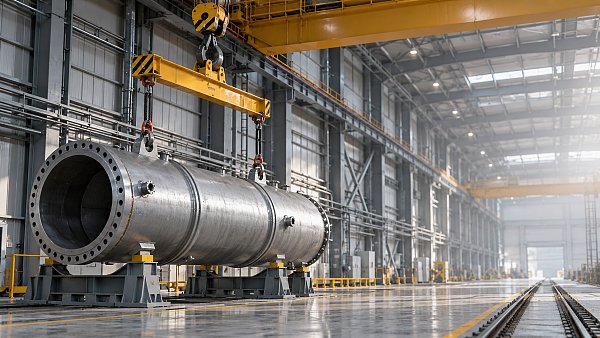
 Oct 23, 2026Selecting Lifting Equipment for Nuclear Component Transport: Key Safety CriteriaSelecting lifting machinery for nuclear component transport? Discover essential safety criteria, load control checks, and supplier requirements to guide confident procurement.
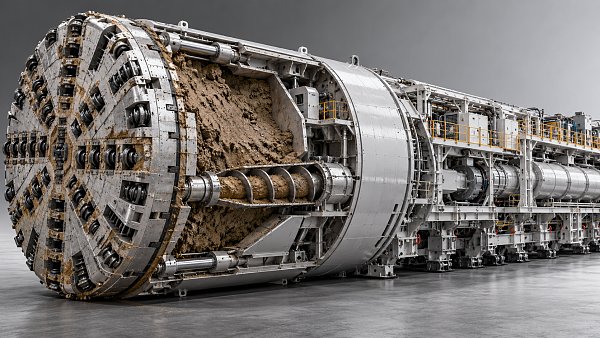
 Oct 22, 2026Tunnel Boring Machines in Southeast Asia: EPB vs. Slurry for Soft GroundCompare tunnel boring machines Southeast Asia projects rely on: EPB vs. slurry for soft ground. Discover how groundwater, settlement risks, and spoil handling shape the right choice.
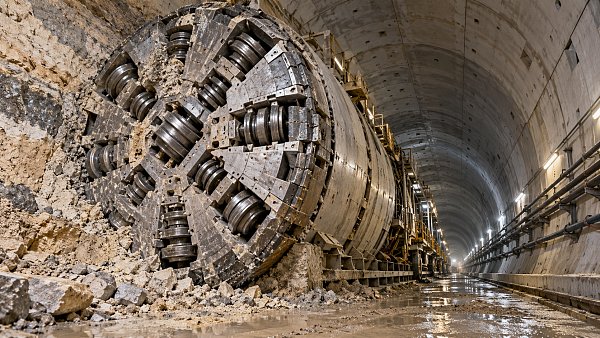
 Oct 21, 2026Choosing Tunneling Equipment for the Middle East: Rock, Soil, and GroundwaterCompare underground tunneling equipment Middle East projects need. Explore rock, soil, groundwater, and TBM options to reduce risk and make confident procurement decisions.

Related News

Structural Load Expert
Weekly Insights
Stay ahead with our curated technology reports delivered every Monday.