
Heavy haulage bottlenecks that disrupt equipment delivery schedules
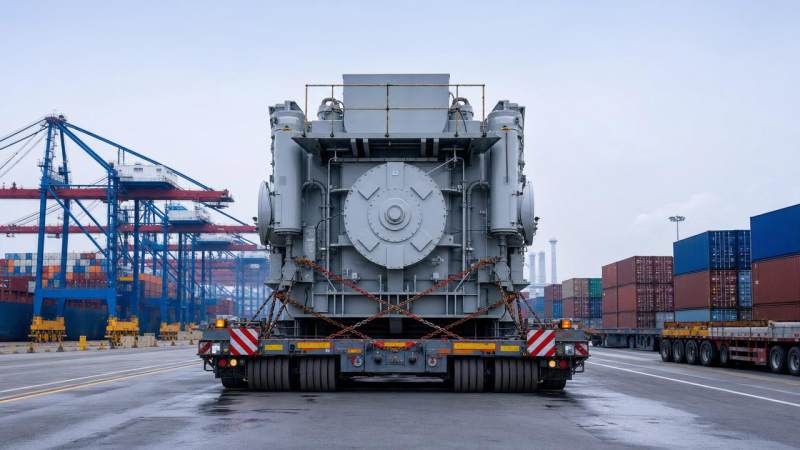
Heavy haulage delays rarely start on the road alone—they often begin with permit gaps, route constraints, port congestion, and poor coordination across suppliers. For dealers, distributors, and agents managing critical equipment delivery, these bottlenecks can quickly disrupt schedules, raise costs, and strain customer trust. Understanding where heavy haulage fails is the first step toward protecting project timelines and improving delivery reliability.
In sectors tied to tunnel boring machines, ultra-large excavators, crawler cranes, road machinery, and mining dump trucks, delivery windows are rarely flexible. A missed slot of 48 hours can affect crane mobilization, site assembly crews, escort bookings, customs clearance, and downstream installation teams. For channel partners operating between OEMs and end users, the real challenge is not only moving oversized loads, but managing a chain of dependencies that can stretch across 3 to 7 jurisdictions and multiple transport modes.
This article examines the most common heavy haulage bottlenecks that interrupt equipment delivery schedules, explains why they matter to commercial intermediaries, and outlines practical control points that improve predictability. The focus is on actionable decision support: where delays originate, how risk accumulates, and what distributors and agents can do before a shipment reaches the road.
Where heavy haulage schedules break first
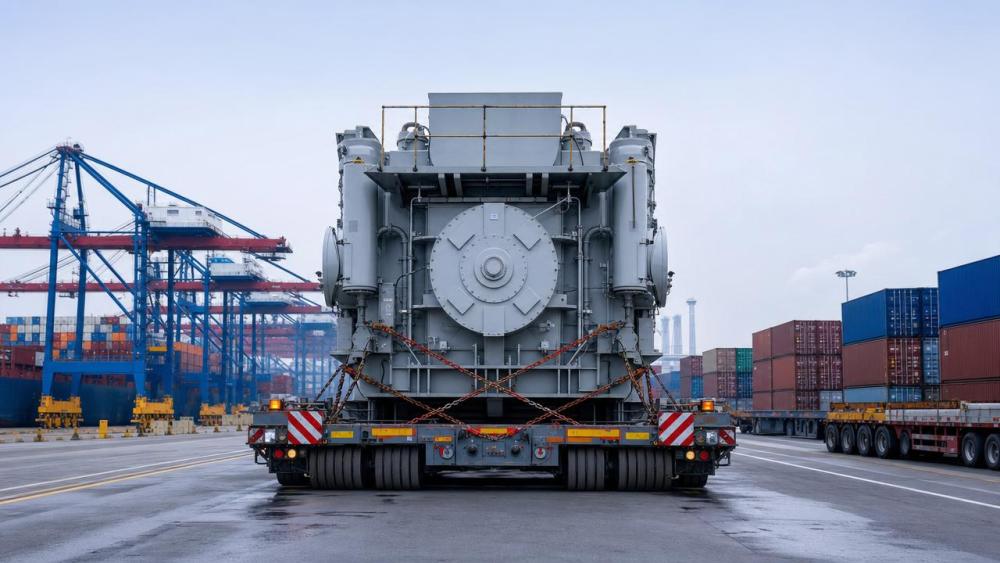
For oversized and overweight equipment, schedule disruption often starts 2 to 6 weeks before dispatch. A crawler crane component, TBM backup gantry, or mining truck module may be production-ready, yet still miss its delivery target because permits, route approvals, lifting windows, and port handling plans were not synchronized. In heavy haulage, transport time is only one part of the total lead time.
Permit gaps and regional approval mismatches
Permit processing is one of the most underestimated risks in heavy haulage planning. Depending on axle count, gross combination weight, cargo dimensions, and whether police escort is required, approvals may take 3 days in one corridor and 15 business days in another. Problems escalate when a load crosses provincial or national boundaries and each authority applies different bridge formulas, curfew rules, or escort thresholds.
Dealers and agents are especially exposed when customer commitments are based on factory release dates rather than permit-ready dates. If even one section of the route requires revised axle spacing calculations or additional engineering review for bridge passage, the full movement plan can stall. This is common with loads above 80 tonnes, over-width cargo above 4.5 meters, or combined train lengths exceeding 30 meters.
Typical permit-related warning signs
- Route survey completed, but permit application submitted less than 7 days before loading
- OEM dimensions differ from packing-list dimensions by more than 100 mm
- Escort requirements confirmed for one district, but not for the full corridor
- Holiday restrictions reduce legal travel days from 5 days per week to 2 or 3
Route constraints that look minor but create major delays
Route feasibility is not only about distance. A 420-kilometer move can be slower than an 800-kilometer move if it includes low bridges, weak culverts, urban turns, steep grades, or night-only access. In open-pit mining and energy projects, the “last 50 kilometers” often creates the highest risk because access roads were designed for standard freight, not 9-axle or 12-axle heavy haulage combinations.
Temporary infrastructure can also become a bottleneck. Road widening, seasonal weight restrictions, rainfall damage, and local traffic diversions may invalidate a survey completed just 10 to 14 days earlier. If the equipment includes sensitive hydraulic systems or pre-assembled structural sections, repeated rerouting increases both transit time and risk of handling damage.
The table below shows where schedule risk usually concentrates across the transport chain for large equipment movements.
The pattern is clear: heavy haulage delays are rarely caused by one dramatic failure. More often, they result from several small mismatches that compound over a 2-week or 4-week delivery cycle. For channel businesses, this means schedule control must begin before dispatch and continue through each transfer point.
Port congestion and multimodal transfer friction
For imported or cross-border equipment, ports and inland terminals can become the largest single source of delay. Heavy haulage cargo often requires special lifting gear, flat-rack availability, berth coordination, and customs documents that match cargo markings exactly. A one-line discrepancy between the packing list and the bill of lading can hold cargo for 3 to 5 extra days, even before any inland movement begins.
Multimodal transfers are especially sensitive when moving disassembled TBM components, crane booms, or mine truck bodies. If the port discharge plan, storage layout, and onward trailer allocation are not aligned, cargo may sit in a holding yard waiting for a transport configuration that should have been booked in advance. During peak project seasons, some terminals need 5 to 10 days of notice for special heavy-lift handling windows.
Why these bottlenecks hit distributors and agents harder
Manufacturers may focus on production completion, while end users focus on on-site availability. Dealers, distributors, and agents sit between these two clocks. When heavy haulage slips, channel partners absorb the communication burden, reputation risk, and often part of the unplanned cost. This exposure is highest in projects where commissioning sequences are tightly linked to civil works, lifting windows, or mine production targets.
Customer trust erodes faster than transport schedules
A 7-day delay is not only a logistics issue. For a distributor supplying a crawler crane for wind turbine erection or a dealer supporting a mining fleet expansion, every missed milestone can trigger broader questions about planning discipline, inventory visibility, and after-sales capability. Buyers may tolerate a delay once, but repeated ETA revisions quickly weaken confidence in future orders.
In B2B heavy equipment sales, trust is cumulative and fragile. If a consignee has mobilized 20 to 40 site workers, arranged unloading equipment, and secured a restricted-access permit, then a failed delivery window becomes visible to multiple stakeholders. The commercial damage can exceed the transport surcharge itself.
Costs multiply across storage, standby, and rework
Heavy haulage bottlenecks create layered costs that are often missed in quotation stages. These may include yard storage after factory release, detention at port, escort rescheduling, crane standby at site, customs amendment fees, and repacking for split shipment. In some cases, a delay of 5 days adds only 3% to freight cost but increases total delivered cost by 8% to 12% once all support activities are counted.
This is particularly relevant in TF-Strategy’s core sectors. A delayed TBM backup system can hold tunnel progress; a late excavator module can postpone mine stripping plans; a crawler crane attachment arriving out of sequence can idle a full assembly crew. For channel partners, heavy haulage performance affects not only transport margins, but the total commercial perception of project reliability.
Common hidden cost categories
- Port or depot storage after free time expires, often from day 4 or day 7 onward
- Standby charges for assist cranes, forklifts, and rigging teams booked by shift
- Additional route survey or police escort fees after permit revision
- Customer-side labor inefficiency when site teams are mobilized too early
How to reduce heavy haulage disruption before it happens
The most effective response is preventive control, not last-minute expediting. Dealers and agents that manage oversized equipment well usually adopt a 5-step review process before shipment release: dimensional validation, route and permit check, port and transfer slot confirmation, consignee readiness review, and milestone-based ETA communication. Each step reduces ambiguity before cost starts accumulating.
Build a pre-dispatch control checklist
A practical checklist should verify final transport dimensions, center of gravity notes, lifting points, packaging condition, axle loading assumptions, escort needs, route survey date, customs file status, and site receiving constraints. For equipment above 60 tonnes or over 4 meters in width, documentation should be frozen at least 5 to 7 working days before loading to avoid late permit corrections.
It is also worth separating “factory complete” from “shipment ready.” A machine can be assembled, inspected, and invoiced, yet still be 10 days away from true dispatch readiness if route approval or special trailer allocation is incomplete. This distinction improves internal forecasting and avoids overpromising to dealers’ customers.
The table below outlines a practical control framework for improving heavy haulage predictability across oversized equipment deliveries.
This framework is useful because it turns heavy haulage from a reactive freight event into a managed delivery program. The strongest gains usually come from earlier dimensional validation and clearer consignee readiness checks, both of which reduce rework at the most expensive stage of the movement.
Use milestone-based communication, not broad ETA promises
Many schedule disputes happen because teams communicate a single estimated arrival date without showing milestone status. A better approach is to track at least 4 milestones: permit cleared, cargo loaded, terminal released, and final-site delivery confirmed. This gives customers context and helps sales teams explain why a shipment is on track, delayed, or still conditional.
For heavy haulage moves linked to infrastructure projects, milestone visibility is more credible than optimistic forecasting. It also supports internal coordination between OEM, logistics provider, and local agent. If one milestone slips by 48 to 72 hours, the impact can be isolated early rather than surfacing as a surprise at the end of the chain.
Choose logistics partners by engineering capability, not rate alone
In complex heavy haulage, the cheapest transport quote is often the most expensive outcome. Dealers and distributors should evaluate service providers on route engineering depth, permit management history, port handling experience, cross-border documentation accuracy, and exception response speed. A provider that answers within 2 hours during a route issue may protect more project value than one offering a 5% lower base rate.
This matters even more for irregular cargo such as TBM shields, long boom sections, track frames, or mine truck assemblies. Engineering-led carriers can recommend cargo splitting, alternative axle configurations, or pre-emptive escort booking that reduce the likelihood of schedule collapse.
Operational questions channel partners should ask early
Early questioning often prevents late-stage disruption. Before committing to a delivery date, distributors and agents should pressure-test the move with concrete operational questions rather than general freight assumptions. This is especially important when the customer treats delivery date as a contract-critical milestone.
Key questions before confirming schedule
- Are final packed dimensions and weights verified, not estimated?
- Does the route survey reflect current road conditions within the last 14 days?
- Which segment has the longest permit lead time: factory exit, port access, border crossing, or site road?
- Is the customer site ready with unloading equipment, ground bearing capacity checks, and access clearance?
- Who owns ETA updates when a variance appears: OEM, forwarder, or local agent?
Frequent planning mistakes
A common mistake is assuming that if one unit of a machine type moved successfully before, the next one will follow the same route and timing. In reality, road conditions, escort rules, vessel schedules, and customs scrutiny can vary month by month. Another mistake is aligning site labor to theoretical arrival rather than confirmed milestone status, which amplifies the visible impact of even a short heavy haulage delay.
For high-value projects, a disciplined review every 72 hours during the final shipment window can sharply improve response quality. This cadence is often enough to catch document issues, route changes, or handoff failures before they become full schedule disruptions.
A more reliable delivery model for heavy equipment channels
Heavy haulage reliability is built through planning depth, technical accuracy, and cross-party communication. Dealers, distributors, and agents that treat logistics as a strategic capability rather than a post-sale function are better positioned to protect margins and customer confidence. In sectors driven by large machinery and project sequencing, delivery discipline can be as important as machine specification.
For organizations navigating TBM logistics, open-pit mining equipment supply, crawler crane mobilization, or other oversized transport programs, the strongest results usually come from earlier route validation, realistic permit timing, milestone-based reporting, and partner selection grounded in engineering competence. If you need clearer visibility into heavy haulage risks, project delivery timing, or equipment movement strategy, contact TF-Strategy to get a more informed plan, discuss your shipment profile, and explore tailored solutions for complex equipment delivery.
Related News
 Sep 22, 2026How to Evaluate a High-Altitude Mining Solutions Manufacturer for Remote ProjectsEvaluate a high-altitude mining solutions manufacturer with proven derating, cooling, service logistics, and lifecycle-cost support for remote projects.
 Sep 21, 2026Industrial Supplier Evaluation: A Risk-Based Scorecard for Quality, Capacity, and DeliveryIndustrial supplier evaluation made practical: use a risk-based scorecard to assess quality, capacity, and delivery reliability, reduce project risk, and select suppliers with confidence.
 Sep 20, 2026Comparing Heavy Equipment Warranty Suppliers: Coverage, Claims, and Downtime RiskSupplier comparison for heavy equipment warranty: evaluate coverage, claims speed, service networks, and downtime risk to protect uptime and project costs.
 Sep 19, 2026Mining Truck Technology Trends: What Fleet Managers Should Prioritize for 2026Mining truck technology trends for 2026: prioritize electrification, autonomy, predictive maintenance, and road intelligence to improve fleet uptime, safety, and cost control.



Ms. Elena Rodriguez
Weekly Insights
Stay ahead with our curated technology reports delivered every Monday.