
Crawler Cranes vs. Mobile Cranes: Which Crane Type Fits Your Heavy Lifting Project?
Crawler Cranes vs. Mobile Cranes: Which Crane Type Fits Your Heavy Lifting Project?
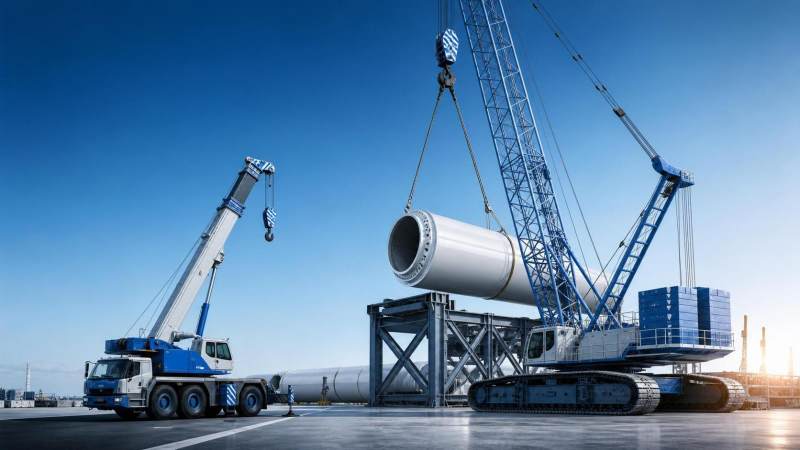
Choosing between crawler cranes and mobile cranes can define the safety, speed, and cost control of a heavy lifting project. For project managers handling wind power, petrochemical, or infrastructure works, crawler cranes often deliver superior stability and lifting capacity on demanding sites, while mobile cranes offer fast deployment and flexible mobility. This guide compares both crane types through the lens of real-world project needs, helping you match equipment performance with site conditions, schedule pressure, and total operating efficiency.
Why the Crawler Cranes Decision Matters
A crane choice is never just a rental decision. It affects foundation preparation, transport logistics, lifting radius, assembly time, and even permit planning.
In large projects, crawler cranes usually become the default when loads are heavy, lifts are repeated, and ground conditions are uncertain. Their tracked undercarriage spreads load well, which makes them valuable on soft soil, large industrial pads, and long-duration construction zones.
Mobile cranes solve a different problem. They are built for speed, road travel, and quick repositioning. If your lifting work is spread across multiple points or the site timeline is tight, their flexibility can save valuable hours.
Crawler Cranes vs. Mobile Cranes: Core Differences
The clearest difference is how each machine moves and stays stable. Crawler cranes move on tracks and can work with minimal relocation once set up. Mobile cranes rely on wheels and outriggers, which makes them faster to mobilize but more dependent on firm, level ground.
That difference matters because lifting success depends on more than capacity. It depends on how smoothly the crane fits into your site workflow.
Where Crawler Cranes Usually Win
Crawler cranes are often the better answer when the project involves large components, long lifting cycles, or limited tolerance for repositioning. Wind turbine tower sections, transformer skids, reactor modules, and heavy steel assemblies are typical examples.
They also perform well when ground bearing pressure is a concern. Because the tracks distribute weight effectively, crawler cranes can remain productive on sites where mobile cranes would need more ground reinforcement.
Another advantage is lifting confidence. On complex lifts, the crawler crane’s steadier base reduces operational stress and gives the lift team more room to control movement, especially during long-radius picks.
- Best for heavy lifts that repeat across the same work zone.
- Useful when site access is limited but ground space is available.
- Strong option for projects where safety margin matters more than fast mobilization.
Where Mobile Cranes Make More Sense
Mobile cranes are often the smarter choice when the project has many short lifts, a compact footprint, or a demanding schedule. They arrive faster, set up faster, and leave faster.
In urban infrastructure, maintenance shutdowns, and plant turnaround work, that speed can outweigh the lower lifting advantage. A mobile crane can be the better business decision when downtime costs more than raw lifting power.
They are also easier to deploy across multiple locations. If your team needs to lift one structure in the morning and another in the afternoon, mobile cranes usually reduce logistical friction.
Still, they need better site preparation. Outrigger mats, level ground, and access roads must be planned carefully to protect performance and safety.
How to Decide for Your Project
A practical decision starts with four questions. First, how heavy is the load and how often will it be lifted? Second, can the site support the crane’s ground pressure? Third, how much time is available for setup and relocation? Fourth, what is the cost of delay if lifting stops?
If the answer points to long-duration, high-capacity work on a single site, crawler cranes are usually the safer commercial choice. If the project is fragmented, time-sensitive, and mobility-driven, mobile cranes may deliver better overall efficiency.
This is where project managers should look beyond rental price. Total cost includes transport, assembly, ground prep, idle time, and lifting risk. A cheaper crane can become expensive if it slows the schedule or forces repeated repositioning.
A Simple Risk Check Before You Commit
Before finalizing crawler cranes or mobile cranes, review the lift plan with the site team and supplier. Check soil conditions, wind limits, access routes, assembly space, and load charts for the actual boom configuration.
A solid lift plan should also define who controls ground readiness, who verifies rigging, and who approves weather stoppage rules. Small gaps in responsibility often create the biggest project delays.
For large industrial jobs, it is worth comparing multiple crane setups against the same lifting scenario. The best choice is not always the largest crane. It is the one that fits the site, the schedule, and the risk profile with the least waste.
Final Takeaway
Crawler cranes are the stronger match for heavy, stable, long-duration lifting work, especially in wind power, petrochemical, and infrastructure projects. Mobile cranes are better when speed, access, and flexibility drive the job.
If you want the right crane choice, start with the site, not the machine. Match lifting demand, ground conditions, and schedule pressure first, then compare the economics. That approach leads to safer lifts, cleaner execution, and better project control.
Related News
 Sep 27, 2026Heavy Equipment Selection Factors for Matching Machine Capacity to Jobsite ConditionsHeavy equipment selection factors for matching capacity to jobsite conditions, improving productivity, safety, fleet efficiency, and total project cost control.
 Sep 26, 2026How to Select Wind Rotor Lifting Equipment for Safe Blade and Hub InstallationWind rotor lifting equipment selection guide: ensure safe blade and hub installation with the right lift method, load control, crane compatibility, wind limits, and compliance.
 Sep 25, 2026What Drives Heavy Haulage Cost on Oversized Construction Equipment Moves?Heavy haulage cost explained: discover how load dimensions, route surveys, permits, escorts, lifting plans, and scheduling shape reliable oversized equipment transport budgets.
 Sep 24, 2026Supplier Management Frameworks That Reduce Delays on Large Construction ProjectsLarge-scale construction projects supplier management frameworks help prevent costly delays with risk-based controls, milestone tracking, quality oversight, and escalation plans for critical packages.
Ms. Elena Rodriguez
Weekly Insights
Stay ahead with our curated technology reports delivered every Monday.