
Equipment Capacity Customization: Which Load and Duty Parameters Matter Most?
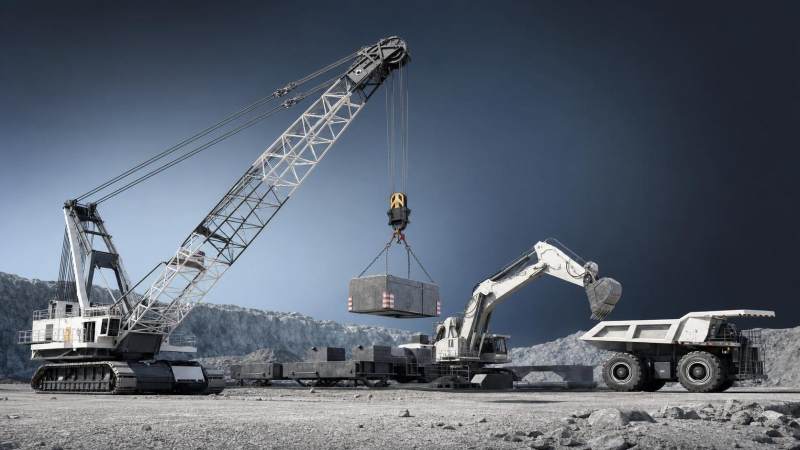
Equipment Capacity Customization: Which Load and Duty Parameters Matter Most?
In heavy industry, equipment capacity customization is rarely about chasing the highest rated number.
The real task is matching machine capability to the duty profile that will actually happen on site.
That is why equipment capacity customization matters in TBMs, crawler cranes, excavators, road machinery, and mining haulage systems.
A machine can look sufficient on paper, yet fail early under shock loading, continuous cycles, or harsh environmental stress.
From a selection standpoint, the biggest mistakes usually come from using nominal capacity without reading the duty conditions behind it.
This also means the best decision is often not the largest machine, but the best-balanced one.
At TF-Strategy, we track how physical parameters, site methods, and project strategy interact in global heavy equipment decisions.
When reviewing equipment capacity customization, several load and duty parameters consistently shape safety, uptime, and total lifecycle cost.
Start with the Real Load Case, Not the Rated Figure
The first priority is defining the real load case.
Rated capacity only matters after the actual operating load is broken into usable engineering terms.
For equipment capacity customization, the key question is simple: what kind of load will the machine carry, resist, lift, cut, or propel?
In practice, that load usually has several parts working together.
- Static load, including dead weight, payload, attached tooling, and supporting structures.
- Dynamic load, created by acceleration, braking, swing, impact, vibration, or uneven ground.
- Peak load, which may appear briefly but still drives structural sizing and component selection.
- Variable load, common in mixed geology, irregular haul roads, and changing lift radii.
A tunnel boring machine, for example, may see stable average torque but extreme local peaks at harder rock interfaces.
A crawler crane may be within chart capacity, yet still face risk from wind, side loading, and frequent pick-and-carry adjustments.
So, good equipment capacity customization starts with load mapping across the full work cycle, not a single design point.
Duty Cycle Is Often More Important Than Maximum Capacity
The next parameter is duty cycle.
Many selection errors happen because teams focus on maximum output while ignoring how long that output must be sustained.
In equipment capacity customization, duty cycle defines the relationship between load level, operating duration, rest time, and repetition frequency.
This affects heat generation, fatigue life, hydraulic pressure stability, and energy efficiency.
A machine built for intermittent peaks may underperform badly in continuous high-duty service.
That pattern is common in open-pit mining and major tunneling programs.
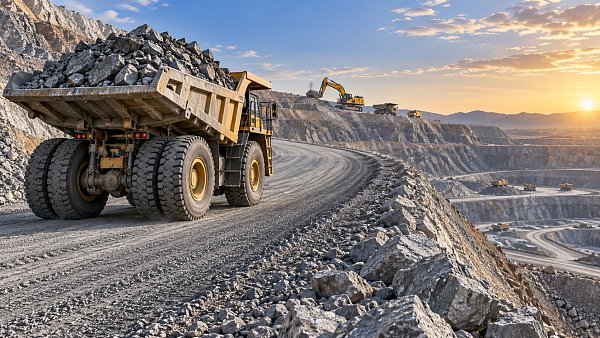
For a mining dump truck, payload rating matters, but cycle repetition under grade, temperature, and brake demand matters just as much.
For an excavator, bucket fill factor is useful, but swing frequency and continuous digging resistance often tell the deeper story.
When evaluating equipment capacity customization, review these duty indicators:
- Hours per shift and shifts per day.
- Percentage of time near rated load.
- Start-stop frequency and idling profile.
- Expected overload events and recovery requirements.
- Cooling, lubrication, and maintenance intervals under target utilization.
If these numbers are unclear, capacity claims are incomplete, no matter how strong the brochure looks.
Peak, Average, and Fatigue Loads Must Be Separated
One of the most useful steps in equipment capacity customization is separating peak load from average load and fatigue load.
These values can lead to very different equipment decisions.
Peak load drives immediate strength requirements.
Average load influences efficiency, energy use, and daily productivity.
Fatigue load determines how frames, joints, ropes, cutterheads, bearings, and hydraulic systems age over time.
This is especially important in long-duration infrastructure projects.
A crane doing repetitive module lifts, or a TBM operating through variable geology, accumulates fatigue quickly even without extreme overload.
That is why equipment capacity customization should include fatigue assumptions early, not after component failures begin appearing.
Environmental Conditions Change Capacity More Than Many Teams Expect
Environmental duty parameters are often underestimated.
Yet they directly affect usable capacity, not just operating comfort.
Altitude reduces engine and cooling performance.
Ambient heat raises thermal stress in hydraulics, traction systems, and electronics.
Cold climates change fluid behavior, startup reliability, and steel toughness.
Dust, water ingress, corrosive exposure, and unstable ground create additional derating factors.
In equipment capacity customization, these conditions should be converted into measurable adjustments.
- Thermal derating for motors, drives, and hydraulic units.
- Load chart reductions under wind or unstable support conditions.
- Lower payload assumptions on poor haul roads or steep gradients.
- Wear rate allowances for abrasive material and mixed geology.
Recent project data also shows a clearer trend: harsh environments punish under-customized equipment faster than before.
Interface Loads and System Matching Deserve Close Attention
Capacity is not only a machine issue.
It is also a system issue.
In equipment capacity customization, interface loads between subsystems often decide whether the full setup works smoothly.
For example, a high-capacity excavator can still lose efficiency if truck matching is poor.
A powerful TBM can face delays if segment handling, slurry treatment, or conveyor removal lacks comparable duty capacity.
A crane with strong nominal lifting capacity may still be constrained by ground bearing pressure or transport assembly limits.
Selection teams should test the full chain:
- Input demand from material, geology, or component weight.
- Machine response under normal and upset conditions.
- Downstream handling, transport, discharge, or support capacity.
- Recovery time after stoppages, jams, or overload events.
This broader view makes equipment capacity customization more realistic and more valuable for decision-making.
Which Parameters Usually Matter Most in Selection Reviews?
Across heavy equipment categories, a practical shortlist tends to drive the best decisions.
For equipment capacity customization, prioritize these parameters first:
- Maximum working load under actual site constraints.
- Continuous duty rating at target utilization.
- Peak torque, breakout force, tractive effort, or line pull where relevant.
- Cycle time under realistic payload and route conditions.
- Fatigue life of critical structural and rotating components.
- Thermal limits in local climate and altitude.
- Safety margin under transient events and abnormal duty.
- Maintenance window compatibility with project production goals.
Not every project weights these factors the same way.
Still, this list usually exposes the gap between marketing capacity and usable capacity.
That gap is where many procurement risks begin.
A Practical Evaluation Framework for Equipment Capacity Customization
A workable review framework keeps the selection process disciplined.
Use this sequence when assessing equipment capacity customization:
- Define the production target, site method, and constraint envelope.
- Separate static, dynamic, peak, and fatigue loads.
- Map the real duty cycle across shifts, seasons, and maintenance plans.
- Apply environmental derating and interface matching checks.
- Compare supplier ratings against actual usable output, not headline values.
- Quantify the cost of under-capacity, over-capacity, and downtime risk.
This approach supports better procurement, better uptime, and cleaner technical justification.
It also aligns with the direction of modern heavy industry, where performance, digital monitoring, and lifecycle control are increasingly linked.
For TF-Strategy, that connection is central.
The strongest equipment decisions now combine field conditions, machine physics, and strategic project intelligence.
In the end, effective equipment capacity customization comes from choosing the right duty-backed capacity for the job, then proving it against reality before commitment.
Related News
 Oct 01, 2026How to Use Technical References to Benchmark Industrial Equipment PricesIndustrial equipment technical reference pricing: learn how to normalize specifications, scope, service life, and operating costs to benchmark quotes accurately and choose the best-value equipment.
 Sep 30, 2026What Does an Ultra-Large Excavator Really Cost Over Its Service Life?Ultra-large excavators cost far more than purchase price. Explore lifecycle expenses, uptime risks, energy use, maintenance, and cost-per-tonne insights.
 Sep 29, 2026Infrastructure Construction Standards: A Project Manager’s Guide to ComplianceInfrastructure construction standards guide for project managers: turn requirements into field controls, hold points, traceability, and compliant delivery.
 Sep 28, 2026How to Specify Custom Mining Equipment for Abrasive Ground and High-Load HaulageCustom mining equipment for abrasive ground and high-load haulage: learn how to optimize payload, wear protection, powertrains, uptime, and lifecycle cost for safer, reliable production.
Ms. Elena Rodriguez
Weekly Insights
Stay ahead with our curated technology reports delivered every Monday.