
Heavy Machinery Applications in Europe: How to Match Equipment to Project Conditions
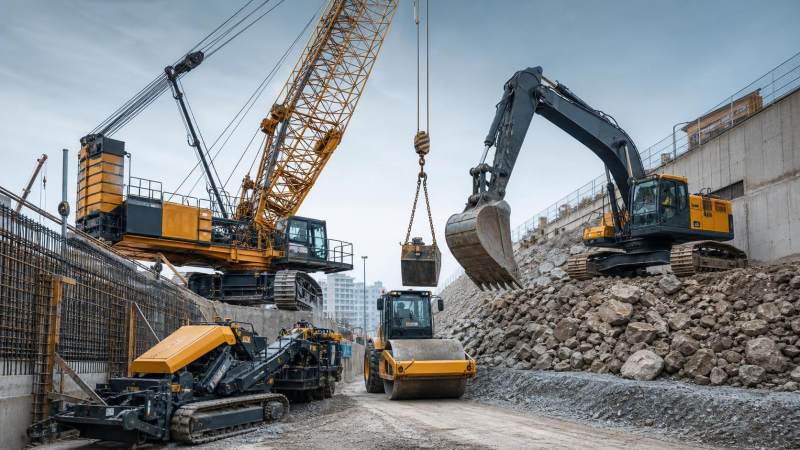
In many European projects, the hardest part is not finding heavy equipment. It is finding equipment that still performs well when the site conditions change from one stage to the next. A machine that works smoothly on level ground can become a liability on narrow urban access roads, saturated soil, steep terrain, or a work zone with strict noise and emissions limits.
If you are responsible for scheduling, procurement, or site execution, this becomes a practical headache fast. Delays appear first as small coordination issues: a crane cannot reach the laydown area, a TBM support system arrives before the shaft is ready, or haul trucks spend too long waiting for safe circulation. In heavy machinery application Europe, matching the machine to the project condition is often the difference between stable progress and repeated course correction.
Start with the project condition, not the machine catalog
A common mistake is to begin with a preferred machine model and then try to fit the project around it. That approach often fails because European projects tend to place several constraints on the same site at once: compact footprints, strict road access, weather exposure, local permitting rules, and sensitive surroundings such as rail corridors or city blocks.
A better starting point is to map the job by condition. Ask a simple question for each work package: what is the ground like, how much space is available, what must be lifted or moved, and what interruptions are likely? Once those answers are clear, the equipment choice becomes less subjective. A tunnel drive in mixed geology needs a different support logic than a quarry loading operation; a wind component lift needs different planning from a road paving train.
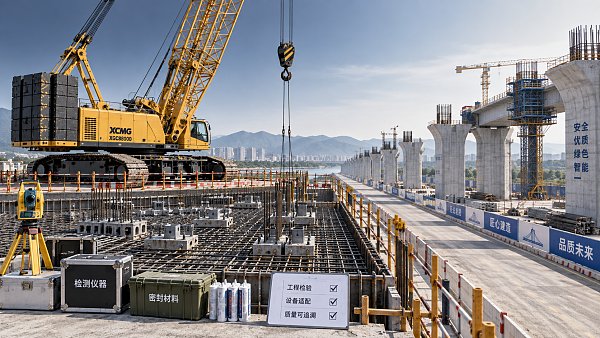
For tunneling, the main issue is usually alignment, face stability, and spoil handling. In urban ground, a TBM may be the right core machine, but only if the shaft logistics, segment supply, and backup system can be arranged without congestion. In open-pit mining, ultra-large excavators and mining dump trucks must be considered as a pair, because cycle time, bench geometry, and haul road condition affect each other. For lifting work, crawler cranes are often selected for their stability, but ground bearing pressure and assembly space can decide whether the plan is realistic at all.
Where equipment choices usually go wrong
The most frequent problem is assuming that nominal capacity equals suitability. A machine may look strong on paper and still perform poorly on a constrained site. That happens when turning radius, transport dimensions, setup time, or undercarriage behavior are ignored. In Europe, these details matter because many sites are built around existing infrastructure rather than empty land.
Another common issue is treating climate as a secondary concern. Cold weather affects hydraulic response, road surface condition, and maintenance windows. Wet seasons can reduce bearing strength and slow truck traffic. Coastal or high-humidity environments may increase wear on exposed components. When these factors are overlooked, the project team often reacts only after productivity has already dropped.
Regulatory and community conditions also shape machine selection. Low-emission requirements, transport permits, operating-hour restrictions, and noise limits can narrow the practical options. This is one reason heavy machinery application Europe is less about maximum size and more about fit. The “best” machine is often the one that can operate consistently inside the actual constraint set.
A practical way to compare options
When several machines appear possible, compare them in the order that affects delivery risk. First, confirm whether the machine can physically enter the site and be assembled there. Then test whether it can work inside the available space without creating a bottleneck for other trades. After that, evaluate ground conditions, energy supply, and maintenance access.
For road machinery, the key question is often how well the paving or compaction train matches the route geometry and traffic staging plan. Large pavers, rollers, and support vehicles may all be suitable individually, yet still fail as a set if the site cannot sustain continuous material flow. For mining dump trucks, route gradients, haul road condition, and loading point arrangement can change the whole decision. A truck that is mechanically suitable may still be inefficient if the route creates unnecessary stops or tire stress.
For ultra-large excavators, the decision is usually tied to face conditions and downstream hauling. If the shovel or bucket size is too aggressive for the haulage plan, the job becomes queue-heavy rather than productive. For crawler cranes, the lifting chart alone is not enough. You also need to account for ground preparation, assembly method, and how often the crane will need to move. On large projects, movement itself can be a hidden cost driver.
In tunnel work, the same logic applies to ancillary systems. TBM selection is not only about diameter or geology. Segment logistics, spoil removal, power supply, and backup train layout can determine whether the machine is a good match for the project conditions. If one of those links is weak, the entire drive can become harder to manage.
Use a process that follows the site, not the brochure
A workable process usually begins with a site walk and a constraint review. That means looking at access roads, staging zones, lifting paths, turning areas, drainage, and utility conflicts before confirming equipment. Then the team should translate those observations into machine requirements: load class, mobility, footprint, assembly sequence, and operating envelope.
From there, build the equipment plan around interfaces. What feeds the machine? What receives output from it? How far is the material moving, and where does it wait? The more interfaces there are, the more likely a mismatch will create idle time. This matters in Europe because many projects are executed in tight windows and with limited room for correction.
It also helps to keep a fallback option in mind. Not a backup purchase, but a pre-thought adjustment path. If ground conditions deteriorate, can the machine be re-positioned, resized, or supported differently? If transport access changes, can assembly be broken into smaller steps? If emissions or noise requirements tighten, is there a compliant alternative for the most sensitive work period?
That kind of planning does not eliminate surprises, but it reduces the number of decisions made under pressure. In practice, that is often the main advantage of using specialized intelligence around heavy machinery application Europe: it helps project leaders compare conditions before they commit to a fixed sequence.
Questions worth asking before procurement
If the project is still in planning, these questions can keep the selection grounded:
- Can the machine arrive, assemble, and leave without disrupting other work packages?
- Does the site surface or ground support the machine under real operating conditions?
- Will the machine remain productive under the local climate and seasonal changes?
- Are emissions, noise, or operating-hour limits likely to shape the equipment choice?
- Does the machine fit the logistics chain around it, not just the task it performs?
For project managers, these questions are useful because they turn a vague preference into a structured decision. The goal is not to buy the biggest machine or the newest one. The goal is to reduce friction between equipment, site, and schedule.
Closing thought for project teams
Heavy equipment performs well when the surrounding conditions are understood early. That sounds simple, but many project delays come from choosing tools before the site logic is clear. If you are working across tunneling, mining, lifting, or road construction in Europe, the safest path is to read the ground first, then the route, then the machine.
That sequence usually leads to better decisions, fewer mid-project adjustments, and a more realistic view of total cost. In a field where every site behaves a little differently, matching equipment to conditions is not extra planning. It is part of the work.
Related News
 Oct 02, 2026How to Evaluate Heavy Equipment Technology Suppliers for Fleet Uptime and SupportHeavy equipment technology suppliers can make or break fleet uptime. Learn how to assess diagnostics, data access, parts, service coverage, and support terms before you buy.
 Oct 01, 2026How to Use Technical References to Benchmark Industrial Equipment PricesIndustrial equipment technical reference pricing: learn how to normalize specifications, scope, service life, and operating costs to benchmark quotes accurately and choose the best-value equipment.
 Sep 30, 2026What Does an Ultra-Large Excavator Really Cost Over Its Service Life?Ultra-large excavators cost far more than purchase price. Explore lifecycle expenses, uptime risks, energy use, maintenance, and cost-per-tonne insights.
 Sep 29, 2026Infrastructure Construction Standards: A Project Manager’s Guide to ComplianceInfrastructure construction standards guide for project managers: turn requirements into field controls, hold points, traceability, and compliant delivery.
Ms. Elena Rodriguez
Weekly Insights
Stay ahead with our curated technology reports delivered every Monday.