
Material Handling for Large-Scale Construction Projects: Equipment Choices and Bottlenecks
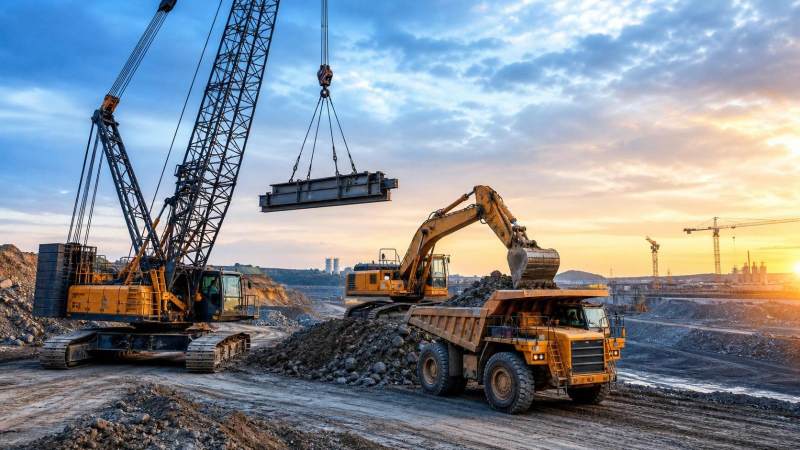
Why does material handling shape the outcome of large construction programs?
In large-scale construction projects, material handling is rarely a side topic. It influences sequence planning, labor productivity, equipment utilization, and site safety every day.
When movement paths fail, concrete waits, steel sits idle, and crews lose productive hours. That is why large-scale construction projects material handling deserves board-level attention.
The issue is broader than lifting or hauling alone. It covers loading, transfer, temporary storage, routing, staging, discharge, and synchronization with installation windows.
On tunnel, mining, energy, and transport jobs, the challenge grows fast. Distances increase, component weights rise, and interfaces between machines become harder to control.
A crawler crane may be available, yet the bottleneck could sit upstream in haul road design. A dump truck fleet may look sufficient, while the real constraint is loading cycle imbalance.
This is where industry intelligence matters. Platforms such as TF-Strategy track equipment parameters, construction methods, and project signals together, which supports more grounded decisions.
The practical question is not simply which machine is bigger. It is which handling system keeps material moving with the fewest interruptions across the entire project chain.
What usually counts as material handling on a major site?
Many teams underestimate the scope. Material handling includes bulk earth, precast elements, steel modules, tunnel segments, aggregates, fuel, tooling, and maintenance parts.
In heavy civil work, the system often combines several layers. One machine loads, another transports, another places, and a fourth clears the access route.
For example, a tunnel package may involve TBM supply logistics, segment delivery, spoil removal, crane-based shaft handling, and surface stockyard coordination.
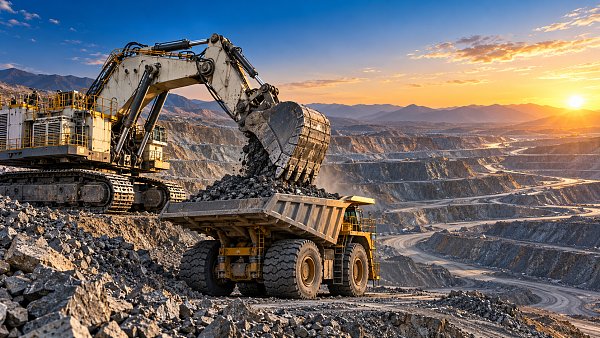
Open-pit and earthmoving projects have a different rhythm. Ultra-large excavators, mining dump trucks, and support graders must operate as a balanced production loop.
Road programs add another layer. Asphalt plants, feeder trucks, pavers, rollers, and material transfer vehicles must align within narrow temperature and timing tolerances.
More commonly, the best way to define large-scale construction projects material handling is by asking one question: where does material pause, queue, or get rehandled?
Every extra touch adds time, fuel use, and risk. Rehandling also increases the chance of damage, contamination, or dimensional mismatch before installation.
A quick decision table helps separate normal movement from hidden waste
The table below summarizes common material handling questions and the operational signal behind each one.
How do you choose equipment without overbuying capacity?
This is one of the most searched questions around large-scale construction projects material handling, and for good reason. Oversized equipment can be as damaging as undersized equipment.
Selection should start with flow, not brand preference. First define tonnage, dimensions, lift radius, haul distance, ground conditions, duty cycle, and allowable downtime.
Then look at interface matching. A crane’s chart means little if transport trailers cannot reach the lift zone or if ground preparation delays assembly.
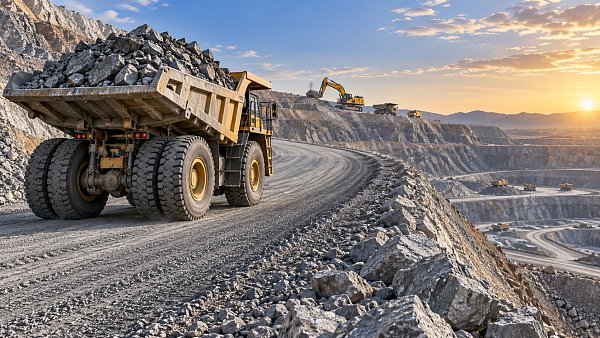
The same applies to dump trucks and excavators. Productivity depends on pass matching, queue time, road gradient, tire performance, and disposal point congestion.
In actual applications, equipment choice is usually a system decision. Single-machine efficiency does not guarantee project efficiency.
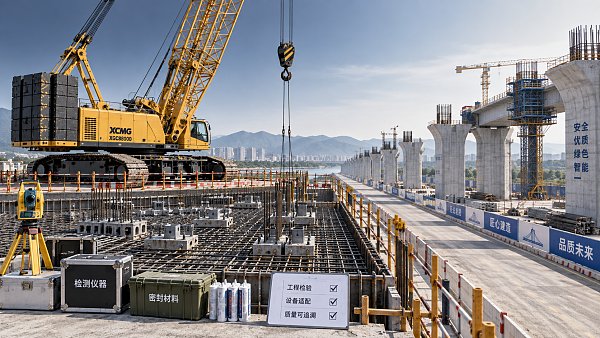
- Choose crawler cranes by lift plan, not headline capacity alone.
- Match excavator bucket size to truck body and cycle target.
- Assess road machinery by feed continuity and final tolerance requirements.
- For TBM logistics, compare shaft, tunnel, and surface transfer as one chain.
Sources like TF-Strategy are useful here because they connect physical machine limits with method statements and emerging trends such as remote operation and electrified haulage.
That broader view improves capital allocation. It helps distinguish temporary peak demand from structural demand across the project lifecycle.
Where do bottlenecks usually appear, even on well-funded projects?
The common assumption is that bottlenecks come from equipment shortage. In reality, they often come from poor synchronization between available assets.
One frequent issue is staging congestion. Material arrives on time, but laydown space is too small or too far from the final workface.
Another is route instability. Temporary roads degrade, turning radii are inadequate, or weather reduces safe movement windows for heavy loads.
Lift sequencing also creates hidden losses. Components may reach site early, yet installation pauses because adjacent civil works are not released.
In tunneling, the bottleneck may shift week by week. Segment supply, muck evacuation, cutter maintenance, and shaft logistics compete for the same time window.
More importantly, bottlenecks move. Solving one constraint can expose the next, so material handling reviews should be repeated during each phase transition.
A practical way to spot trouble early is to monitor queue time, rehandle rate, utilization spread, and the gap between planned and actual cycle duration.
Warning signs that deserve attention
- Frequent idle periods for support crews despite full equipment deployment.
- Sudden fuel growth without equivalent production growth.
- Repeated temporary storage of the same material.
- Night shifts showing better flow than day shifts for no technical reason.
- High maintenance events triggered by rough haul conditions rather than engine hours.
Is the lowest transport cost really the best decision?
Usually not. The lowest visible transport cost can increase the total cost of large-scale construction projects material handling when delays spread across the schedule.
A cheaper truck fleet may have lower availability, slower unloading, or weaker performance on grades. Those gaps can hold back the entire production train.
The same applies to lifting plans. Choosing a smaller crane to save rental cost may require extra repositioning, more assembly time, and tighter weather dependence.
This is why total cost of ownership matters more than unit price. The full calculation should include standby risk, congestion impact, maintenance access, and schedule exposure.
Decision quality improves further when external signals are included. Market intelligence on component supply, fuel trends, and equipment availability can change the preferred option.
TF-Strategy’s focus on tenders, raw material shifts, heavy equipment evolution, and green transition logic is relevant because material handling decisions increasingly sit inside larger strategic tradeoffs.
What does a stronger handling strategy look like in practice?
A strong strategy is visible before the first machine mobilizes. It links engineering sequence, logistics design, equipment selection, and live operating data.
It also treats material handling as a managed production system, not a collection of subcontracted tasks. That distinction changes outcomes.
In practice, the most reliable approach is to build a decision framework around a few repeatable checks.
- Map every movement from source to placement, including waiting points.
- Define the controlling cycle for each phase, then size support assets around it.
- Stress-test access, weather sensitivity, and maintenance windows before mobilization.
- Track daily deviations and adjust dispatch, staging, or routing quickly.
- Review external intelligence regularly, especially for specialized equipment and supply risk.
That final step is becoming more important. Electrification, remote control, and stricter safety expectations are changing how heavy equipment supports infrastructure delivery.
The best next move is to examine one active project through this lens. Identify the real bottleneck, compare system-level equipment options, and set measurable handling standards before the next phase begins.
Related News
 Sep 30, 2026What Does an Ultra-Large Excavator Really Cost Over Its Service Life?Ultra-large excavators cost far more than purchase price. Explore lifecycle expenses, uptime risks, energy use, maintenance, and cost-per-tonne insights.
 Sep 29, 2026Infrastructure Construction Standards: A Project Manager’s Guide to ComplianceInfrastructure construction standards guide for project managers: turn requirements into field controls, hold points, traceability, and compliant delivery.
 Sep 28, 2026How to Specify Custom Mining Equipment for Abrasive Ground and High-Load HaulageCustom mining equipment for abrasive ground and high-load haulage: learn how to optimize payload, wear protection, powertrains, uptime, and lifecycle cost for safer, reliable production.
 Sep 30, 2026When does a lower construction machinery price raise lifecycle costs?Construction machinery pricing can hide costly risks. Discover how downtime, fuel use, maintenance, productivity, and resale value shape total lifecycle costs.
Ms. Elena Rodriguez
Weekly Insights
Stay ahead with our curated technology reports delivered every Monday.