
How to Evaluate an Open Pit Mining Contractor for Safety, Fleet, and Production Goals
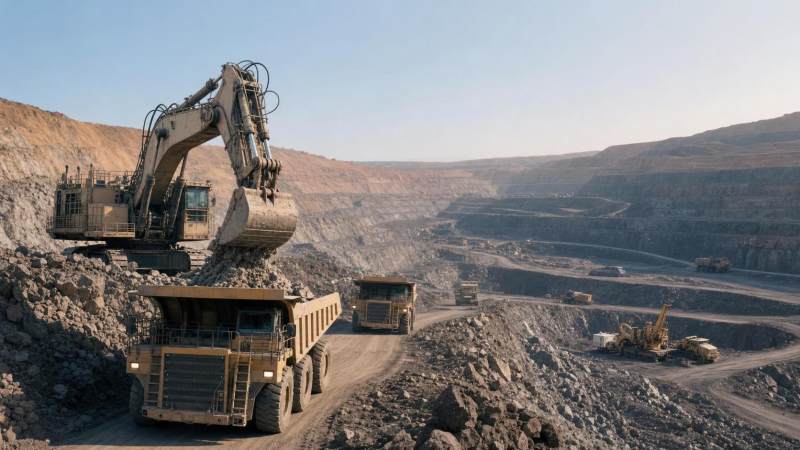
How to Evaluate an Open Pit Mining Contractor for Safety, Fleet, and Production Goals
Choosing the right open pit mining contractor can determine whether a project meets its safety targets, controls fleet costs, and delivers planned output on schedule.
For project leaders, the review goes far beyond fleet size or bid price.
A strong open pit mining contractor must show operational discipline, maintenance depth, production stability, and clear risk control.
In practical terms, the best decision comes from comparing evidence, not promises. That is where a structured evaluation process matters.
Start With Safety Performance, Not Bid Price
Safety should be the first screen when selecting an open pit mining contractor.
A low-cost contract quickly loses value if incidents stop production, damage equipment, or trigger regulatory exposure.
Ask for three years of verifiable safety data.
- TRIFR and LTIFR trends
- High-potential incident records
- Near-miss reporting frequency
- Corrective action closure rates
- Supervisor field inspection routines
Look closely at the trend line, not just the latest number.
A capable open pit mining contractor usually shows consistent reporting and clear lessons learned from past events.
Contractors with unusually clean records may still need deeper review.
Sometimes weak reporting systems hide exposure. In mining, underreporting is not the same as safe operations.
What good safety evidence looks like
The strongest open pit mining contractor usually provides more than policies.
- Site-specific risk assessments for blasting, haul roads, pit wall exposure, and shift changeovers
- Fatigue management controls for operators and maintenance teams
- Competency matrices for excavator, drill, dozer, and haul truck crews
- Evidence of daily pre-start checks and safety coaching
Assess Fleet Capability Against the Mine Plan
The next step is matching fleet capability to material movement goals.
An open pit mining contractor may own impressive equipment, yet still be wrong for the bench geometry, haul profile, or stripping ratio.
Ask for a fleet list tied to actual production assumptions.
This review should include standby philosophy as well.
A dependable open pit mining contractor usually plans backup units for critical production bottlenecks.
Without standby coverage, a single shovel failure can break the weekly production plan.
Ask the contractor to prove the fleet model
Do not rely on brochure specifications.
Request actual site data from similar geology, haul distances, and weather conditions.
That is the clearest way to test whether the open pit mining contractor can repeat performance under comparable conditions.
Review Maintenance Systems Before Production Claims
Fleet reliability depends on maintenance discipline.
Many production shortfalls are really maintenance failures that surfaced too late.
A serious open pit mining contractor should show a full maintenance framework.
- Preventive maintenance compliance rates
- Component change-out planning
- Oil analysis and condition monitoring
- Parts inventory strategy for critical failures
- Workshop capacity and field service coverage
Availability and utilization figures need context.
For example, high availability means little if units often lose payload, speed, or digging force.
Ask for mechanical availability, physical availability, and mean time between failures.
A mature open pit mining contractor will explain those numbers clearly and tie them to production risk.
Test Production Reliability, Not Peak Output
One common mistake is selecting an open pit mining contractor based on best-case output.
Mining projects succeed on stable weekly and monthly delivery, not isolated production highs.
Focus on schedule adherence and recovery capability.
- Compare planned tonnes against actual tonnes over at least twelve months.
- Review variance causes such as weather, labor turnover, tire delays, and pit access issues.
- Check how quickly the contractor restored output after disruption.
This is where contractor quality becomes obvious.
A high-performing open pit mining contractor usually has visible dispatch controls, shift reporting discipline, and short-interval planning routines.
Those systems often matter more than a small difference in unit rates.
Questions worth asking in the tender stage
- How is daily production loss escalated and corrected?
- What is the target for truck queue time and idle time?
- How are drill, blast, load, and haul teams coordinated?
- What production data is shared in real time?
Examine Workforce Stability and Site Leadership
Equipment alone does not deliver an efficient mine.
A reliable open pit mining contractor needs stable supervisors, experienced operators, and practical maintenance leaders.
Ask for turnover data by role, not just total headcount.
High churn in dispatch, supervision, or senior maintenance roles often creates hidden delivery risk.
Leadership quality also shows in the field.
Site visits can reveal whether the open pit mining contractor runs clean workshops, disciplined pre-starts, and orderly shift handovers.
Look at Commercial Terms Through an Operating Lens
Commercial review should support operations, not compete with them.
The right open pit mining contractor may not submit the cheapest headline rate.
Still, the total contract structure must be workable and transparent.
- Payment triggers linked to measurable output
- Clear definitions for downtime responsibility
- Fuel, tire, and explosives cost treatment
- Mobilization and demobilization assumptions
- Bonus and penalty settings that reinforce safe production
This is especially important in volatile mining markets.
A resilient open pit mining contractor contract protects both delivery continuity and cost visibility when operating conditions shift.
Use a Weighted Scorecard for Final Selection
A scorecard helps turn complex comparisons into a defensible decision.
It also keeps a strong open pit mining contractor from being overlooked because of a narrow price discussion.
The exact weighting can vary by project stage and orebody conditions.
What matters is using one framework for every open pit mining contractor under consideration.
Make the Final Decision on Execution Confidence
The best open pit mining contractor is usually the one with the strongest evidence of repeatable execution.
That means safer routines, better fleet care, steadier production, and fewer surprises across the contract life.
In real procurement work, disciplined evaluation protects both schedule and capital efficiency.
Before award, confirm site references, validate operating data, and test assumptions line by line.
When an open pit mining contractor can prove safety control, fleet readiness, and production consistency together, the selection case becomes much stronger.
Related News
 Oct 01, 2026How to Use Technical References to Benchmark Industrial Equipment PricesIndustrial equipment technical reference pricing: learn how to normalize specifications, scope, service life, and operating costs to benchmark quotes accurately and choose the best-value equipment.
 Sep 30, 2026What Does an Ultra-Large Excavator Really Cost Over Its Service Life?Ultra-large excavators cost far more than purchase price. Explore lifecycle expenses, uptime risks, energy use, maintenance, and cost-per-tonne insights.
 Sep 29, 2026Infrastructure Construction Standards: A Project Manager’s Guide to ComplianceInfrastructure construction standards guide for project managers: turn requirements into field controls, hold points, traceability, and compliant delivery.
 Sep 28, 2026How to Specify Custom Mining Equipment for Abrasive Ground and High-Load HaulageCustom mining equipment for abrasive ground and high-load haulage: learn how to optimize payload, wear protection, powertrains, uptime, and lifecycle cost for safer, reliable production.
Ms. Elena Rodriguez
Weekly Insights
Stay ahead with our curated technology reports delivered every Monday.