
Geotechnical Construction Methods for Foundations: Best Options by Soil and Load Type
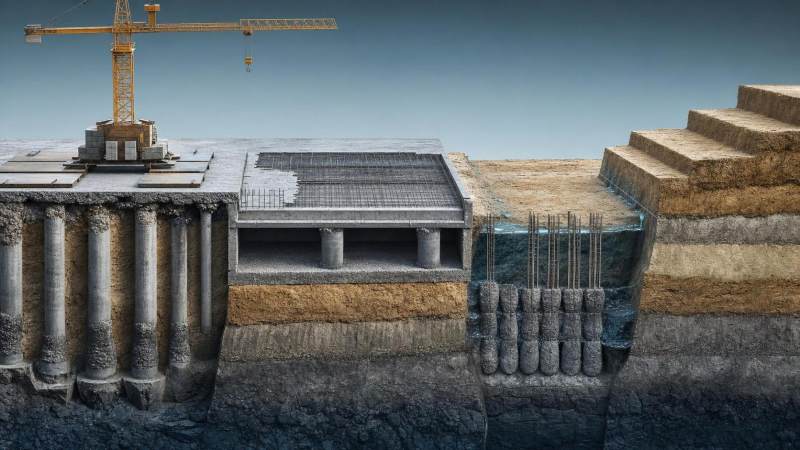
Why geotechnical construction methods for foundations change from one site to another
Choosing geotechnical construction methods for foundations is rarely a matter of picking the strongest option. Real performance comes from matching ground behavior, structural load, water conditions, and available equipment.
That is why a highway embankment, a TBM launch shaft, a crane pad, and a plant foundation can face completely different design pressures, even within the same region.
In heavy industry and infrastructure delivery, this distinction matters early. A weak foundation choice can delay excavation cycles, disrupt lifting plans, or create settlement that affects adjacent structures and utilities.
Across the project intelligence tracked by TF-Strategy, the better outcomes usually come from one discipline: treating geotechnical construction methods for foundations as a site-specific engineering decision, not a catalog item.
The first judgment is soil behavior, not foundation preference
Different soils fail in different ways. Some compress slowly. Some lose strength when wet. Others appear dense near the surface but become variable with depth.
In practical terms, geotechnical construction methods for foundations should start with four questions: how the soil carries load, how it drains, how much movement is acceptable, and how construction will disturb it.
A shallow spread footing may work well in dense granular soil with moderate structural demand. The same method becomes risky in soft clay, loose fill, or collapsible ground.
Where projects involve heavy excavation fleets, crawler cranes, or vibration-sensitive tunnel interfaces, the acceptable margin for differential settlement is usually much smaller than the basic bearing check suggests.
A quick comparison of common site conditions
The table below highlights how soil and load type change the preferred direction for geotechnical construction methods for foundations.
When shallow foundations still make sense
Shallow systems remain efficient where soils are competent and load spread is realistic. Warehouses, pavement-supported facilities, and some road structures often fit this range.
The better question is not whether shallow foundations are cheaper. It is whether settlement remains uniform under operational loading, seasonal moisture change, and repeated equipment movement.
For moderate static loads, spread footings and raft foundations can reduce complexity. They also simplify inspection and avoid deeper drilling operations where access is limited.
This approach becomes less attractive when concentrated loads rise sharply. Wind turbine auxiliaries, process skids, and heavy crane support zones can overload an otherwise acceptable shallow concept.
Soft ground usually changes the conversation fast
Soft clay, peat, and saturated silts often demand geotechnical construction methods for foundations that manage time as much as strength. Immediate bearing capacity is only part of the story.
In these conditions, differential settlement can continue long after construction ends. That matters for pipe racks, machine alignment, rail interfaces, and tunnel support structures.
Piles are common when structural loads must bypass weak upper layers. Precast driven piles, bored piles, and steel tubular piles each suit different access, vibration, and groundwater limits.
Where loads are distributed rather than highly concentrated, preload with vertical drains or rigid inclusions may be more efficient than full deep piling. The right choice depends on schedule tolerance.
A frequent mistake is comparing only installation cost. On soft ground, the true comparison must include waiting time, monitoring, rework risk, and the performance consequences of residual settlement.
Heavy loads need more than a higher safety factor
Some projects are governed by extreme point loads rather than broad area loading. Launching gantries, crawler cranes, TBM shafts, and module lifting pads belong to this category.
In these settings, geotechnical construction methods for foundations must consider load path, dynamic effects, temporary construction stages, and the footprint of support equipment.
For crawler crane pads, the issue is often local bearing pressure combined with repeated movement. A pad that passes an initial check may still rut, pump water, or soften under traffic.
For TBM launch and reception areas, stability is more complex. Excavation geometry, wall deflection, base heave, and groundwater pressure can be as important as the permanent structural load.
This is where field intelligence matters. Equipment parameters, shaft depth, lifting sequence, and soil response have to be read together, not as separate packages.
What changes when the load case becomes demanding
- Check temporary and permanent loads separately.
- Review eccentric loading, not only vertical reaction.
- Account for vibration, braking, and staged lifting effects.
- Confirm whether groundwater can reduce pad or subgrade stiffness.
- Match foundation method to available installation equipment.
Groundwater and excavation support often decide the method
Many foundation problems are actually water problems. A site with reasonable soil strength can still become unstable once excavation opens, seepage starts, or pore pressure changes.
That is why geotechnical construction methods for foundations near shafts, basements, marine edges, or cut-and-cover works must include dewatering and support interaction from the beginning.
Bored piles may lose productivity in unstable holes. Spread footings may require extensive dewatering. Jet grouting or secant systems may solve seepage control while also improving founding conditions.
A common misread is treating groundwater as a secondary contractor issue. In reality, it can redefine method selection, sequence, spoil handling, and nearby settlement exposure.
Different scenarios call for different foundation choices
The decision pattern becomes clearer when the site use is compared directly.
Where misjudgments usually happen
The most common error is assuming similar projects need identical geotechnical construction methods for foundations. Similar superstructures can behave very differently when groundwater, fill history, or construction sequencing changes.
Another weak point is relying on isolated borehole data without checking lateral variation. Mixed ground can punish any method that depends on uniform support.
Temporary works are also underestimated. Excavators, dump trucks, and lifting gear can impose demanding conditions long before the permanent structure becomes active.
Then there is the cost trap. A method with lower upfront installation cost may create higher total cost through longer program duration, monitoring needs, or maintenance during operation.
A practical way to narrow the best option
A workable decision path starts with the actual load case, not the preferred construction technology. Then confirm soil profile continuity, groundwater behavior, allowable settlement, and installation constraints.
After that, compare at least two realistic geotechnical construction methods for foundations on the same basis: structural adequacy, construction risk, equipment fit, schedule impact, and lifecycle cost.
For complex infrastructure, this comparison should include how the foundation method interacts with shafts, lifting plans, haul roads, vibration sources, and future maintenance access.
That is usually where the strongest decision emerges. Not from the most familiar method, but from the one that remains stable under real site conditions and operational demands.
Before moving forward, organize site data by soil type, load type, groundwater exposure, and construction sequence. Then test the shortlist against cost, time, and failure consequences with the same discipline used for any major heavy engineering asset.
Related News
 Oct 02, 2026How to Evaluate Heavy Equipment Technology Suppliers for Fleet Uptime and SupportHeavy equipment technology suppliers can make or break fleet uptime. Learn how to assess diagnostics, data access, parts, service coverage, and support terms before you buy.
 Oct 01, 2026How to Use Technical References to Benchmark Industrial Equipment PricesIndustrial equipment technical reference pricing: learn how to normalize specifications, scope, service life, and operating costs to benchmark quotes accurately and choose the best-value equipment.
 Sep 30, 2026What Does an Ultra-Large Excavator Really Cost Over Its Service Life?Ultra-large excavators cost far more than purchase price. Explore lifecycle expenses, uptime risks, energy use, maintenance, and cost-per-tonne insights.
 Sep 29, 2026Infrastructure Construction Standards: A Project Manager’s Guide to ComplianceInfrastructure construction standards guide for project managers: turn requirements into field controls, hold points, traceability, and compliant delivery.
Ms. Elena Rodriguez
Weekly Insights
Stay ahead with our curated technology reports delivered every Monday.